Strategy
Why Digital Transformation Projects Fail Inside Growing Companies
Digital transformation projects rarely fail because the technology is too hard.
They fail because the company is growing faster than its operating system.
The sales team has one version of the truth. Operations has another. Finance keeps the “real” numbers in a spreadsheet. Customer support knows where the process breaks, but nobody asks them until after the software is already built. Leadership wants transformation, but the project is delegated as an IT task.
Then everyone is surprised when the new system launches and nobody uses it.
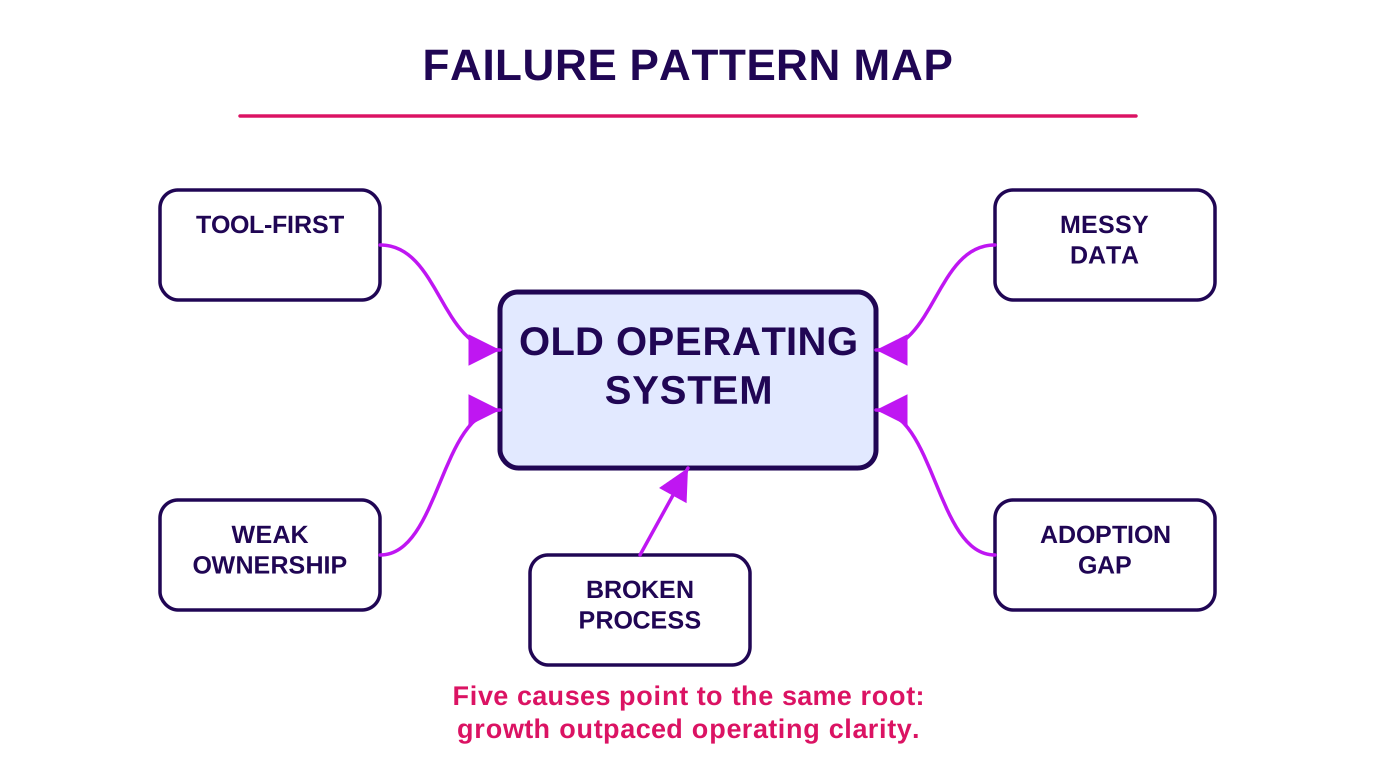 The failure pattern is usually not technical: tool-first thinking, weak ownership, broken process, poor adoption, and messy data all expose the same thing — an old operating system that growth has outgrown. View full size →
Digital transformation fails when companies treat technology as the transformation. The real transformation is operational clarity.
This matters most inside growing companies. Not tiny startups, where everyone still sits close enough to shout across the room. Not giant enterprises, where bureaucracy is already a known disease. Growing companies sit in the dangerous middle: big enough to have complexity, but not yet mature enough to have strong systems.
That is where digital transformation gets messy.
This article breaks down why these projects fail, what the warning signs look like, and how to run transformation work in a way that actually changes how the business operates.
Quick Answer: Why Digital Transformation Projects Fail
Digital transformation projects fail when companies start with tools before constraints, automate broken workflows, delegate operating decisions to IT, ignore adoption, and measure success by launch instead of business improvement.
| Failure pattern | What it looks like | What breaks | Better move |
|---|---|---|---|
| Tool-first thinking | ”We need a CRM/ERP/dashboard” before defining the constraint | The system solves a vague problem | Name the decision, workflow, or bottleneck first |
| Weak leadership ownership | Leaders sponsor, but IT owns the change | Trade-offs stay unresolved | Leadership owns process, data, and adoption decisions |
| Broken process automation | Existing workflow is copied into software | Digital bureaucracy | Remove process fossils before building |
| Adoption treated as training | Users attend onboarding but keep side spreadsheets | Shadow systems survive | Design the new workflow to be easier than the old one |
| Data definitions ignored | Teams disagree on what metrics mean | Dashboards create arguments | Define source of truth, ownership, and required fields |
| Oversized scope | The project tries to transform everything at once | Feedback arrives too late | Pilot the smallest workflow that proves the operating model |
The Real Problem: Growth Creates Operational Debt
Every growing company accumulates operational debt.
At first, work gets done through people. Someone knows who to call. Someone remembers the exception. Someone keeps the tracker updated because they care enough to do it manually.
That works until the company grows.
More customers. More teams. More product lines. More approvals. More edge cases. More “just this once” exceptions that quietly become normal operations.
The business keeps moving, but the system underneath it becomes fragile.
You start seeing symptoms like:
- Reports that take days to compile because data lives in five places
- Teams arguing over whose spreadsheet is correct
- Customers waiting because approvals depend on one busy person
- Managers asking for dashboards, but nobody trusts the data
- Staff creating shadow workflows outside the official system
- New hires taking months to understand how work really gets done
None of these are purely technology problems. They are coordination problems.
Software can help. But if you automate a confused process, you do not get transformation. You get faster confusion. This is why experienced operators keep repeating the same warning: digital transformation is not just a technology project; HBR frames it as an organisational change problem, not a tooling upgrade.
The first job of digital transformation is not to digitize the current mess. It is to understand which parts of the mess should survive.
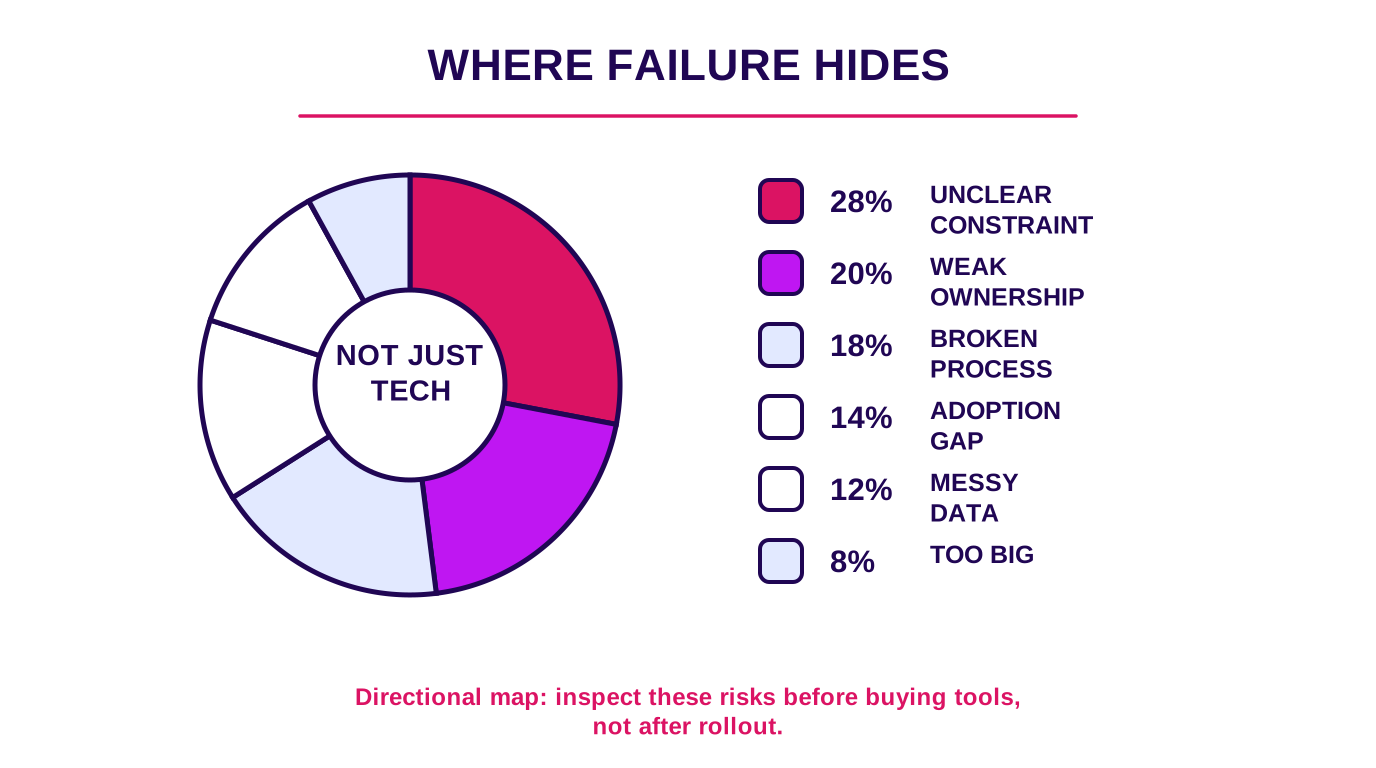 Where failure usually hides: not in one technical bug, but across unclear constraints, weak ownership, broken process, adoption gaps, messy data, and oversized scope. View full size →
Failure Pattern 1: The Project Starts With a Tool, Not a Business Constraint
Many transformation projects begin with a sentence like this:
“We need a CRM.”
Maybe you do. But that statement is not a diagnosis. It is a proposed treatment.
The real constraint might be:
- Leads are not followed up within 24 hours
- Sales notes are inconsistent, so handover to operations is painful
- Management cannot see pipeline health until the end of the month
- Customer history is scattered across WhatsApp, email, and personal spreadsheets
- The team has no shared definition of a qualified lead
Those are different problems. They may all involve a CRM, but they require different design decisions.
When companies start with the tool, the project becomes vendor-driven. The team compares features, licenses, dashboards, integrations, and demos. Everyone feels productive because there are many things to discuss.
But the core question remains unanswered:
What business constraint are we trying to remove?
Without that answer, the project has no strategic spine.
A better starting point is:
- What decision is currently slow, blind, or inconsistent?
- What process creates that problem?
- What data is missing, duplicated, or untrusted?
- What behaviour needs to change after the system goes live?
- What result would prove the transformation worked?
Only after that should you talk about tools.
Technology selection should be the consequence of clarity, not the substitute for it.
Failure Pattern 2: Leadership Sponsors the Project, But Does Not Own the Change
Digital transformation is often announced by leadership, then handed to IT.
That is understandable. IT knows systems. IT understands integrations. IT can evaluate technical risk.
But IT cannot decide how sales should qualify leads. IT cannot decide which approval step should be removed. IT cannot force operations to stop using the old spreadsheet. IT cannot resolve political tension between departments that disagree on who owns the data.
Those are management decisions.
When leadership delegates the change too far down, the project becomes technically active but organisationally weak. Meetings happen. Requirements are collected. Screens are designed. Integrations are discussed.
But the difficult decisions remain untouched.
You see this when teams say things like:
- “Let’s include both workflows for now.”
- “We can decide the approval rule later.”
- “Just make the field optional.”
- “The old spreadsheet can stay until people are comfortable.”
- “We don’t want to force the team too much.”
This sounds reasonable. It is often the beginning of failure.
Transformation requires trade-offs. If the new system does not change how decisions are made, what data is trusted, and which behaviours are expected, then it is not transformation. It is another interface.
Leadership does not need to manage every ticket. But it must own the operating decisions:
- Which process becomes the standard?
- Which old workflow gets retired?
- Which metrics matter?
- Who has authority to approve exceptions?
- What happens when teams refuse to adopt the new way?
If leadership wants transformation without discomfort, what they actually want is software decoration.
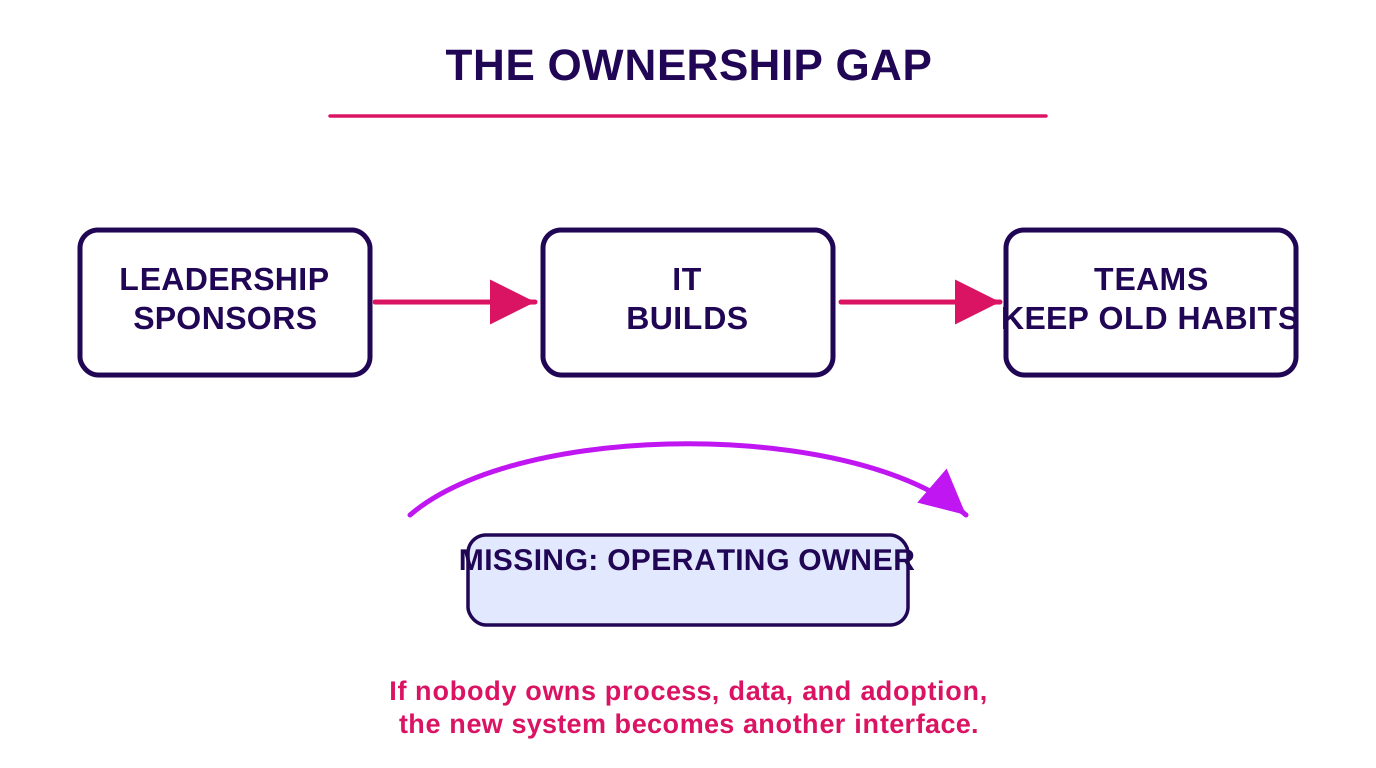 The ownership gap: leadership sponsors the project, IT builds the system, but teams keep old habits because nobody owns the operating change. View full size →
Failure Pattern 3: The Company Automates Broken Processes
A bad process does not become good because it is digital.
If your approval flow has seven steps because nobody trusts anybody, putting it into software will not make it efficient. It will make the distrust easier to track.
If your sales team enters poor data because the qualification criteria are unclear, a CRM will not fix that. It will preserve bad data in a more expensive place.
If your inventory process depends on people correcting stock manually at the end of the day, a dashboard will not create real-time visibility. It will create a real-time view of unreliable inputs.
Before building or buying software, every process should be challenged:
- Why does this step exist?
- Who uses the output?
- What decision does it support?
- What happens if we remove it?
- Is this rule still true, or did it survive from an older version of the company?
Growing companies often carry process fossils. A rule was created three years ago because one client had one special case. Nobody remembers why it exists, but everyone still works around it.
Transformation is the moment to remove those fossils.
The goal is not to map the current process perfectly. The goal is to design the process the company needs next.
Failure Pattern 4: Adoption Is Treated as Training, Not Product Design
Most companies think adoption happens after launch.
They build the system, run a training session, share a slide deck, maybe record a walkthrough. Then they expect people to change habits built over years.
That rarely works.
Adoption is not a communication problem. It is a product design problem.
People adopt systems when the new way is clearly better than the old way. Faster. Easier. More reliable. More useful to their daily work. If the new system only creates cleaner reports for management while making frontline work harder, adoption will fail quietly.
Teams may still use the system when watched. But the real work will move elsewhere:
- WhatsApp groups
- Personal notes
- Offline spreadsheets
- Unofficial trackers
- Manual copy-paste routines
This is the shadow system. It is the clearest sign that adoption failed.
To prevent this, adoption must be designed from the beginning:
- Identify the users whose behaviour must change.
- Understand what makes their current workflow convenient.
- Remove friction from the new workflow before launch.
- Make the system useful to the user, not just to management.
- Validate adoption with real usage, not attendance in training.
A good adoption metric is not “100 people attended onboarding.”
A better metric is:
- 80% of qualified leads are updated within 24 hours
- 90% of purchase requests go through the new approval flow
- Weekly management reports no longer require manual spreadsheet consolidation
- Customer support tickets include complete order history without asking another team
Training explains the system. Product design makes the system worth using.
Failure Pattern 5: Data Governance Is Ignored Until Reporting Breaks
Every transformation project eventually becomes a data project.
At some point, leadership asks for dashboards. Conversion rate. Fulfilment time. Customer lifetime value. Stock accuracy. Revenue by segment. Project margin. Whatever matters to the business.
Then the team discovers the uncomfortable truth:
Nobody agrees on the data.
One team defines an active customer as someone who purchased in the last 90 days. Another uses 180 days. Sales counts pipeline value before discount. Finance counts after discount. Operations tracks fulfilment date differently from customer support.
The dashboard is not wrong. The business language is inconsistent.
Digital transformation fails when data definitions are treated as technical details. They are not. They are operating agreements.
Before building dashboards, define:
- What each key metric means
- Where the source of truth lives
- Who owns data quality
- Which fields are mandatory and why
- How exceptions are handled
- When data becomes official
This may feel slow. It is not. It prevents months of dashboard debates later.
A dashboard does not create alignment. It reveals whether alignment already exists.
Failure Pattern 6: The Project Is Too Big to Learn From
Large transformation projects create a dangerous delay between decision and feedback.
The company spends months defining requirements. Months building or configuring. Months integrating. Then the system finally launches and everyone discovers what should have been learned in Week 3.
The workflow does not match reality. The approval rule breaks in edge cases. Users hate the input screen. The integration technically works but creates reconciliation problems. The dashboard answers questions leadership no longer asks.
This is not because the team was careless. It is because complex systems cannot be fully understood in meeting rooms.
You need real usage.
Growing companies should treat transformation like product development:
- Start with the riskiest workflow, not the biggest module
- Build the smallest usable version
- Test it with real users and real data
- Measure behaviour change
- Refine before expanding
This does not mean moving slowly. It means creating a feedback loop early enough to matter.
A useful transformation pilot might be:
- One branch, not the whole company
- One sales pipeline, not every customer segment
- One approval flow, not all procurement
- One operational report, not the full executive dashboard
The question is not “Can we launch everything?”
The better question is:
What is the smallest workflow that can prove the new operating model works?
Failure Pattern 7: Success Is Measured by Launch, Not Operating Change
Many digital transformation projects are declared successful on the day the system goes live.
That is too early.
Launch means the software exists. It does not mean the company has changed.
A transformation project should be measured by operational outcomes:
- Are decisions faster?
- Is data more trusted?
- Are handovers cleaner?
- Is manual work reduced?
- Are customers served better?
- Can new employees learn the process faster?
- Can leadership see problems earlier?
If the answer is no, the system may be deployed, but the transformation has not happened.
This is where many companies stop too soon. They budget for implementation, but not adoption. They plan for go-live, but not behaviour change. They assign a project manager, but not an operating owner after launch.
Transformation needs post-launch ownership.
Someone must watch the system in the real world:
- Which steps are skipped?
- Which fields are filled incorrectly?
- Which teams still use side channels?
- Which reports are trusted?
- Which workflows create new bottlenecks?
The first 30 to 60 days after launch are not maintenance. They are the most important learning window in the project.
What Successful Transformation Looks Like
Successful transformation inside a growing company usually looks less dramatic than people expect.
It is not a giant launch event. It is not a beautiful dashboard on a big screen. It is not a CEO announcing that the company is now “digital-first,” whatever that means this week.
It looks like this:
- Teams use the same source of truth without being chased
- Managers stop asking for manual report consolidation
- Exceptions are visible instead of hidden in chats
- Customers get faster answers because history is accessible
- New hires understand the workflow without oral tradition
- Leaders can make decisions before problems become expensive
That is transformation.
Not software. Not automation. Not dashboards.
A better operating system for the business.
The Synetica Approach: Blueprint Before Build
At Synetica, we do not start transformation work by asking, “What should we build?”
We start with a Blueprint.
The Blueprint clarifies four things before serious implementation begins:
- Business constraint — what growth problem are we removing?
- Operating model — how should the work actually flow?
- Data model — what information must be trusted, structured, and owned?
- Adoption model — whose behaviour must change, and what makes the new way easier?
Only after that do we decide whether the right answer is custom software, workflow automation, CRM implementation, ERP integration, dashboarding, process redesign, or a combination.
This is slower than buying the first tool that looks impressive.
It is faster than spending six months implementing the wrong thing.
For growing companies, the goal is not to become more digital. The goal is to become more coordinated, more measurable, and more able to move without breaking the business.
Technology is how we support that.
Clarity is where it starts.
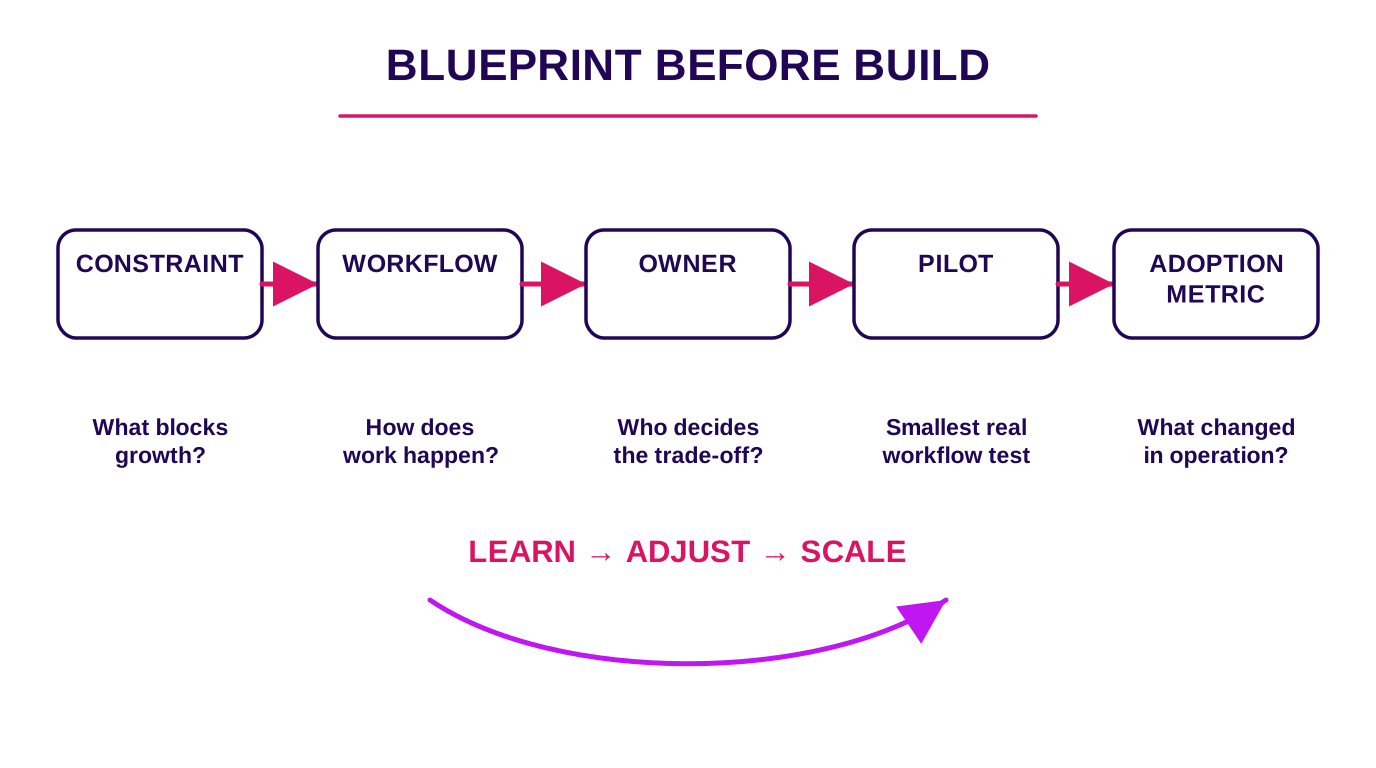 Blueprint before Build: map the real work, decide what changes, pilot the habit, then measure adoption. View full size →
A Practical Checklist Before You Start
Before your next digital transformation project, answer these questions honestly:
-
What business constraint are we trying to remove?
If the answer is just “we need a system,” you are not ready. -
Which process should change, not just move online?
Do not automate a workflow you have not challenged. -
Who owns the operating decisions?
IT can own implementation. Leadership must own the change. -
What data needs one definition?
If teams define metrics differently, dashboards will create arguments, not clarity. -
What behaviour must users adopt?
Adoption should be designed before launch, not begged for after launch. -
What is the smallest workflow we can validate first?
Start where learning is fastest and risk is visible. -
What outcome proves this worked?
Launch is not the outcome. Operating improvement is.
If your team can answer these clearly, the technology conversation becomes much easier.
If not, pause.
The expensive mistake is not delaying the project by two weeks to get clarity.
The expensive mistake is launching a system that preserves the confusion you were trying to escape.
Final Thought
Digital transformation does not fail because companies lack ambition.
It fails because ambition outruns clarity.
Growing companies do not need more software for the sake of software. They need systems that match how the business should operate at the next stage of growth.
That means mapping the real constraint, redesigning the workflow, defining the data, testing adoption, and measuring the change after launch.
Do that, and technology becomes leverage.
Skip it, and technology becomes a very expensive mirror for the same old mess.
Need help putting this into practice?
Book a Blueprint session and we'll turn the ideas in this article into your next validated release.
Book a Discovery Call