Guide
ERP System vs Separate Apps: When Do You Need Integration?
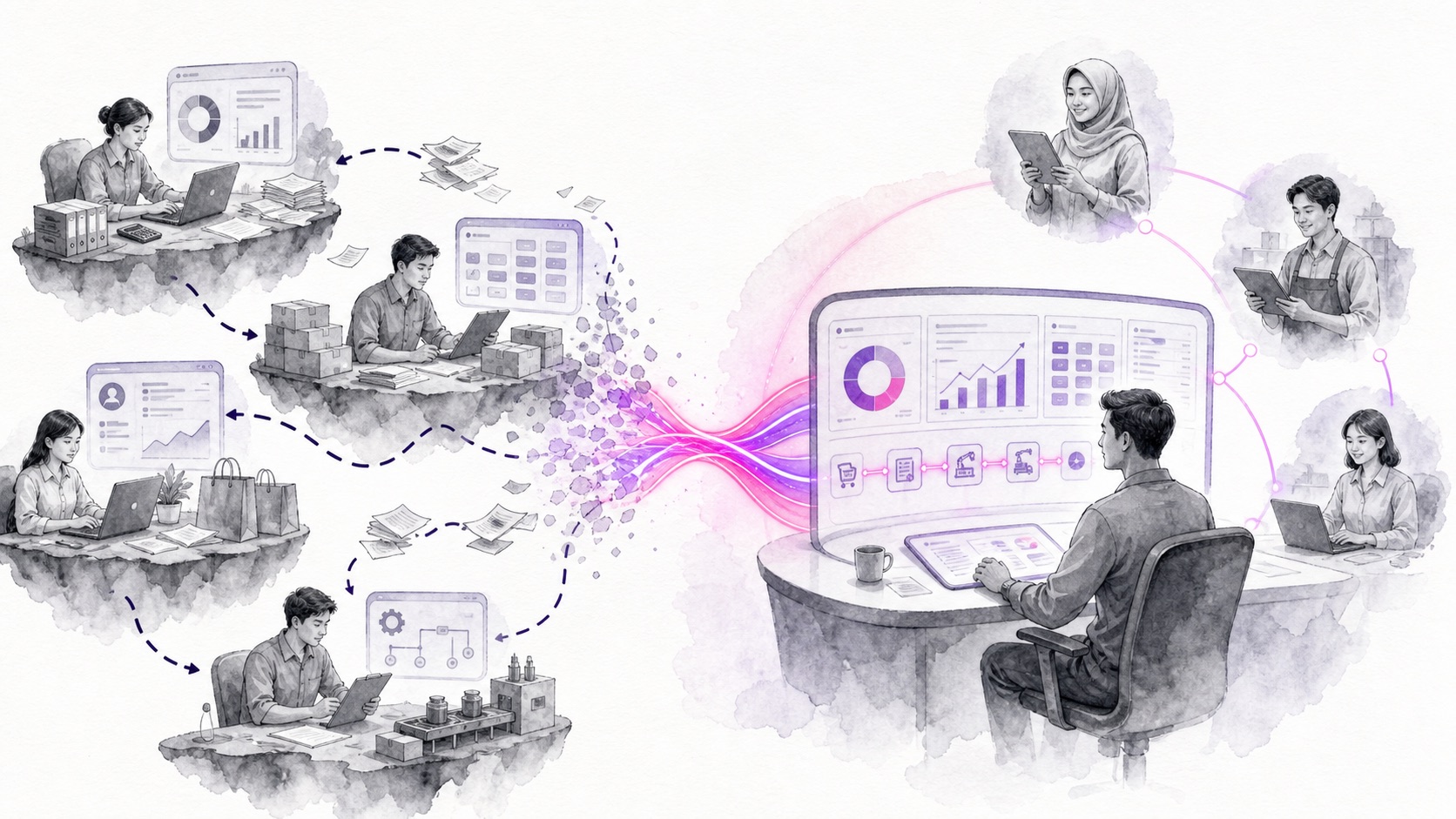
An ERP system becomes relevant when the apps that helped you grow start forcing people to reconcile the business by hand. Finance has one number. The warehouse has another. Sales promises stock from yesterday’s spreadsheet. The problem is not a lack of software. The problem is that your software does not move as one system.
Across 15+ years of platforms, middleware, CRM integrations, and custom operations systems, we have seen companies buy ERP too early and keep disconnected apps too long. Both are expensive. One pays for complexity before it is useful; the other pays coordination debt every day.
This guide helps you choose among four paths: keep separate apps, build an integration layer, buy a packaged ERP system, or build custom ERP. The decision starts with workflow dependency—not the length of a vendor feature list.
TL;DR — the whole guide in five lines:
- Separate apps still work when the workflows are genuinely separate — accounting does not need to become ERP just because sales uses a CRM.
- Integration becomes necessary when one event must update many systems — a paid order changes stock, invoicing, delivery, and reporting.
- Packaged ERP wins for standard processes — you get a shared data model faster, but the business adapts to the suite.
- Custom ERP only makes sense for differentiating workflows — do not custom-build accounting that is already a commodity.
- A 10-week workflow rollout beats a big bang — validate for 2 weeks, build for 8, then expand based on evidence.
Proof From Systems We Have Integrated
Serious integration is not two APIs saying hello. It must preserve event order, payment state, ownership, and recovery when one system fails.
For Grab Philippines, our team built a biller gateway connecting food and mart operations with POS systems. The receipt is concrete: 8 interconnected microservices handling orders, payments, and data synchronisation. It is not an ERP monolith. It is an integration layer because the participating platforms need to remain independent.
For Seva.id, Astra needed leads from multiple product verticals to reach the correct CRM and sales systems. Replacing Astra’s stack would have created more risk than value. We connected the website, CRM, finance APIs, search, and routing logic already in use. That delivery relationship has run for more than seven years.
Both cases point to the same rule: do not merge software to make the architecture diagram look tidy. Connect the records and events that genuinely need to move together. See the full receipt for the Grab Philippines integration and more Synetica case studies.
What Is an ERP System?
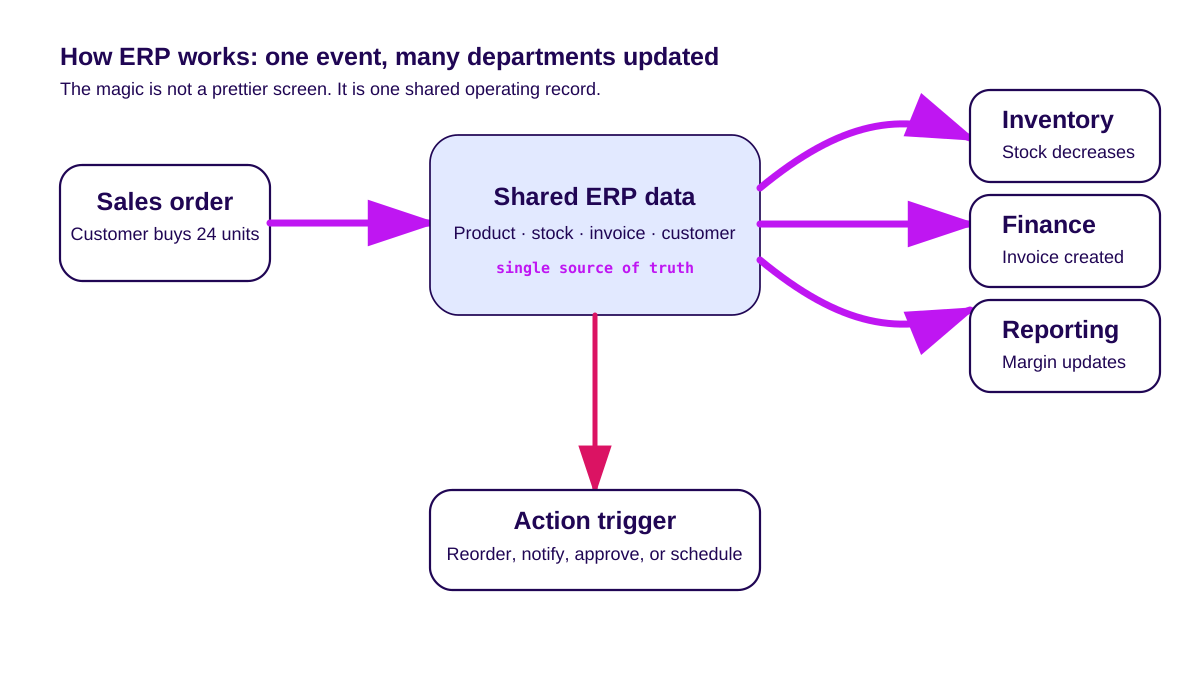
An ERP system connects a company’s core processes—finance, procurement, inventory, sales, HR, and operations—through a shared data model and workflow. One sales order can reserve stock, create an invoice, trigger delivery, and update reporting without being entered four times.
Oracle describes modern ERP as an integrated suite built around a common data model and one source of truth. That is the useful distinction. Not the number of screens. Not the vendor logo. ERP creates value when a business event only needs to be recorded once.
Its core jobs are to:
- Unify master records for customers, products, suppliers, and employees.
- Move transactions across departments without manual re-entry.
- Enforce approvals, roles, audit trails, and business rules.
- Report financial and operational positions from the same records.
- Trigger the next action when an event or exception occurs.
If you need the foundation first, read What Is ERP? Definition, Modules, and Examples.
Packaged ERP vs Custom ERP vs an Integration Layer
The right path depends on how interdependent your workflows are and how uniquely your business creates value.
| Path | Indicative upfront cost | Time | Flexibility | Best fit |
|---|---|---|---|---|
| Separate apps | IDR 20–80m | 2–6 weeks | High per tool, low across tools | Small teams; independent processes |
| Integration layer | IDR 80–250m | 6–12 weeks | High; keep best-fit tools | The tools work, but handoffs fail |
| Packaged ERP | IDR 150–500m+ | 3–9 months | Medium; configuration-heavy | Standard finance, HR, procurement, and stock |
| Custom ERP | IDR 200–800m+ | 10–24 weeks | Very high | The workflow is part of the business moat |
These are planning ranges for growing Indonesian businesses, not quotations. Licensing, user count, migration, integration, and compliance can move them substantially.
Validate it in 2 weeks. Before committing an ERP budget, we map the process, prototype one critical workflow, and price the buy, integrate, and build paths — see Blueprint & Prototype.
ERP System Features and Modules That Matter
Vendor feature lists can be as long as a monthly grocery receipt. You do not need all of them. You need capabilities that keep data, decisions, and handoffs consistent.
Govern master data
Customers, SKUs, suppliers, accounts, locations, and employees need clear owners. If one customer has three IDs across three systems, every dashboard will lie with confidence.
Run transaction workflows
ERP should connect order-to-cash, procure-to-pay, stock transfer, expense approval, or payroll. Start with the workflow that costs the most when it fails—not the module that looks best in a demo.
Handle exceptions
The happy path is easy. Value appears when stock is short, payments duplicate, pricing changes, approvals stall, or a partner API goes down. A mature ERP system makes exceptions visible and recoverable.
Protect roles and audit trails
Who may create a vendor, change a bank account, approve a purchase, or cancel an invoice? Roles, segregation of duties, and change history belong in the first design, not a later security sprint.
Tie reporting to transactions
A dashboard should not become a prettier spreadsheet. Every number must trace back to the transaction, state, and owner that produced it.
Define integration contracts
APIs, webhooks, event queues, retry rules, and mappings are product behaviour. Oracle likewise treats adapters, business events, and APIs as foundations of ERP integration, not post-launch patchwork.
When Are Separate Applications Still Enough?
Keep point apps when processes are standard, data ownership is explicit, and one tool’s failure does not break another team’s workflow. Accounting, CRM, HRIS, and inventory apps do not need to be forced into one suite.
Separate apps are still healthy when:
- Every record has one unambiguous owner.
- Cross-system handoffs are infrequent and low-volume.
- Weekly exports do not block daily decisions.
- A change in one tool does not create rework in three departments.
- The team can answer “where is the correct number?” without a meeting.
A 30-person services company may do perfectly well with accounting SaaS, CRM, project management, and HRIS. There is no stock, production, or supply chain. Full ERP would turn four simple tools into one large tool that still needs configuration.
Do not buy ERP to cure poor data discipline. Define owners, naming rules, and reconciliation first. Otherwise ERP only centralises the mess.
When Do You Need ERP Integration?
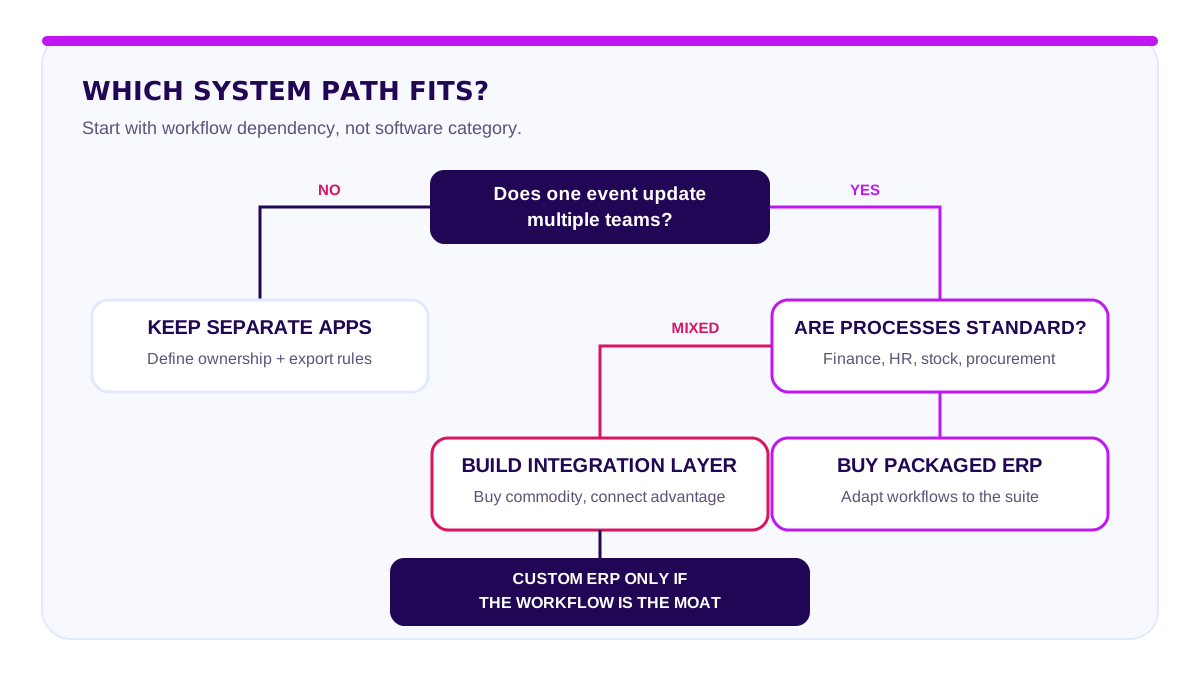
The strongest signal is not company size. It is dependency. If one business event changes obligations across several teams, you already have an integration problem—even if nobody calls it ERP.
Choose an integration layer when the tools already fit
Keep the CRM, accounting system, POS, or WMS that works. Build the layer that aligns IDs, moves events, handles retries, and creates visibility across systems.
This path fits when sales needs live stock, payment must update invoices, or marketplace orders must reach fulfilment without re-entry. Buy commodity processes; build the connection.
Choose packaged ERP when processes are standard
Finance, HR, procurement, and basic inventory are rarely where a business seeks differentiation. A suite supplies the common data model, roles, audit, and standard workflow faster than a ground-up build.
The trade-off is direct: you adapt the process to the software. If every department demands customisation so the suite copies old habits, you may be paying ERP prices to preserve a legacy process.
Choose custom ERP when the workflow is the moat
Custom makes sense for unique pricing engines, operational routing, allocation logic, multi-party settlement, or compliance flows that directly affect margin and customer experience.
Build only what differentiates. Accounting, authentication, email, and file storage rarely need reinvention. Synetica’s Production Grade Software starts from validated scope, not a departmental wish list.
How to Choose an ERP System: Vendor Checklist
A demo proves the software can run. It does not prove the software can run your business. Use this checklist for ERP vendors and custom partners:
- Demo one workflow end to end. Use real orders, SKUs, approvals, and exceptions.
- Name every source of truth. Ask who owns customers, products, stock, invoices, and payments.
- Test exceptions. What happens after a duplicate payment, API timeout, or stock change?
- Calculate three-year cost. Include licensing, users, implementation, migration, training, connectors, support, and change requests.
- Demand an exit path. Export data in open formats with attachments and audit history intact.
- Check Indonesian integration. Midtrans/Xendit, WhatsApp, BPJS, PPh 21, VAT/e-Faktur, and bank reconciliation need concrete answers.
- Assign post-launch ownership. Who monitors queues, repairs failures, maintains mappings, and approves schema change?
- Run a reference call. Speak to a client at your scale and complexity without the vendor salesperson present.
- Set success metrics. Cycle time, error rate, days to close, stock accuracy, or manual hours removed.
For a deeper partner review, use our software vendor due-diligence checklist.
What Does ERP Integration Cost in Indonesia?
ERP cost is not only the license or build quote. The largest cost often hides in reconciliation, exceptions, unclear ownership, and change without contracts.
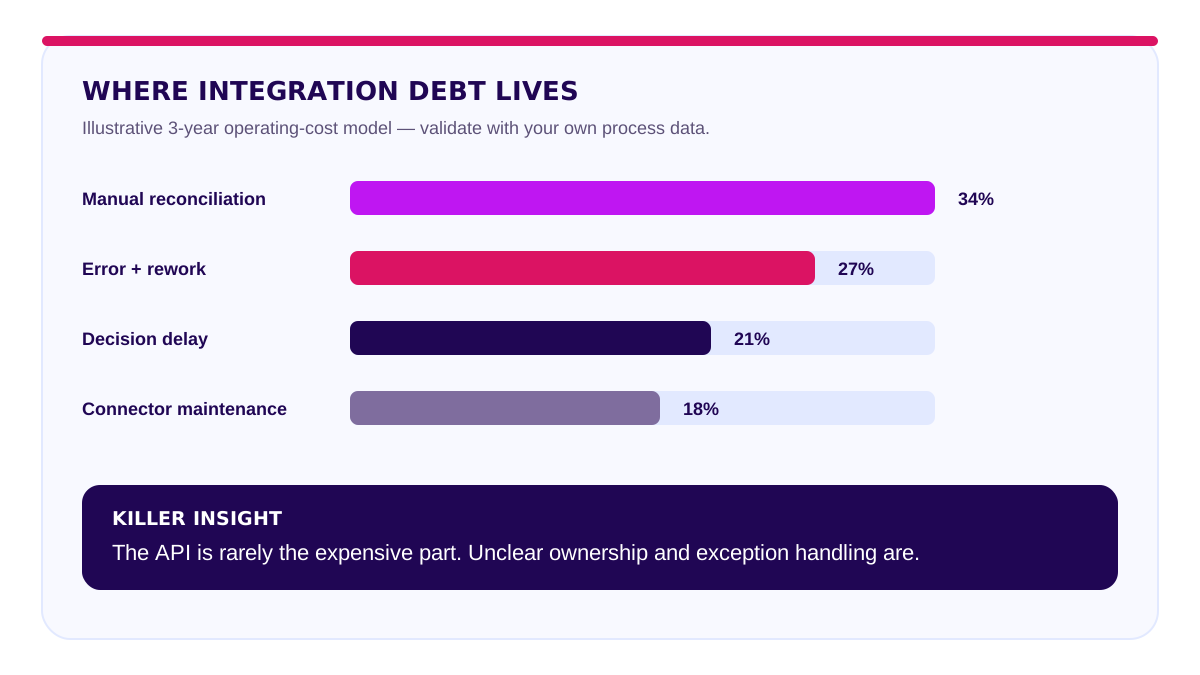
Use four buckets:
- Platform: licenses, infrastructure, database, observability, and security tooling.
- Delivery: process mapping, configuration/build, migration, integration testing, and training.
- Operations: support, connector monitoring, vendor updates, incidents, and data correction.
- Change: more users, new modules, tax rules, workflows, and vendor replacement.
A simple model: if two people spend a combined 12 hours each week reconciling orders, stock, and invoices, multiply that by loaded hourly cost and 50 weeks. Then add error cost, collection delays, and late stock decisions. Compare three-year numbers, not month-one quotes.
How to Implement an ERP System Without a Big Bang
A big bang gives you one launch date and a hundred ways to fail. A safer path ships one valuable workflow, runs it in parallel, then expands.
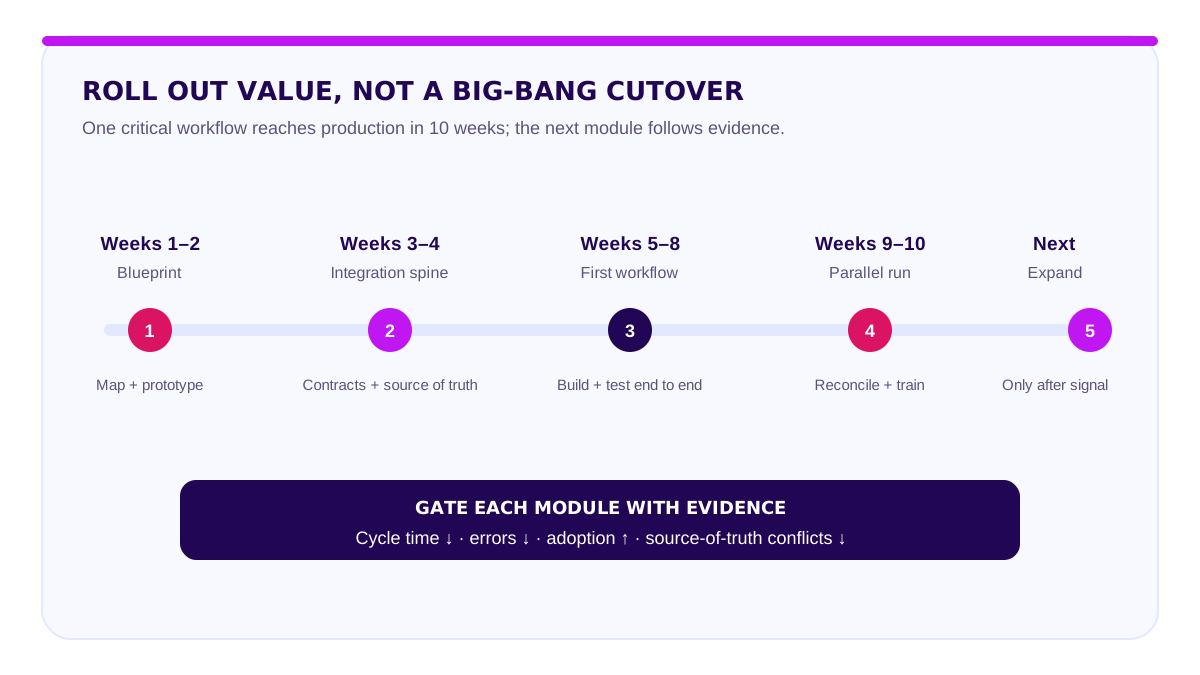
Weeks 1–2: Blueprint one workflow
Map the process people actually use. Define data owners, exceptions, success metrics, and a prototype. Test with the users doing the work—not only the project sponsor.
Weeks 3–4: Build the integration spine
Define canonical IDs, API contracts, events, retries, access controls, logging, and reconciliation. These sound technical but answer a business question: whose number wins when systems disagree?
Weeks 5–8: Ship the first workflow
Build end to end. One working order-to-cash flow creates more value than five disconnected screens. Test success, duplication, timeout, reversal, and manual recovery.
Weeks 9–10: Run in parallel
Compare old and new outputs for a full business cycle. Train power users. Measure cycle time, error, adoption, and data gaps before switching the old flow off.
Martin Fowler captures the staged-rollout argument clearly:
“The most important reason to consider a strangler fig application over a cut-over rewrite is reduced risk.” — Martin Fowler
Once the signal is positive, take the next module. If it is not, correct the assumption without putting the entire operation at risk.
What I Would Recommend Before Buying ERP
Start with a dependency map, not a vendor shortlist. Pick one event—such as an order being paid—and map every system and team that must change. If there is one, a point app may be enough. If there are five, integration is already a business decision.
Buy commodity processes. Finance, payroll, authentication, and basic CRM are usually safer to buy.
Build workflows that create margin or service advantage. That is where custom investment has a reason to exist.
Roll out one value stream. Do not launch by departmental boundary. Launch order-to-cash, procure-to-pay, or stock-to-delivery end to end.
There is one next step: bring the most painful workflow to a Discovery Call. In a 2-week Blueprint, we turn cross-department complaints into a costed buy, integrate, or build decision.
FAQ
What is an ERP system?
An ERP system connects finance, procurement, inventory, sales, HR, and operations through a shared database and workflow so transactions do not need to be entered repeatedly.
What is the best ERP system?
There is no honest universal winner. Fit depends on process standardisation, local integrations, user count, compliance, three-year cost, and how unique your operating workflow is.
How much does an ERP system cost?
For a growing Indonesian business, early planning ranges may start around IDR 150–500m+ for suite implementation and IDR 200–800m+ for a custom scope. Licensing, migration, users, integrations, and data complexity determine the final number.
Can an ERP system be custom-built?
Yes. Custom ERP makes sense when a unique workflow creates competitive advantage. For commodity processes, a hybrid path—buy standard modules and build the integration—is often faster and safer.
ERP system vs separate applications: which is better?
Separate apps are better when processes are independent and data ownership is clear. ERP is better when one event must update many functions. An integration layer is the middle path when existing tools fit but their handoffs fail.
Sources
Related Posts
Two weeks to a real answer
Need help putting this into practice?
Book a Blueprint session and we'll turn the ideas in this article into a tested prototype in front of real users—2 weeks, from $3,000.