Guide
ERP System Build vs Buy: A Guide for Growing Companies
An ERP system build-vs-buy decision becomes urgent when standard software starts fighting the way your business actually works. Buy too early and teams bend valuable workflows around a vendor template. Build too much and you spend custom-engineering money on accounting, payroll, and approvals that thousands of companies already solved. The decision is not “software or custom.” It is which parts should be standard and which parts deserve ownership.
Across 15+ years of platforms, integrations, and operations software, we have seen both mistakes. The expensive projects were rarely caused by one bad technology choice. They were caused by treating every process as equally unique—or equally standard.
This guide gives you a practical scorecard for packaged ERP, custom ERP, and the hybrid path. We will compare workflow fit, three-year cost, capability, implementation risk, and a 10-week way to validate the choice before scaling it.
TL;DR — the whole guide in five lines:
- Buy processes that should be boring — finance, payroll, procurement controls, and standard inventory usually benefit from proven software.
- Build workflows that change margin or service — unique pricing, allocation, routing, and customer operations can justify custom ownership.
- Hybrid is the default for many growing companies — packaged core, custom edge, one integration contract between them.
- Compare three-year cost, not the proposal headline — licenses, migration, support, change, and internal ownership outlive implementation.
- Validate one workflow before funding the programme — 2 weeks for Blueprint & Prototype, then 8 weeks for one production value stream.

Proof From Systems We Have Built and Integrated
The clearest build-vs-buy answer often appears at the boundary between systems. That is where standard records meet the workflow that makes the business different.
For Astra’s Seva.id, replacing the existing CRM and finance landscape would have created more risk than value. We built the digital lead platform and integration layer around those systems. The result has supported multiple automotive and property verticals through a 7+ year delivery relationship.
For Grab Philippines, the need was not a new finance suite. It was reliable movement of orders and payments between food, mart, and POS operations. We built 8 interconnected microservices because the connection itself was the product requirement.
Simba Gold Store sits further toward custom. Its gold-trading workflow needed a customer mobile app, an operations dashboard, and a backend API with real-time pricing and NPWP tax integration—3 connected platforms, not a generic ERP screen.
The pattern is consistent: keep proven systems when they fit; build the workflow, integration, or control layer that the market cannot supply cleanly. See the Astra Seva case study, Grab Philippines integration, and Simba Gold platform.
What Is an ERP System?
An ERP system is software that connects day-to-day business processes—finance, procurement, inventory, sales, HR, and operations—through shared records and workflows. It should let one event update every team that owns an obligation.
Oracle’s ERP definition emphasises a common data structure and a single source of truth. That matters more than the number of modules. A system with twenty screens but four conflicting customer records is not integrated; it is a larger filing cabinet.
An ERP system should help you:
- Unify customer, product, supplier, employee, and account records.
- Move transactions without re-entry between departments.
- Enforce approvals, roles, audit trails, and business rules.
- Expose exceptions before they become month-end surprises.
- Report from the transactions that produced the number.
If you need the concept first, read What Is ERP? Definition, Modules, and Examples.
Packaged vs Custom vs Hybrid ERP: Quick Comparison
The right ERP path depends on process uniqueness, not company prestige or headcount.
| Path | Indicative upfront cost | Time to first value | Flexibility | Best fit | Main risk |
|---|---|---|---|---|---|
| Packaged ERP | IDR 150–500m+ | 3–9 months | Medium | Standard finance, HR, procurement, stock | Paying to customise the suite back into your old process |
| Custom ERP | IDR 200–800m+ | 10–24 weeks | Very high | Differentiating operations and controls | Scope and maintenance become your responsibility |
| Hybrid ERP | IDR 120–600m+ | 8–20 weeks | High at the edge | Standard core plus unique workflow | Weak integration contracts create hidden fragility |
These are planning ranges for growing Indonesian businesses, not quotations. Users, modules, migration, compliance, data quality, and vendor choices move the total substantially.
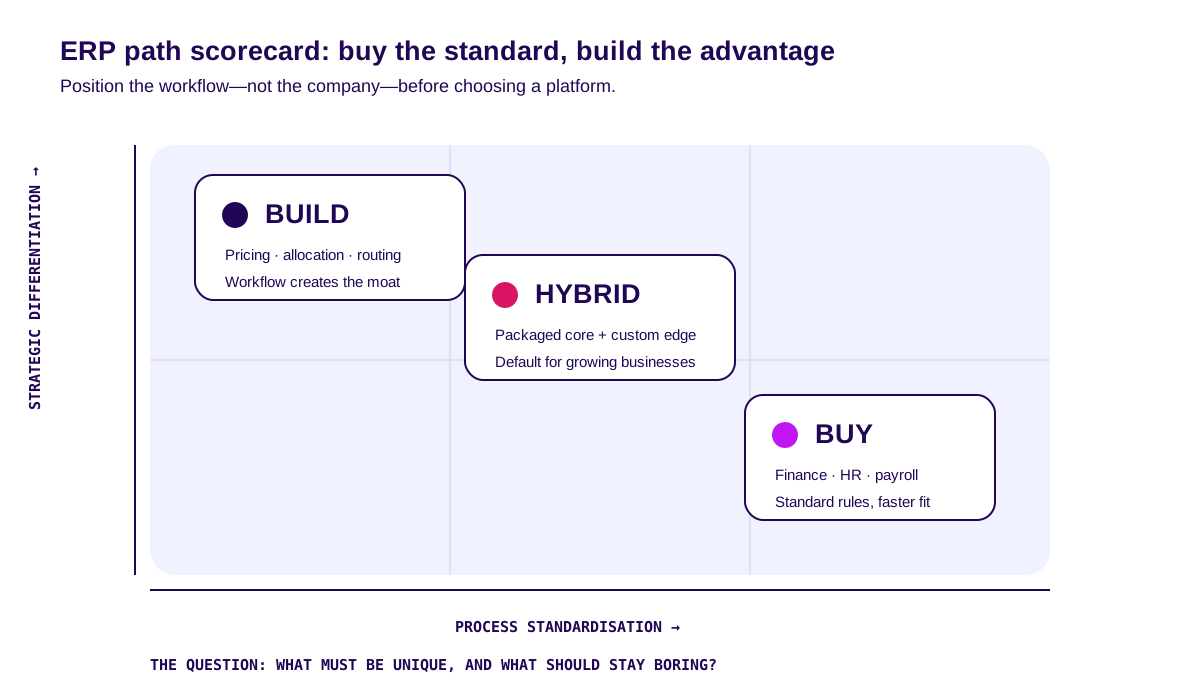
Microsoft’s cost guidance frames build versus buy similarly: buying can deploy faster with lower upfront cost, while building gives more control but demands development time and maintenance. Speed, control, and ownership move together. You cannot optimise all three for free.
Validate it in 2 weeks. Before committing an ERP budget, map one critical workflow and prototype the buy, hybrid, and build options with the people doing the work — see Blueprint & Prototype.
Which ERP Features and Modules Should You Buy?
Buy modules where the rules are mature, regulated, and broadly shared across companies. Your finance team needs accuracy and auditability, not a custom chart-of-accounts adventure.
Good packaged-core candidates include:
- Finance and accounting: general ledger, receivables, payables, closing, tax records.
- HR and payroll: employee records, leave, payroll, BPJS, and PPh 21 workflows.
- Procurement controls: suppliers, purchase requests, approvals, purchase orders.
- Basic inventory: SKUs, locations, receipts, transfers, and stock counts.
- Identity and permissions: user lifecycle, roles, authentication, segregation of duties.
Buying does not mean accepting every vendor default. You still configure roles, accounts, tax, approval thresholds, and reports. The boundary is simple: configure the standard; do not rebuild it without a measurable business reason.
When Should You Build a Custom ERP Workflow?
Build when the workflow changes how you earn, allocate scarce resources, fulfil a promise, or control material risk. If competitors can buy the same capability from the same marketplace, it is probably not your moat.
Custom can be justified for:
- Dynamic pricing or settlement logic that directly affects margin.
- Allocation and routing across locations, fleets, agents, or inventory pools.
- Multi-party approvals tied to unique risk or compliance rules.
- Operational workflows that define your service promise.
- Partner, marketplace, or field operations that packaged modules model poorly.
The test is not “our process is complicated.” Every department can produce a complicated spreadsheet if given enough Fridays. The test is whether standardising the process would remove an advantage or merely remove a habit.
How Does a Hybrid ERP System Work?
A hybrid ERP uses packaged software as the stable system of record and custom software as the differentiated operating layer. The integration spine between them owns IDs, events, APIs, retries, access control, and reconciliation.
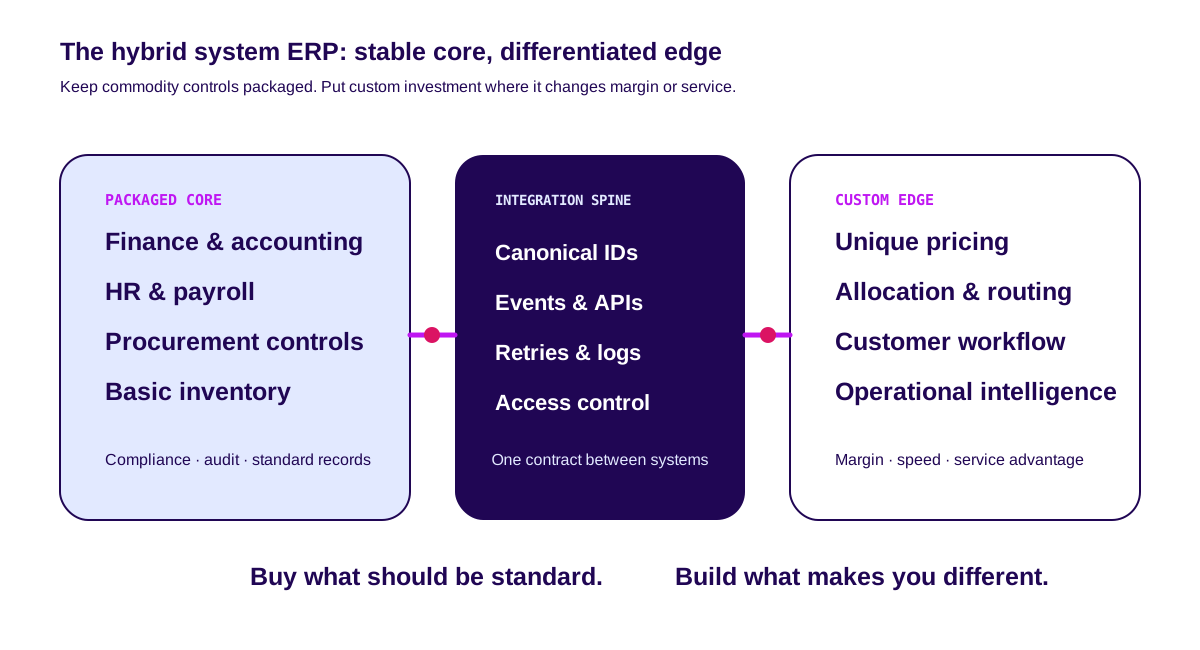
This architecture prevents two common failures. First, the custom team does not reinvent ledger, payroll, or authentication. Second, the ERP vendor does not become the only place where your unique workflow can live.
Hybrid is not automatically safer. It needs explicit contracts:
- Which system owns each record?
- Which event starts the next action?
- What happens after timeout, duplication, or reversal?
- Who can replay or correct a failed transaction?
- How can the business reconcile two systems without engineering help?
If those answers are vague, hybrid becomes integration spaghetti with better slides. Read the deeper ERP system integration guide before choosing it.
How Much Does an ERP System Cost Over Three Years?
The implementation quote is only the opening balance. Three-year ERP cost includes platform, delivery, operations, and change.
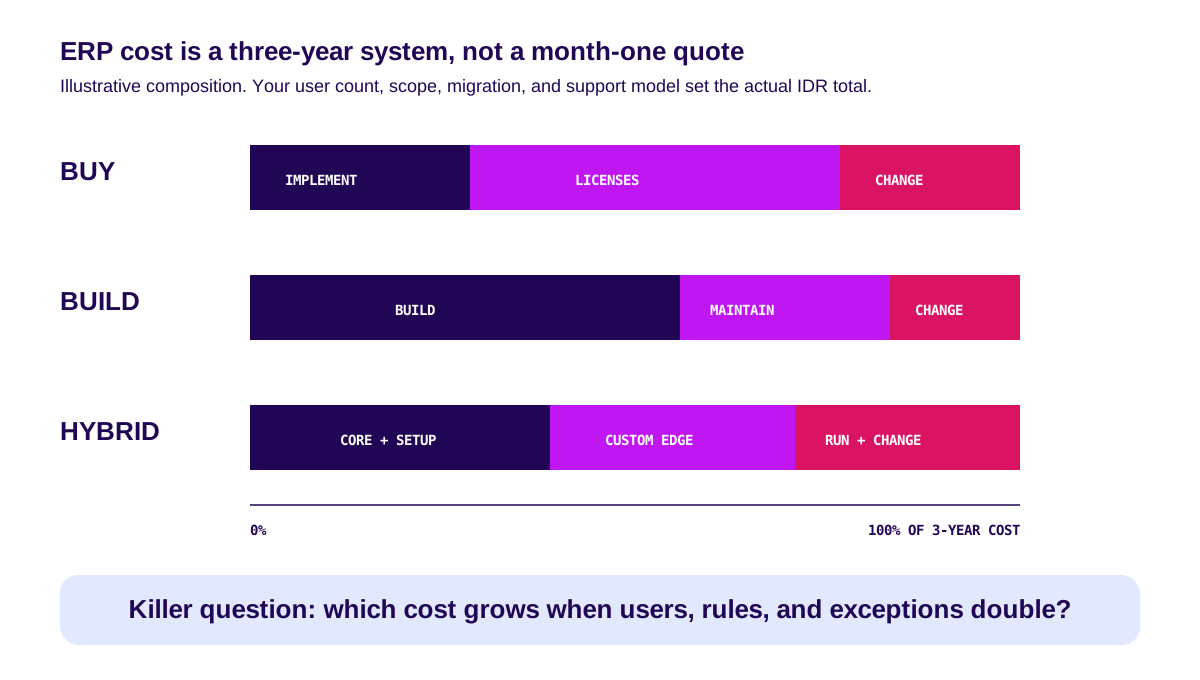
Model these buckets separately:
- Platform: subscriptions, hosting, database, monitoring, security tools.
- Delivery: process mapping, configuration or build, migration, testing, training.
- Operations: support, incidents, connector monitoring, data repair, vendor updates.
- Change: new users, entities, workflows, tax rules, reports, and integrations.
Then stress-test the model. What happens when user count doubles? When a new branch adds approval rules? When the vendor changes a connector? When the custom lead leaves?
Packaged ERP often wins month one. Custom may win when licensing or forced workarounds compound. Hybrid can cap both, but only if the custom edge stays focused. The cheapest path is the one whose growth curve matches the business—not the one with the smallest first invoice.
How Do You Choose an ERP Vendor or Development Partner?
A polished demo proves that the happy path exists. Your decision depends on exceptions, ownership, and exit.
Use this checklist:
- Demo one real workflow end to end with your sample data.
- Name the source of truth for customers, products, stock, invoices, and payments.
- Test duplicate, timeout, reversal, shortage, and manual correction scenarios.
- Price three years, including users, migration, support, connectors, and change.
- Confirm data export, attachments, history, and the contract exit path.
- Verify Indonesian tax, payroll, payment, bank, and WhatsApp integrations.
- Assign post-launch ownership for queues, mappings, incidents, and releases.
- Speak to a client with similar operational complexity.
- Agree on outcome metrics: cycle time, error rate, close time, stock accuracy, or manual hours removed.
Use the full software vendor due-diligence checklist before signing.
How Do You Implement ERP Without a Big Bang?
Roll out one value stream, not a collection of departmental screens. Order-to-cash or procure-to-pay produces evidence; five half-finished modules produce meetings.
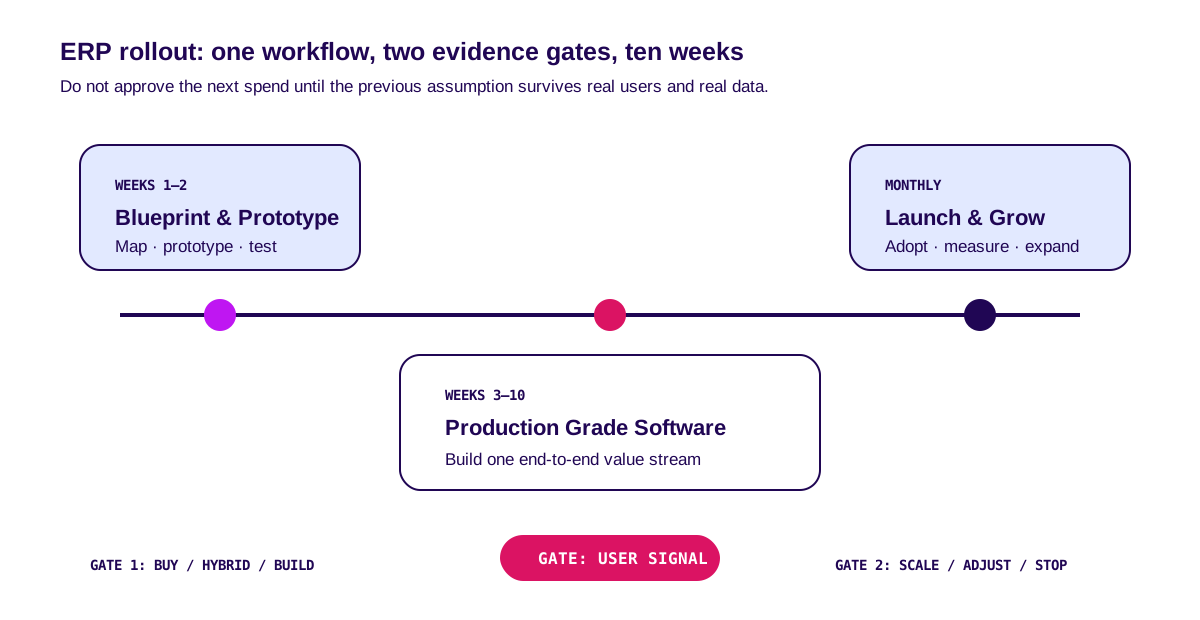
Weeks 1–2 are Blueprint & Prototype. Map the current process, define data owners and exceptions, compare buy/hybrid/build, and test a working prototype with users.
Weeks 3–10 deliver one production-grade workflow. Build the integrations, permissions, observability, recovery paths, and end-to-end flow. Run it against real data and a full business cycle.
Then Launch & Grow monthly. Measure adoption, error rate, cycle time, and manual work removed before expanding to the next module. SAP’s implementation guidance also recommends a pilot before full rollout and treats phased rollout decisions as dependent on complexity, risk tolerance, standardisation, and integration requirements.
Martin Fowler’s point on staged replacement is blunt: “The most important reason … is reduced risk.” — Original Strangler Fig Application
What I Would Recommend Before You Build or Buy ERP
Map one business event. Pick an order being paid, stock being transferred, or a purchase being approved. Trace every record, team, exception, and decision it changes.
Separate commodity from advantage. Default finance, payroll, identity, and standard procurement to buy. Demand a business case for every custom module.
Choose the smallest reversible path. A pilot with clear export and rollback beats a long contract built on demo confidence.
Fund one end-to-end result. Approve the next module only after users adopt the first and the numbers improve.
There is one next step: bring the workflow with the most reconciliation, delay, or customer impact to a Discovery Call. We will turn it into a costed buy, hybrid, or build decision before you fund the wrong system.
FAQ
What is an ERP system?
An ERP system connects core business processes through shared records and workflows. Finance, procurement, inventory, sales, HR, and operations work from consistent data instead of separate spreadsheets.
What is the best ERP system?
There is no universal best. The right system fits your process standardisation, Indonesian integrations, user count, compliance, budget, data quality, and three-year ownership model.
How much does an ERP system cost?
For early planning, growing Indonesian businesses may see IDR 150–500m+ for packaged implementation, IDR 200–800m+ for custom scope, or IDR 120–600m+ for hybrid delivery. Scope and ownership determine the final figure.
Can an ERP system be custom-built?
Yes. Custom ERP is justified when a unique workflow creates margin, service, compliance, or operational advantage. Commodity functions are usually safer to buy or integrate.
ERP system vs packaged application: which is better?
Packaged software is better for mature standard processes and faster deployment. Custom is better for differentiating workflows. Hybrid is often the practical middle path for growing companies.
Sources
- Oracle: What Is ERP?
- Microsoft Azure Well-Architected Framework: Decide Whether to Build or Buy
- SAP: ERP Transformation Rollout Strategy
Related Posts
Two weeks to a real answer
Need help putting this into practice?
Book a Blueprint session and we'll turn the ideas in this article into a tested prototype in front of real users—2 weeks, from $3,000.