Guide
Employee Attendance App: Online, GPS, and Anti-Fraud
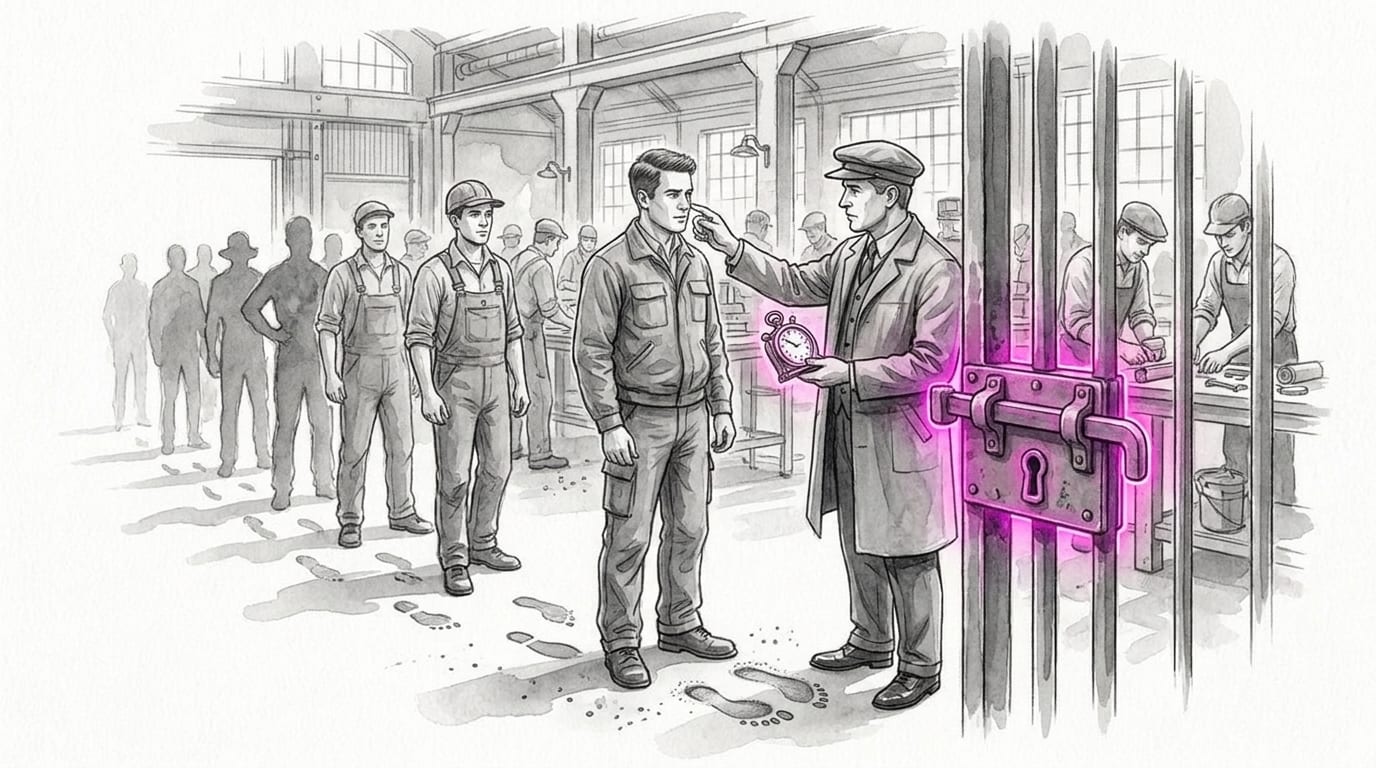
An attendance app has one job: prove that the right person was at the right place for the hours you pay. If a supervisor can clock in five friends, or a phone can “stand” at a client site from a café, the app is recording activity, not attendance.
We have spent more than 15 years delivering business systems for Indonesian companies, including field and multi-site operations. Attendance looks like the easy module. It is usually where payroll money leaks first.
This guide covers capture methods, fraud patterns, an illustrative leakage model, vendor tests, costs, and rollout. If attendance is only one part of your HR problem, start with our HRIS application guide.
TL;DR — the whole guide in five lines:
- Attendance is a fraud-control problem, not a clock. Pick methods by the tricks your staff can actually pull.
- No single method is enough. A geofence alone stops none of the six common fraud patterns; stack identity, location, and device checks.
- Measure the leak before you buy. In our illustrative 300-person model, layered controls avoid IDR 13.41 million a month.
- Face and fingerprint data is specific personal data under Indonesian law. Collect less, keep it shorter, and restrict who sees it.
- Attendance stops being enough when it must drive pay. That is the moment to move up to an HRIS.
What Is an Attendance App?
An attendance app records when, where, and who clocked in and out, then turns those records into payable hours. It replaces paper sheets and WhatsApp photos with evidence you can check.
A useful attendance app answers four questions for every working day:
- Who clocked in — the employee, or someone holding their phone?
- Where — inside the geofence, from a genuine device?
- When — against which shift, rest day, or holiday?
- What it’s worth — normal hours, approved overtime, or unpaid absence?
The last question is where attendance meets payroll.
Next: Attendance App Options: SaaS vs Hybrid vs Custom.
Attendance App Options: SaaS vs Hybrid vs Custom
Buy a SaaS attendance app unless your sites, rosters, or fraud patterns are unusual enough to cost more than a custom edge.
| Factor | SaaS attendance app | Hybrid | Custom |
|---|---|---|---|
| First-year cost (300 staff) | IDR 40–110m | IDR 120–350m | IDR 400m–1.2bn |
| Time to live | 1–2 months | 2–4 months | 4–8 months |
| Flexibility | Vendor settings | SaaS core + custom rules or app | Fully yours |
| Best for | Own sites, standard field sales | Client-site staff, complex rosters | Attendance is your product |
SaaS wins for most growing businesses; Indonesian vendors already ship GPS, selfie, and shift features. Hybrid wins when one rule does not fit, such as guards rotating across client sites. Custom wins only when attendance is what you sell.
Next: Which Attendance Capture Method Should You Use?.
Which Attendance Capture Method Should You Use?
Every capture method trades fraud resistance for friction and cost per site.
| Method | Stops | Weak against |
|---|---|---|
| Fingerprint terminal | Buddy punching | Shift swaps, sites without a device |
| Face terminal | Buddy punching, photo spoofing | Cost per entrance, lighting |
| Mobile GPS geofence | Clock-ins far from site | Mock-location apps, rooted phones |
| Selfie + liveness | Buddy punching, printed photos | Poor cameras, low light |
| QR / NFC tag at site | Remote clock-ins | Photographed static QR codes |
| Wi-Fi / beacon check | Clock-ins outside the office | Shared or spoofed networks |
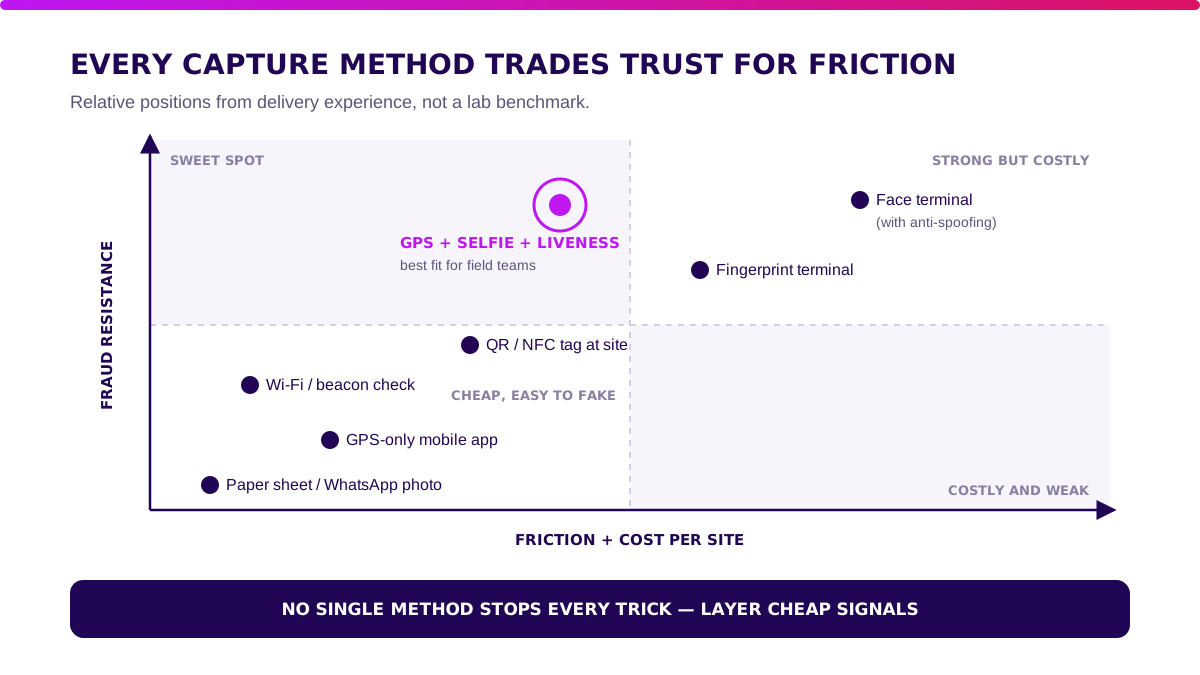
For field teams, mobile GPS plus selfie and liveness is the usual sweet spot. Add a rotating QR or NFC tag at fixed client sites.
Next: How Do People Cheat an Attendance App?.
How Do People Cheat an Attendance App?
Six fraud patterns cover most cases.
- Buddy punching. A colleague clocks in with your card, PIN, or phone.
- Fake GPS. A mock-location app puts the phone inside the geofence. Android flags mock locations, but only if the app checks.
- Rooted or emulated phones. A tampered device hides the mock location. Device integrity APIs (Play Integrity, App Attest) exist for this.
- Photo spoofing. A printed photo passes a face match without liveness detection.
- Unapproved shift swaps. The right person, on a shift nobody approved.
- Padded overtime. Staff clock out long after work, and overtime is paid from the timestamp.
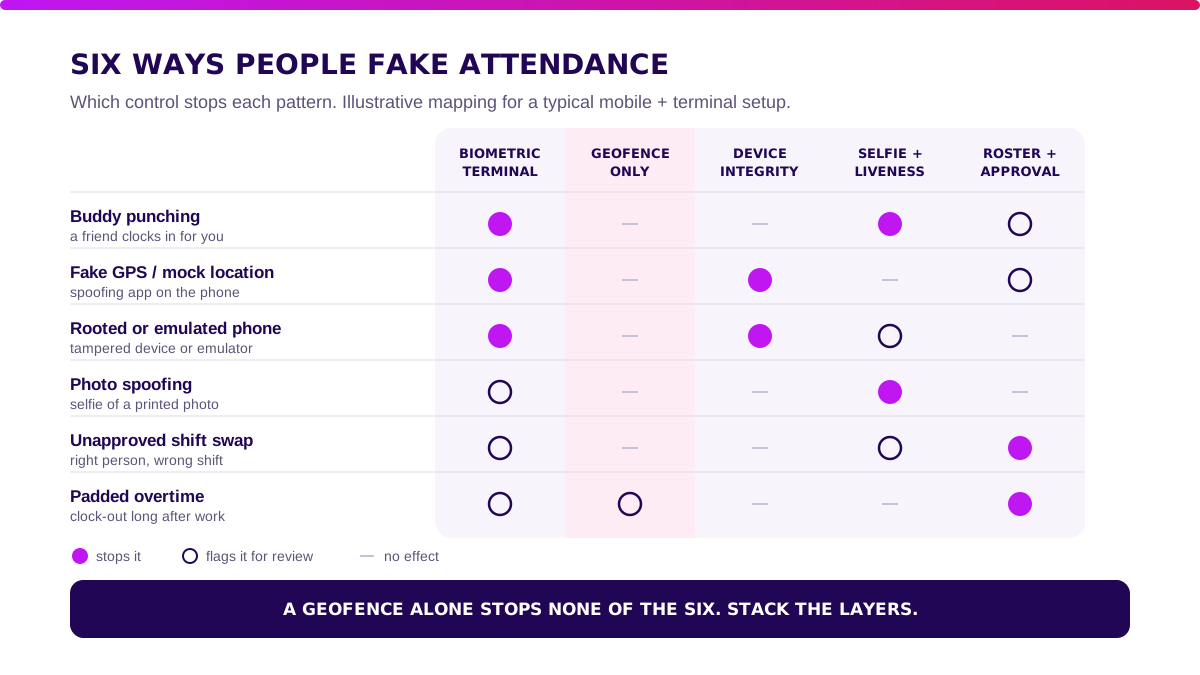
A geofence alone stops none of the six. Layers do the work: identity, device integrity, roster rules, and supervisor approval before overtime becomes pay.
Builder’s note: I test every attendance app with a mock-location app, a rooted phone, and a printed selfie before I look at its dashboard. Ten minutes of honest cheating tells me more than an hour of demo.
Next: How Much Does Attendance Fraud Cost?.
How Much Does Attendance Fraud Cost?
The business case is paid time nobody worked, plus overtime nobody approved.
This model is illustrative, not client data. Replace every input with your own month.
Imagine 300 field staff working 22 days a month, which is 6,600 attendance days:
- False time. 4% of days (264) carry a false clock-in, averaging 50 minutes of unworked paid time: 13,200 minutes, or 220 hours. With a monthly wage of IDR 5.19 million, the hourly wage is IDR 30,000 (1/173 of monthly wage, the basis in PP 35/2021). Cost: IDR 6.60 million/month.
- Padded overtime. Staff log 1,800 overtime hours (6 each). 8% (144 hours) has no verified presence. At an illustrative blended overtime rate of IDR 45,000/hour: IDR 6.48 million/month.
- Reconciliation. Two admins spend 80 hours matching sheets and chat photos, at IDR 60,000/hour: IDR 4.80 million/month.
Total: IDR 17.88 million/month.
With layered controls, false days drop to 1% (66 days, 55 hours, IDR 1.65 million), unverified overtime drops to 2% (36 hours, IDR 1.62 million), and reconciliation drops to 20 hours (IDR 1.20 million). New cost: IDR 4.47 million/month.
That avoids IDR 13.41 million/month, or about IDR 161 million/year.
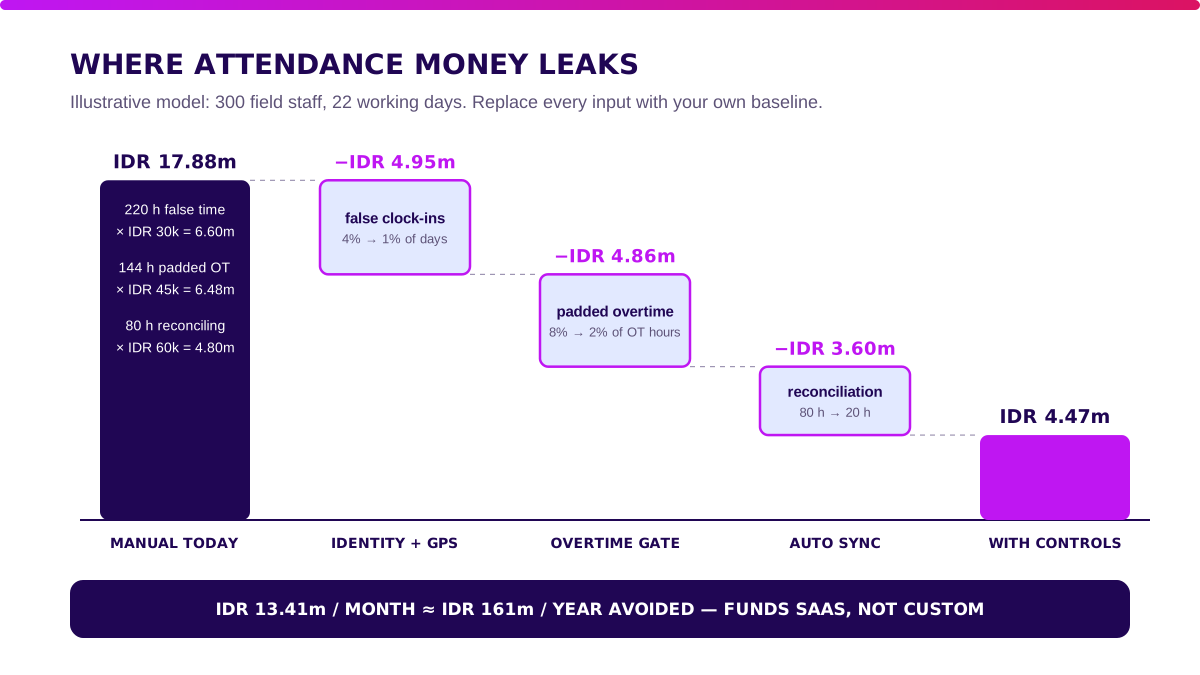
Over a third of the leak is overtime, a payroll rule, not a clock-in. That is the first hint that attendance alone will not close the loop.
Which Attendance App Features Actually Matter?
Features matter only when they make a clock-in harder to fake or easier to pay correctly. Six capabilities do most of the work.
1. Layered identity and device checks
Combine selfie liveness, mock-location detection, and device integrity. Bind each employee to one registered device.
2. Geofences per site, not per company
Draw a radius for every store, plant, and client site, with roster exceptions for staff who move between sites.
3. Shifts, rosters, and rest days
Map shifts, night shifts, rest days, and public holidays. A clock-in means nothing until the app knows its shift.
4. Offline capture that cannot rewrite time
Store clock-ins when signal drops, then sync. Record server time on sync and flag device clocks that drifted.
5. Overtime and exception approval
Pay overtime only after a supervisor approves it against a real record. Route late and out-of-fence clock-ins to the same queue.
6. Payroll sync and biometric data handling
Export approved hours by period and employee ID into payroll. For the salary maths, see our payroll software guide.
Biometric data needs its own rules. Indonesia’s Personal Data Protection Law, UU 27/2022, lists biometric data as specific personal data.
In practice we explain what is collected and why, get written consent, offer a non-biometric fallback, limit access to named roles, and delete records on a fixed schedule after an employee leaves.
When Is an Off-the-Shelf Attendance App Enough?
Stay off-the-shelf when your staff clock in at your own sites, or when a standard mobile app passes your field test. Shifts that repeat and field visits to known locations are standard settings.
Build a custom edge only when a measured rule costs more than the build: staff at many client sites with client rosters, clients who demand verified-hour reports, or fraud that standard settings miss.
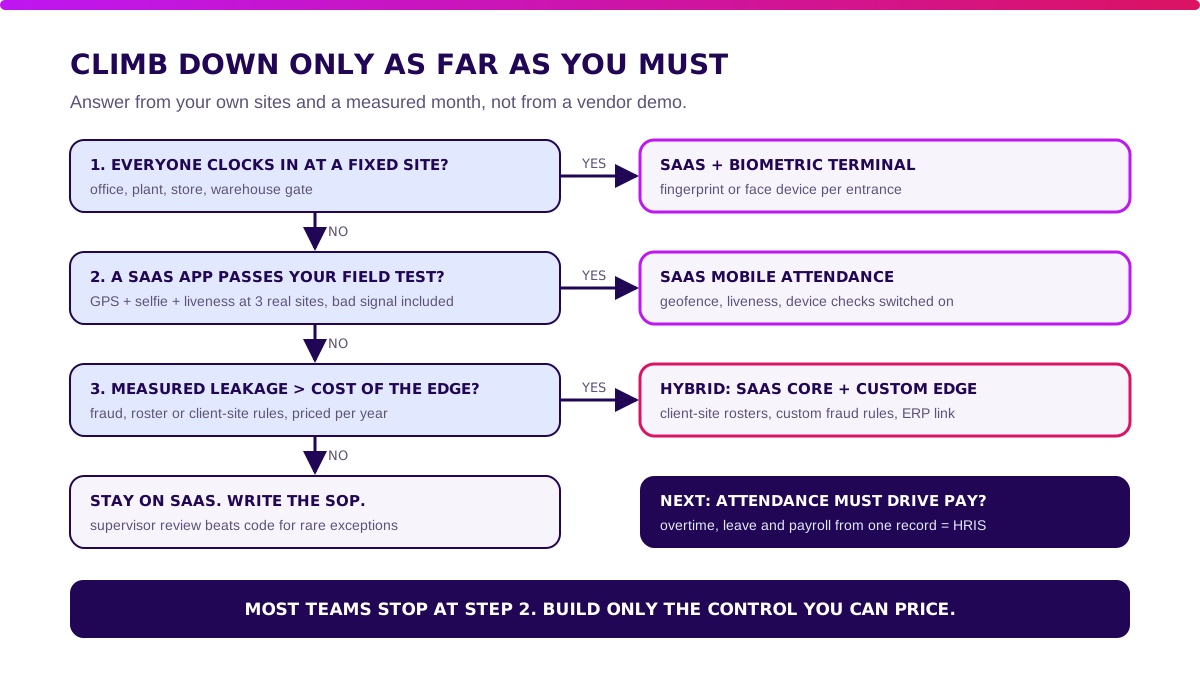
Attendance stops being enough when it must drive pay. Once overtime, leave, PPh 21, and BPJS depend on the same hours, you need one employee record behind them: an HRIS. Our HR software guide maps features by company size.
Validate it in 2 weeks. Before you commit budget to an attendance app, Blueprint & Prototype measures your leakage, prototypes the riskiest clock-in flow at a real site, and gives you real cost numbers plus a build, buy, or wait recommendation.
How to Choose an Attendance App: 10 Vendor Tests
A demo clocks in from the vendor’s office. These tests clock in from your worst site.
- Clock in with a mock-location app running, and expect a rejection or flag.
- Clock in from a rooted or emulated phone.
- Show the selfie camera a printed photo and a photo on a second screen.
- Clock in 300 metres outside a geofence, then from inside it.
- Clock in with no signal, change the phone’s clock, then sync.
- Swap a shift without approval and check what the supervisor sees.
- Clock out three hours late; the extra time must wait for approval.
- Run a night shift across midnight and a public holiday.
- Export a month of approved hours and match payroll by employee ID.
- Show who can view face data, and delete a leaver’s biometric records.
If the vendor passes, continue with software vendor due diligence for hosting, security, SLA, and exit terms.
How Much Does an Attendance App Cost in Indonesia?
First-year cost includes subscription or build, devices, setup, integration, and support. The per-user fee is one line.
These are illustrative ranges for 300 staff, not vendor quotes:
| First-year component | SaaS app | Hybrid | Custom |
|---|---|---|---|
| Subscription or build | IDR 30–70m | IDR 30–70m | IDR 300–800m |
| Devices, tags, and setup | IDR 5–20m | IDR 10–30m | IDR 20–80m |
| Custom edge and integration | IDR 0–10m | IDR 60–200m | IDR 40–200m |
| Support and contingency | IDR 5–10m | IDR 20–50m | IDR 40–120m |
| Illustrative total | IDR 40–110m | IDR 120–350m | IDR 400m–1.2bn |
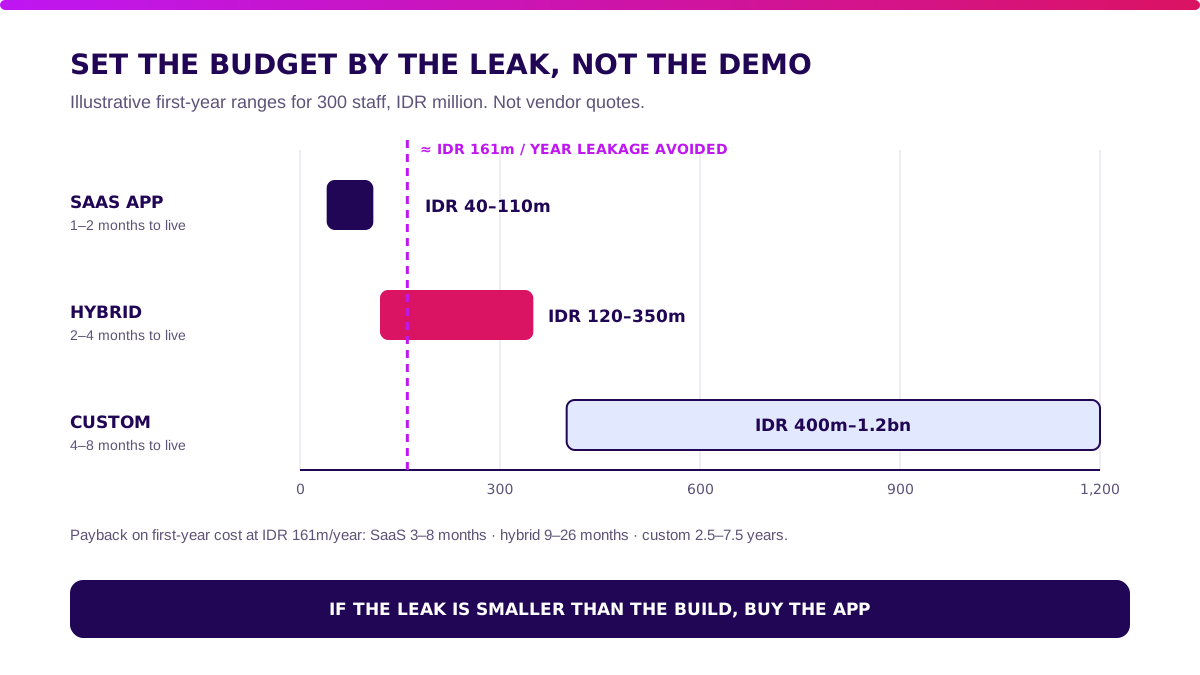
At IDR 161 million a year of avoided leakage, SaaS pays back in about 3–8 months, hybrid in 9–26 months, and custom in 2.5–7.5 years.
Next: How to Roll Out an Attendance App Without Big-Bang Failure.
How to Roll Out an Attendance App Without Big-Bang Failure
Pilot one team, run one payroll cut-off in parallel, then add sites in waves.
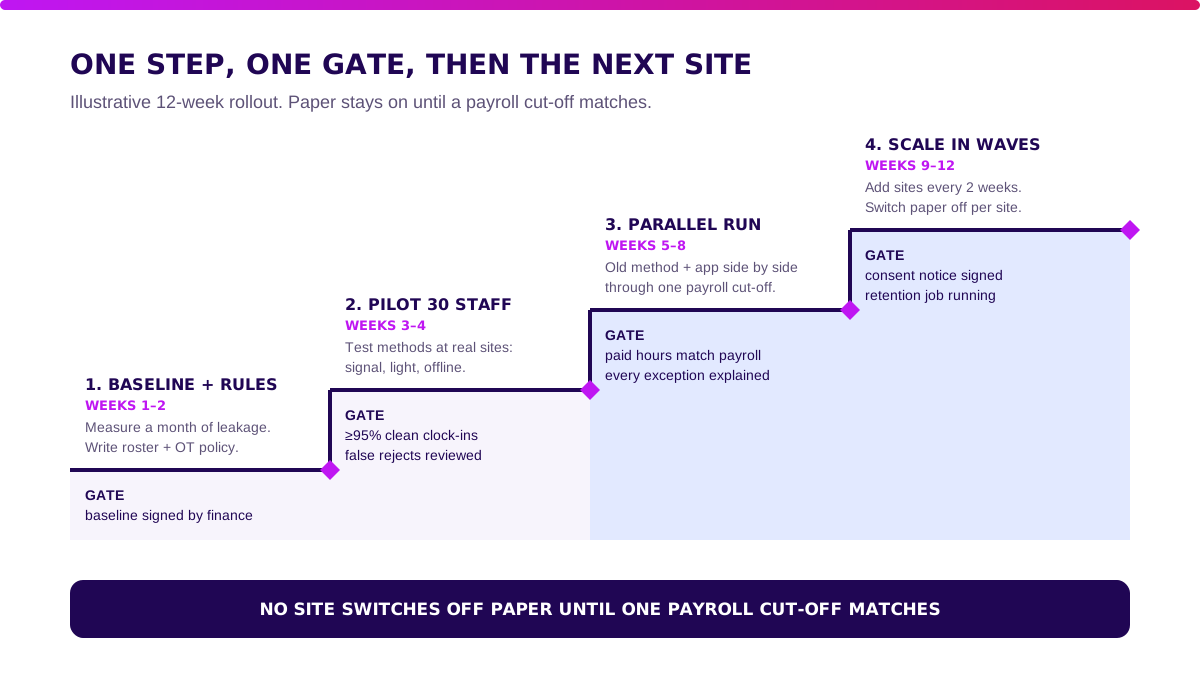
Step 1 — baseline and rules (weeks 1–2)
Measure a month of false time, overtime, and reconciliation. Write roster and overtime policy.
Gate: finance signs the baseline.
Step 2 — pilot 30 staff (weeks 3–4)
Test methods at real sites: weak signal, bad light, old phones. Gate: at least 95% clean clock-ins.
Step 3 — parallel run (weeks 5–8)
Run old and new side by side through one payroll cut-off. Gate: every exception explained.
Step 4 — scale in waves (weeks 9–12)
Add sites every two weeks and switch paper off per site. Gate: consent signed, retention running.
If you validated a custom edge, Production Grade Software turns it into secure, observable, maintainable software.
What I Would Do Before Buying an Attendance App
- Measure one month of leakage. Without a baseline, you cannot tell a good app from a nice one.
- Try to cheat it yourself. Ten minutes per vendor.
- Write roster and overtime rules first. An app cannot enforce an unwritten policy.
- Collect the least biometric data that works. Every face template is a liability.
- Plan the HRIS step now. If attendance feeds payroll within a year, pick an app that lives inside one.
Run the ten tests with two vendors at your worst site. Pick the one that catches fake clock-ins without blocking honest ones.
Next: FAQ About Attendance Apps.
FAQ About Attendance Apps
What is an attendance app?
An attendance app records who clocked in, where, and when, then turns those records into payable hours.
What is the best attendance app in Indonesia?
The one that survives your own fraud tests at your own sites: mock location, rooted phone, printed selfie, and offline clock-in.
How much does an attendance app cost?
In this article’s illustrative model for 300 staff: IDR 40–110 million for SaaS, IDR 120–350 million for hybrid, and IDR 400 million–1.2 billion for custom in the first year.
Can an attendance app be custom-built?
Yes, when attendance is part of what you sell, or client-site rules cost more than a build. Most companies should add a custom edge to a SaaS core instead.
Is a custom attendance app better than an off-the-shelf app?
Not by default. Off-the-shelf wins when standard controls pass your field test.
Custom wins only when a measured leak is larger than the cost of building it.
Related Posts
Two weeks to a real answer
Need help putting this into practice?
Book a Blueprint session and we'll turn the ideas in this article into a tested prototype in front of real users—2 weeks, from $3,000.