Guide
HRIS Application: How Growing Companies Choose the Right One
An HRIS application should turn one employee record into a correct payslip, a correct PPh 21 withholding, and a correct BPJS contribution every month. If HR, finance, and site managers still reconcile three spreadsheets before payday, the software has not done its job yet.
We have spent more than 15 years delivering business systems for Indonesian companies across retail, distribution, finance, and operations. The hard part of an HRIS is rarely the feature list. It is getting master data, attendance rules, and payroll policy to agree before the first live cut-off.
This guide covers what an HRIS is, packaged vs hybrid vs custom options, an illustrative payroll business case, six modules that matter, ten vendor tests, first-year cost ranges, and a phased rollout. If HR is one piece of a wider operations stack, read our ERP software guide first.
TL;DR — the whole guide in five lines:
- Payroll accuracy is the real test. Attendance, leave, PPh 21, and BPJS must come from one employee record.
- Most growing companies should buy a packaged HRIS and spend their effort on clean master data and clear policies.
- Build only at the edge: field attendance, site-specific rules, or ERP integration that a vendor cannot configure.
- Price the whole first year, not the subscription. Data cleanup, integration, and parallel runs cost real money.
- Run payroll in parallel twice before you switch off the old process.

What Is an HRIS Application?
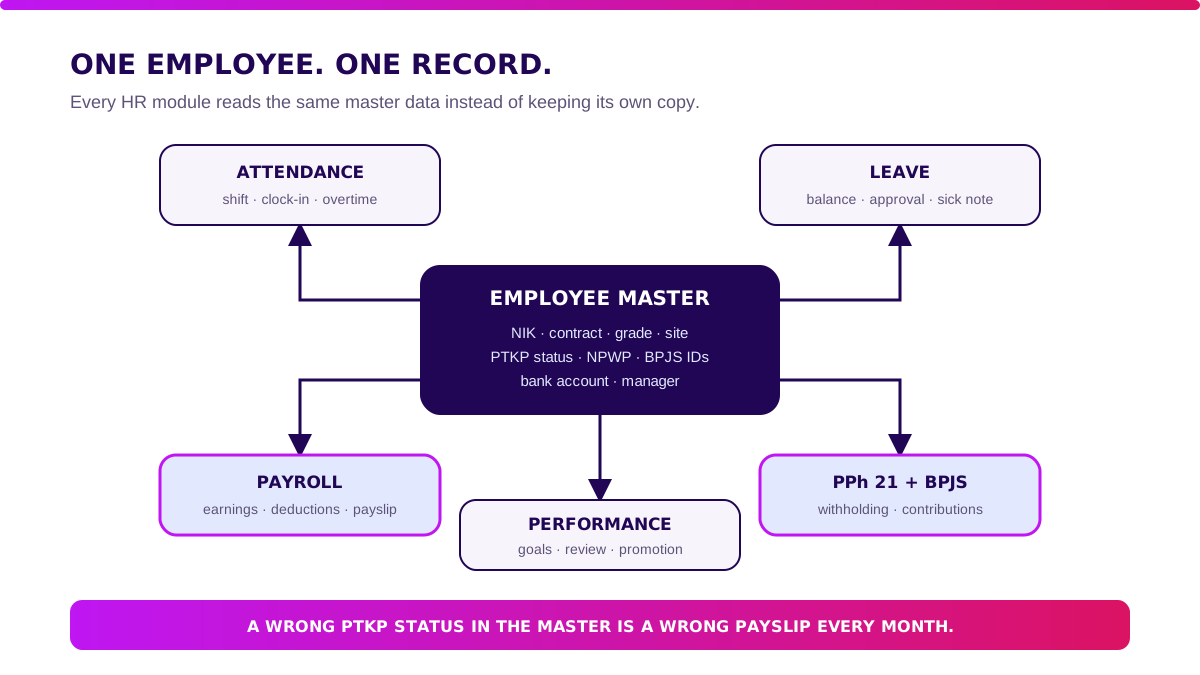
An HRIS (Human Resource Information System) application stores employee data and runs the HR processes that depend on it: attendance, leave, payroll, tax, social security, and performance. It replaces scattered spreadsheets with one system of record for every person on the payroll.
In Indonesia, a useful HRIS answers five questions without anyone opening a second file:
- Who works here, on which contract, grade, site, and manager?
- Did they work the hours they are being paid for, including approved overtime?
- What leave do they have, and who approved it?
- What is their gross pay, PPh 21 withholding, and BPJS contribution this month?
- Can we prove all of it to an auditor, a tax officer, or the employee?
The employee master is the foundation. A wrong PTKP status, a missing NPWP, or a duplicate NIK does not fail once.
It produces a wrong payslip every month until someone notices.
Next: HRIS Application: Packaged vs Hybrid vs Custom.
HRIS Application: Packaged vs Hybrid vs Custom
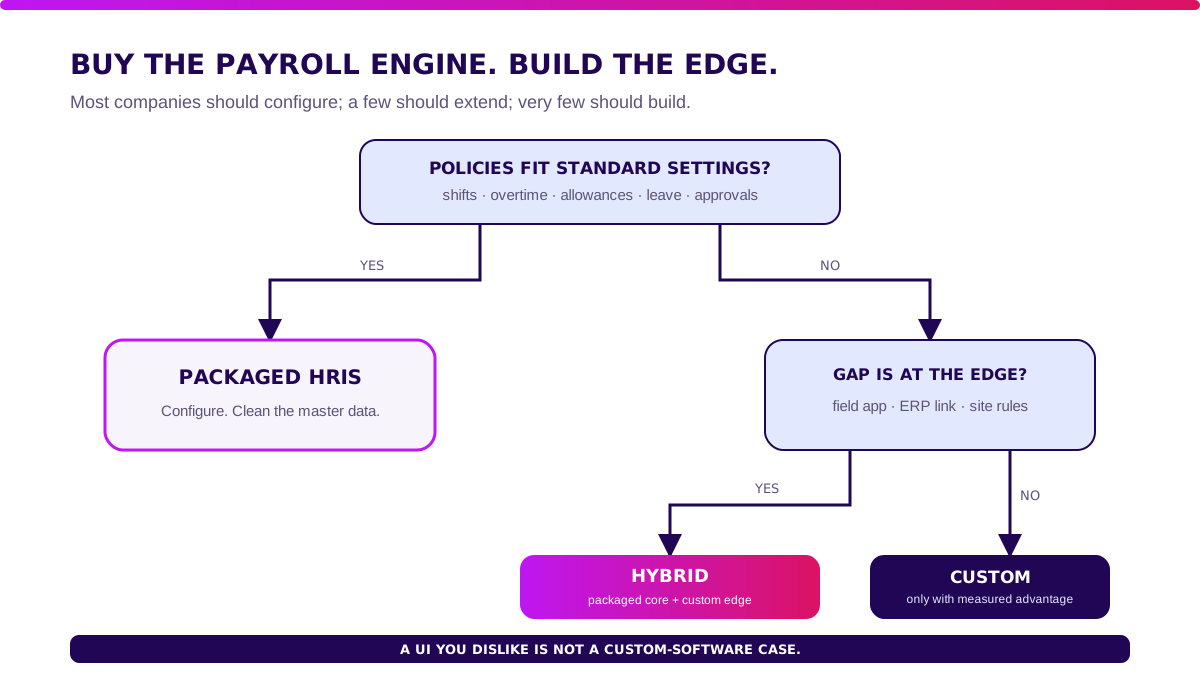
Choose the smallest option that pays people correctly and keeps compliance boring. In HR, boring is the goal.
| Factor | Packaged HRIS (SaaS) | Hybrid | Custom platform |
|---|---|---|---|
| First-year cost (250 staff) | IDR 125–300m | IDR 280–800m | IDR 1.05–3.1bn |
| Go-live | 1–3 months | 3–6 months | 6–12 months |
| Policy flexibility | Vendor settings | Packaged core + custom edge | Fully yours |
| Tax and BPJS updates | Vendor maintains | Vendor maintains core | You maintain |
| Best for | Standard office and retail policies | Field teams, multiple sites, ERP links | HR logic is part of the product |
Packaged wins for most companies up to several thousand employees. Indonesian HRIS vendors already maintain PPh 21 and BPJS logic, which is the part you least want to own.
Hybrid wins when the payroll core fits but the edge does not. Think GPS attendance for a sales force, shift rules for a factory, or posting payroll journals into your ERP by cost centre.
Custom wins only when HR logic is part of how you compete. Staffing agencies, outsourcing firms, and gig platforms that run payroll for thousands of workers across many clients are the typical case. Hating a vendor’s user interface is not.
Next: How Does an HRIS Run Payroll Every Month?.
How Does an HRIS Run Payroll Every Month?
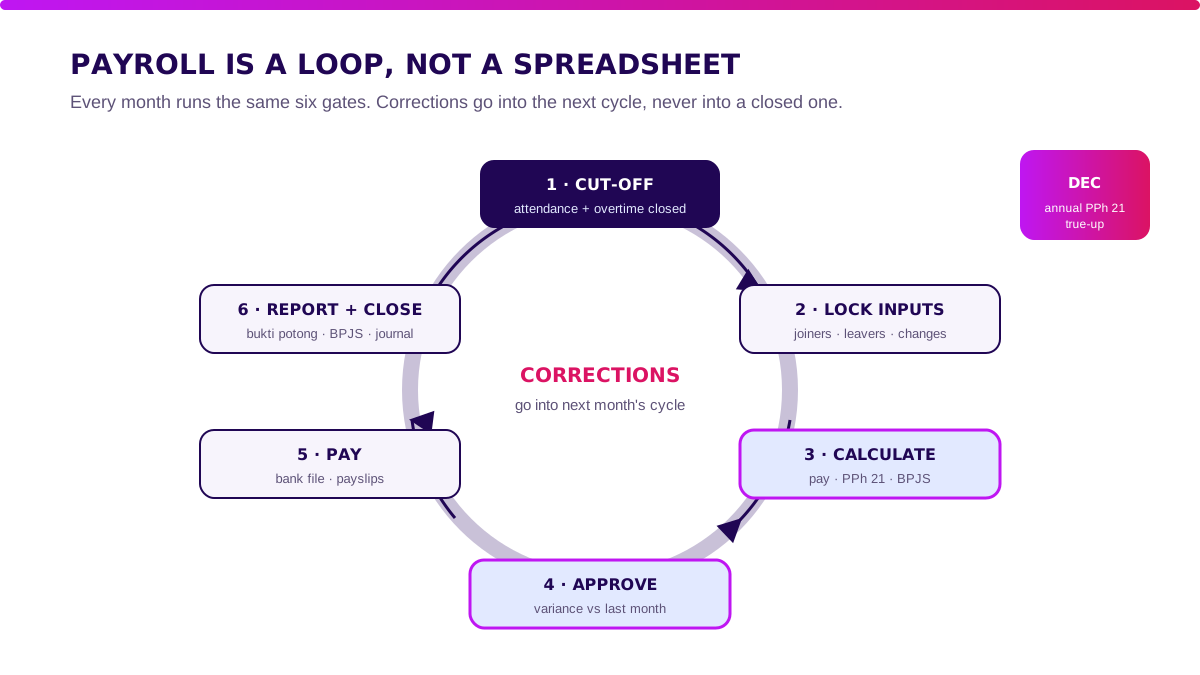
Payroll is a monthly loop with six gates. Skip a gate and the error moves to the next month, where it costs more to fix.
- Cut-off. Attendance, overtime, and leave for the period are closed.
- Lock inputs. Joiners, leavers, promotions, and bank changes are frozen for the run.
- Calculate. Gross pay, allowances, deductions, PPh 21, and BPJS are computed.
- Approve. Finance reviews the variance against last month, not every line.
- Pay. The bank file is generated and payslips are released.
- Report and close. Tax withholding slips, BPJS reports, and the payroll journal are filed. The period is locked.
Two Indonesian rules make this loop harder than it looks. Since 1 January 2024, PMK 168/2023 sets monthly PPh 21 withholding with average effective rates (TER), while the last tax period recalculates the year with the progressive rates.
BPJS contributions also have wage caps that change, so the system must apply the right ceiling for the right period.
For a line-by-line walk from gross to net pay, read our payroll software guide.
Overtime is the other trap. Under PP 35/2021, the hourly wage is 1/173 of the monthly wage, and each overtime hour is paid at a multiplier.
An HRIS that pays overtime from a spreadsheet total, not from approved attendance records, will overpay quietly.
Builder’s note: I don’t sign off an HRIS until one joiner, one leaver, and one retroactive salary change all produce the correct payslip, tax slip, and BPJS report in the same cycle.
When Does an HRIS Application Pay Back?
The business case is fewer payroll hours, fewer corrections, and less unapproved overtime. Not “digital transformation”.
The following example is illustrative, not client data. Measure your own baseline for three payroll cycles before you buy.
Imagine a company with 250 employees across two sites, running payroll in spreadsheets:
- Preparation: 3 people spend 120 hours a month collecting attendance, checking overtime, and calculating pay. At a loaded cost of IDR 90,000 per hour, that is IDR 10.8 million/month.
- Corrections: 2% of payslips (5 slips) need a fix, each taking 3 hours: IDR 1.35 million/month.
- Leakage: monthly overtime spend is IDR 150 million. 3% is paid without an approved attendance record: IDR 4.5 million/month.
Visible cost: IDR 16.65 million/month, before late-filing penalties or employee disputes.
With a packaged HRIS, preparation drops to 40 hours (IDR 3.6 million), corrections drop to one slip (IDR 0.27 million), and unapproved overtime drops to 1% (IDR 1.5 million). New cost: IDR 5.37 million/month.
That avoids IDR 11.28 million/month, or about IDR 135 million/year.
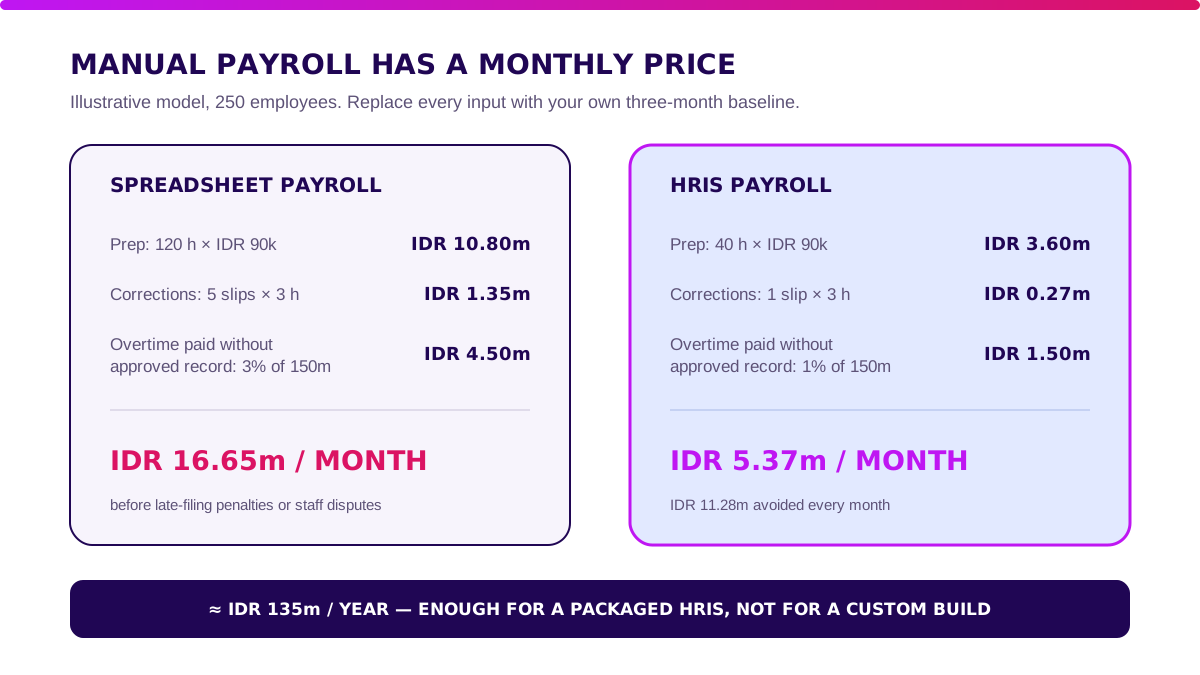
Notice what the number says. IDR 135 million a year easily funds a packaged HRIS.
It does not fund a IDR 1 billion custom build. That is exactly why the architecture decision should follow the baseline, not the other way around.
Next: Which HRIS Features and Modules Are Required?.
Which HRIS Features and Modules Are Required?
Features matter only when they close the loop from a working hour to a correct, compliant payment. Six modules do most of the work. For the full feature map by company size, see our HR software guide.
1. Employee master and organisation structure
Store NIK, contract type, grade, site, cost centre, manager, PTKP status, NPWP, BPJS numbers, and bank account. Give every field one owner.
Keep an effective-dated history, so a promotion in March does not rewrite January.
2. Attendance, shifts, and overtime
Capture clock-in from fingerprint devices, mobile GPS, or selfie check-in. Map shifts, rest days, and public holidays.
Turn overtime into pay only after a manager approves it against a real attendance record. Our attendance app guide covers GPS, selfie, and anti-fraud controls.
3. Leave and approval workflow
Track annual, sick, maternity, and special leave balances. Route approvals by manager and substitute.
Block payroll deductions for leave that was approved but not synced.
4. Payroll, PPh 21, and BPJS
Calculate earnings, allowances, deductions, THR, and bonuses. Apply TER categories monthly and the annual recalculation at year end.
Apply BPJS Kesehatan and BPJS Ketenagakerjaan rates and caps by period. Generate the bank file, payslips, and the payroll journal.
5. Employee self-service
Let employees see payslips, request leave, update their data, and download tax slips from their phone. Every request an employee can serve alone is one WhatsApp message HR does not have to answer.
6. Access control, audit trail, and data protection
Salary, health, and family data are sensitive. Indonesia’s Personal Data Protection Law, UU 27/2022, treats health data as specific personal data.
Restrict access by role, log every view and change of salary data, and define how long you keep records after an employee leaves.
When Is an Off-the-Shelf HRIS Enough?
Stay off-the-shelf when your policies fit the vendor’s settings and your payroll runs from one legal entity or a few. Configuration is cheaper than owning tax logic.
Packaged is usually enough when:
- shifts, overtime, and allowances follow a handful of standard patterns;
- attendance comes from office devices or a standard mobile app;
- leave policy matches the Manpower Law with a few company additions;
- payroll journals can be exported to accounting as a file;
- the vendor updates PPh 21 and BPJS rules without a change request;
- you can export every employee, payslip, and tax record with stable IDs.
Before you customise anything, clean the employee master and run one full payroll cycle in the vendor’s sandbox. Dirty data makes every HRIS look broken.
Next: When Do You Need a Hybrid or Custom HRIS?.
When Do You Need a Hybrid or Custom HRIS?
Build when a repeated HR rule changes cost, compliance risk, or workforce productivity at meaningful volume.
Strong signals include:
- field staff clock in at customer sites, and attendance fraud is a measured cost;
- plants, stores, or projects each run different shift and allowance rules;
- payroll must post to the ERP by cost centre, project, or client;
- you run payroll for workers placed at many client companies;
- incentives depend on sales, production, or delivery data from other systems;
- HR rebuilds the same report outside the system every month.
Count it before you build it. If a rule touches 2,000 workers every month and removes two hours of manual work per site, calculate the value.
If it happens twice a year, write a procedure.
Validate it in 2 weeks. Before you commit budget to an HRIS application, Blueprint & Prototype maps your payroll policies, prototypes the riskiest workflow, and gives you real cost numbers plus a build, buy, or wait recommendation.
How to Choose an HRIS Application: 10 Vendor Tests
A demo shows the happy path. These tests show whether payday survives your real policies.
Use your own employees, sites, and last month’s payroll data:
- Import 50 real employee records and reject a duplicate NIK and an invalid PTKP status.
- Run last month’s payroll and match every net pay to the rupiah.
- Calculate PPh 21 for a mid-year joiner and show the year-end recalculation.
- Apply a BPJS wage cap to a high earner and show the employer and employee split.
- Approve overtime for one shift worker and prove unapproved hours are not paid.
- Process a retroactive salary increase across two closed months.
- Process a resignation with final pay, leave encashment, and tax.
- Clock in from a phone at a customer site and flag an attendance outside the geofence.
- Show who viewed or changed one employee’s salary in the last 90 days.
- Export employees, payslips, tax slips, and BPJS reports with stable IDs and full history.
If the vendor passes the workflow tests, continue with software vendor due diligence for security, data hosting, SLA, pricing, and exit terms.
How Much Does an HRIS Application Cost in Indonesia?
First-year cost includes subscription or build, data cleanup, policy setup, integration, parallel runs, training, and support. The subscription is only one line.
These are illustrative ranges for a 250-employee company, not vendor quotes:
| First-year component | Packaged HRIS | Hybrid | Custom platform |
|---|---|---|---|
| Subscription or build | IDR 90–180m | IDR 90–180m | IDR 700m–2bn |
| Data and policy setup | IDR 15–50m | IDR 40–120m | IDR 100–300m |
| Custom edge and integration | IDR 10–40m | IDR 120–400m | IDR 150–500m |
| Support and contingency | IDR 10–30m | IDR 30–100m | IDR 100–300m |
| Illustrative total | IDR 125–300m | IDR 280–800m | IDR 1.05–3.1bn |
Packaged subscriptions in Indonesia are usually priced per employee per month, so the first line scales with headcount. Custom builds scale with rules, not people.
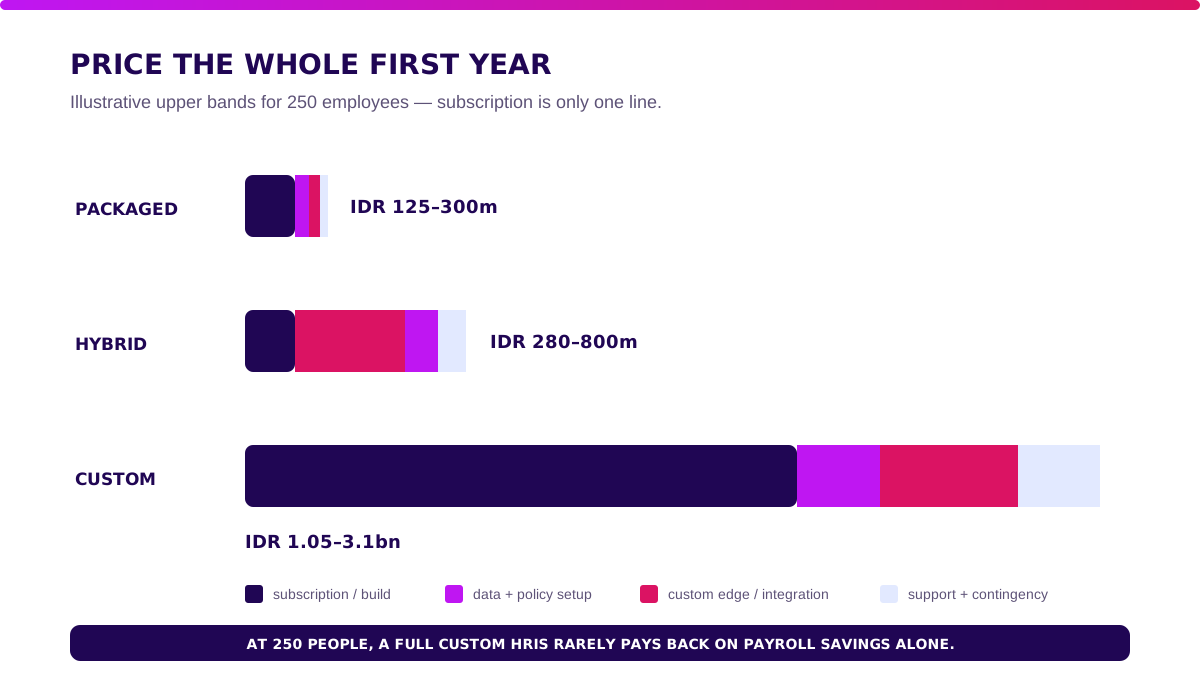
Replace these bands with your headcount, sites, legal entities, attendance methods, integrations, and data quality. Then compare the total with your measured payroll baseline.
Next: How to Implement an HRIS Without a Big-Bang Failure.
How to Implement an HRIS Without a Big-Bang Failure
Roll out one legal entity and one site first. Run payroll twice in parallel before you trust it.
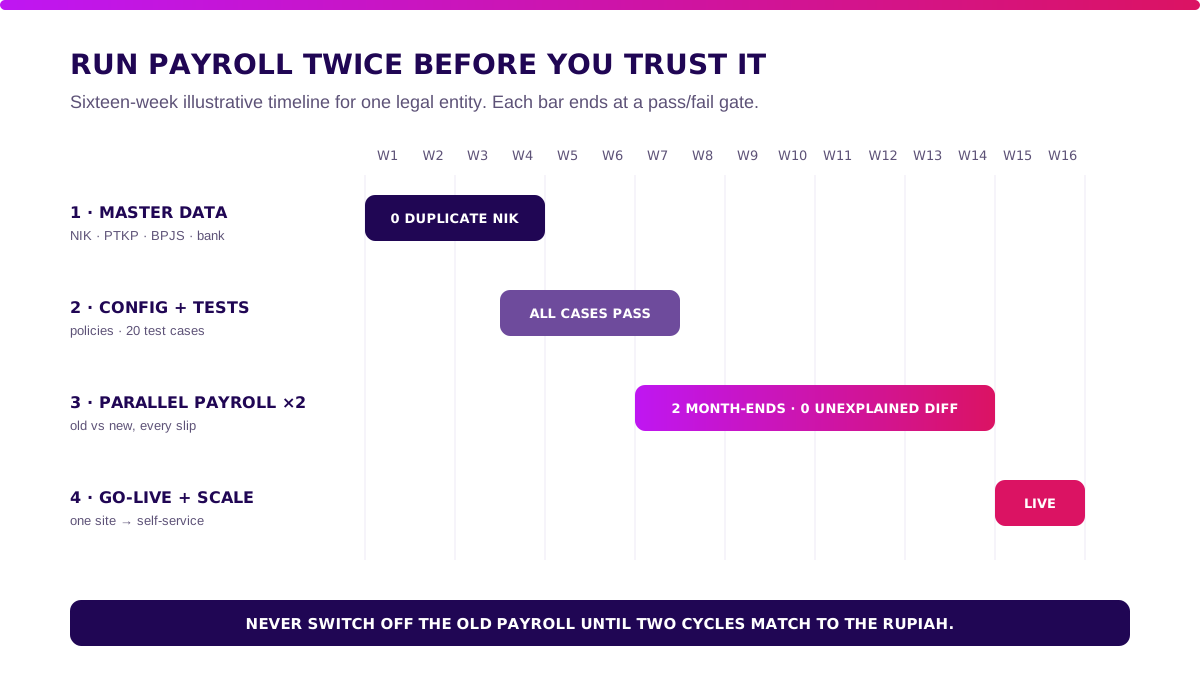
Phase 1 — master data cleanup (weeks 1–4)
Collect NIK, PTKP, NPWP, BPJS numbers, bank accounts, contracts, and leave balances. Remove duplicates.
Gate: zero duplicate or missing mandatory fields.
Phase 2 — configuration and test cases (weeks 4–7)
Configure shifts, overtime, allowances, leave, and approval chains. Write 20 test cases from your hardest real employees.
Gate: every case passes.
Phase 3 — two parallel payroll runs (weeks 7–14)
Run the old process and the HRIS side by side for two month-ends. Explain every difference.
Gate: zero unexplained differences, to the rupiah.
Phase 4 — go-live and scale (weeks 15–16 onward)
Switch the first site. Then open employee self-service and add sites in waves.
If you validated a custom edge, Production Grade Software turns it into secure, observable, maintainable software.
What I Would Do Before Buying an HRIS
- Clean the employee master first. No HRIS can fix a wrong PTKP status it was given.
- Write your payroll policy down. If two HR staff calculate overtime differently, the vendor cannot configure either.
- Test with your hardest employees. Mid-year joiners, shift workers, and high earners break demos.
- Keep the old payroll running. Two matching cycles are your only real acceptance test.
- Buy the core, build only the edge. Let the vendor own tax updates. Own only what makes you different.
Take last month’s payroll and run the ten tests with two vendors. Choose the one that matches every payslip, not the one with the nicest dashboard.
Next: FAQ About HRIS Applications.
FAQ About HRIS Applications
What is an HRIS application?
An HRIS application is software that stores employee data and runs HR processes such as attendance, leave, payroll, PPh 21, BPJS, and performance from one system of record.
What is the best HRIS application in Indonesia?
The best one is the HRIS that passes your own payroll data. Run last month’s payroll, a mid-year joiner, a BPJS cap, and a retroactive raise in each vendor’s sandbox, then compare results to the rupiah.
How much does an HRIS application cost?
In this article’s illustrative model for 250 employees, first-year cost is IDR 125–300 million for packaged, IDR 280–800 million for hybrid, and IDR 1.05–3.1 billion for custom. Headcount, sites, integrations, and data quality drive the real number.
Can an HRIS application be custom-built?
Yes. Custom makes sense when HR logic is part of the business, such as staffing agencies or companies with complex field attendance and incentive rules.
For most companies, a packaged core with a custom edge is cheaper and safer.
Is a custom HRIS better than an off-the-shelf HRIS?
Not by default. Off-the-shelf is better when policies are standard, because the vendor maintains tax and BPJS rules.
Custom is better only when a measured rule creates value that configuration cannot deliver.
Related Posts
Two weeks to a real answer
Need help putting this into practice?
Book a Blueprint session and we'll turn the ideas in this article into a tested prototype in front of real users—2 weeks, from $3,000.