Guide
Supply Chain Management: How to Digitise the Chain End to End
Supply chain management is the work of making demand, supply, inventory, production, delivery, and returns move as one system. Digitising it does not mean buying a larger dashboard. It means replacing slow hand-offs with shared decisions.
We have spent more than 15 years delivering business systems across distribution, logistics, retail, and operations. The same failure repeats: every department can show a green dashboard while the customer still waits. Purchasing optimises price. Warehousing optimises space. Sales promises a date. Nobody owns the gap between them.
This guide explains the end-to-end model, where money leaks, which modules matter, packaged vs hybrid vs custom choices, ten vendor tests, illustrative first-year costs, and a phased rollout. For warehouse-floor execution, read our warehouse management system guide. This article works one level above the building.
TL;DR — the whole guide in five lines:
- Supply chain management synchronises decisions, not just shipments.
- Measure perfect orders and inventory days together. Service without cash discipline is expensive; lean inventory without service is empty shelves.
- Buy standard planning, procurement, transport, and collaboration capabilities.
- Build only the allocation, promise, or network rule that creates measurable advantage.
- Pilot one product family and one route first. A network-wide rollout only multiplies unclear rules.

What Is Supply Chain Management?
Supply chain management is the coordinated planning and execution of sourcing, production, inventory, logistics, fulfilment, and returns across the organisations that serve customer demand.
The Council of Supply Chain Management Professionals includes sourcing, procurement, conversion, logistics, and coordination with suppliers, intermediaries, service providers, and customers in its official definition. Read the CSCMP definition.
The ASCM SCOR Digital Standard gives the work seven connected processes: Orchestrate, Plan, Order, Source, Transform, Fulfill, and Return. It is useful because it stops the supply chain from being reduced to “trucks and warehouses.” Explore the SCOR Digital Standard.
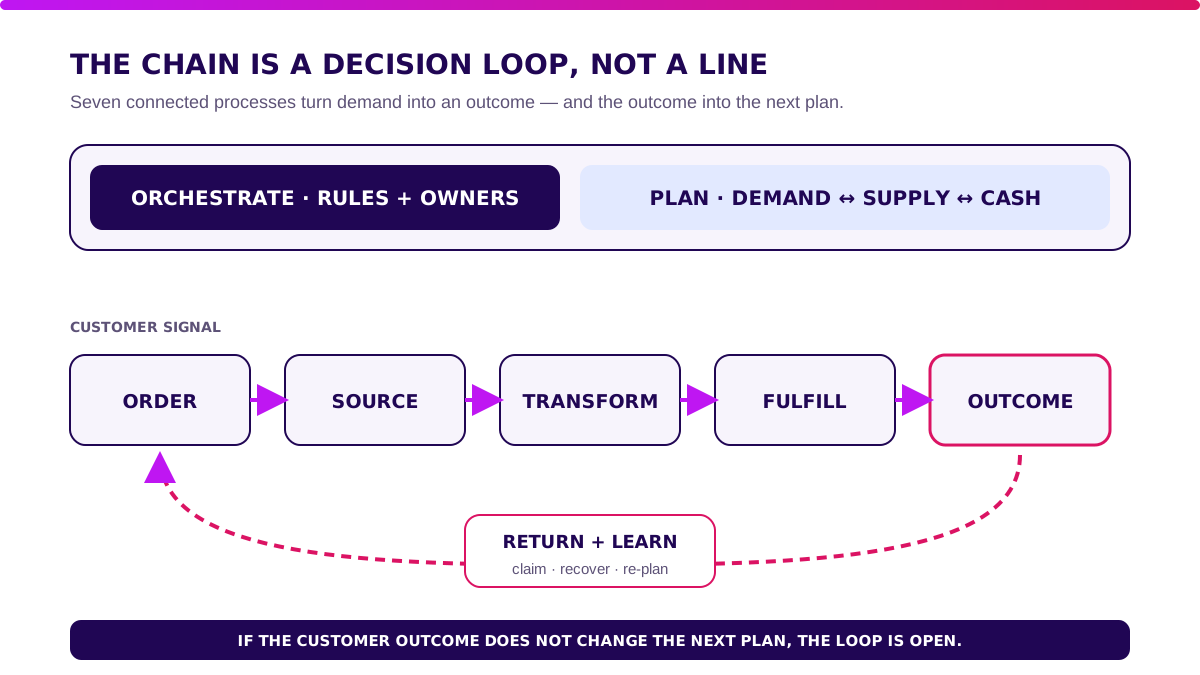
In practice, SCM helps you:
- Translate demand signals into a supply and capacity plan.
- Commit realistic dates based on inventory, production, and transport constraints.
- Source materials and services against cost, lead time, quality, and risk.
- Position inventory where it can serve demand without trapping excess cash.
- Execute production, warehouse, and transport work against one priority set.
- Recover returns, shortages, delays, and disruptions with defined ownership.
- Measure service, cost, cash, and resilience as one scorecard.
ERP records transactions. A stock app controls quantities. A WMS directs warehouse work. A transport management system plans freight. SCM connects their decisions. The distinction matters: another system of record will not fix a decision that arrives three days late.
Supply Chain Management Software: Packaged vs Hybrid vs Custom
Buy the common network capabilities. Build only the decision rule that customers or margin can feel.
| Factor | Point tools + spreadsheets | Packaged SCM suite | Hybrid | Custom platform |
|---|---|---|---|---|
| First-year cost | Lowest, until manual work scales | Medium | Medium to high | Highest |
| Go-live | Fast per team | 3–9 months | 4–12 months | 9–18 months |
| End-to-end visibility | Fragmented | Strong when modules share data | Strong across selected flows | Designed for your network |
| Process fit | Flexible but person-dependent | Vendor configuration | Standard core + custom edge | Validated operating model |
| Ownership | Hidden in people and files | Vendor owns roadmap | Shared | You own lifecycle |
| Best for | Small, stable network | Standard planning and execution | Unique allocation or partner rules | Supply-chain logic is the advantage |
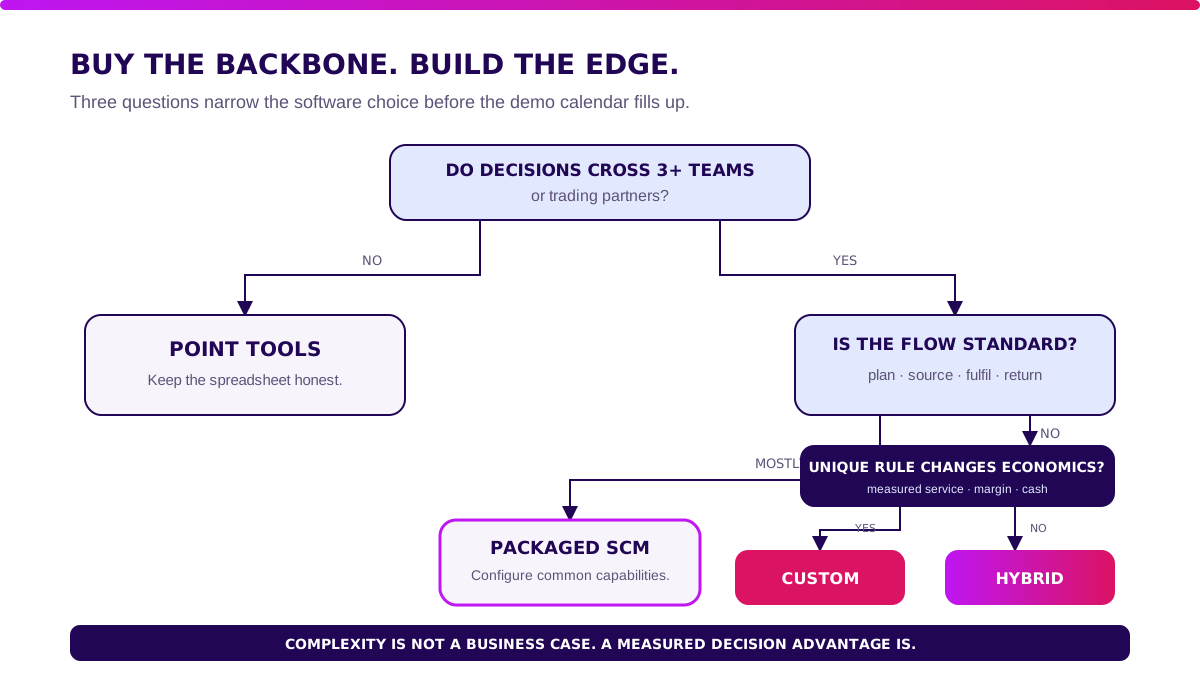
Point tools still work when the network is small and exceptions are visible. A weekly planning file can be honest technology. The problem starts when the workbook needs private macros, three people to reconcile it, and a nightly prayer.
A packaged suite wins when your flow is recognisable. Demand planning, purchase collaboration, order management, transport tendering, shipment tracking, and supplier performance are established problems. Configuration is usually a better buy than fresh code.
Hybrid wins when the backbone is standard but one decision is not. Keep the ERP, WMS, TMS, or planning engine. Build an orchestration layer for marketplace allocation, made-to-order promise dates, multi-principal distribution, cold-chain exceptions, or another rule that the core cannot express.
Custom earns its place when the network logic is the product. Think dynamic fulfilment routing, proprietary replenishment, constrained production promises, or a partner ecosystem that competitors cannot reproduce. Custom is not a reward for being complicated. It needs a measured business case.
When Does Digital Supply Chain Management Pay Back?
Digitisation pays back when it removes a measurable service leak, releases working capital, or both.
Use a worked model before watching a vendor demo. The inputs below are illustrative, not a client result.
Imagine a distributor processing 2,000 orders per month at an average order value of IDR 2.5 million. Its perfect-order rate is 92%, meaning 160 orders arrive late, incomplete, damaged, or with incorrect documents.
- 160 imperfect orders × IDR 350,000 in expediting, claims, redelivery, credits, and admin = IDR 56 million per month.
- Improving perfect orders from 92% to 97% leaves 60 imperfect orders.
- 100 avoided failures × IDR 350,000 = IDR 35 million monthly operating savings, or IDR 420 million per year.
Now look at cash. Annual cost of goods sold is IDR 90 billion, or about IDR 247 million per day. Better planning and supplier visibility reduce inventory cover by eight days without lowering service.
- IDR 90 billion ÷ 365 × 8 days = about IDR 1.97 billion in working capital released.
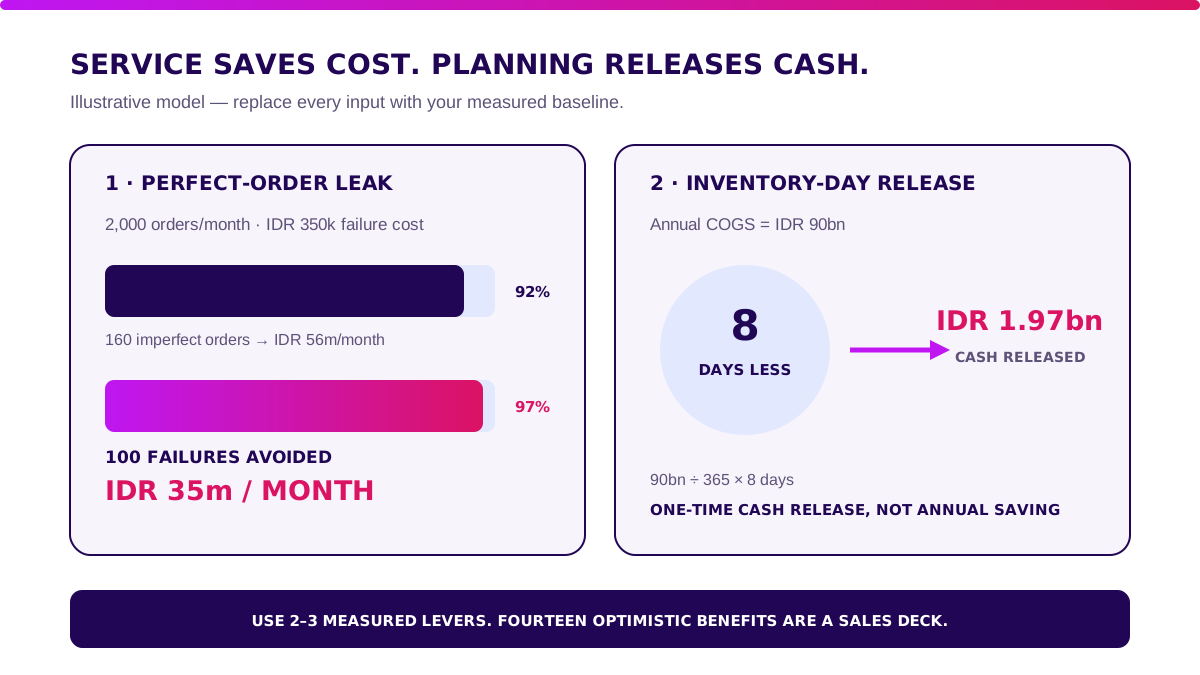
Do not add every theoretical benefit into one heroic ROI slide. Validate the baseline first: perfect-order rate, forecast error, supplier on-time-in-full, inventory days, expedite spend, and order cycle time. A believable case uses two or three measured levers, not fourteen optimistic ones.
Which Supply Chain Management Modules Matter?
The essential modules are the ones that close a decision loop from signal to action.
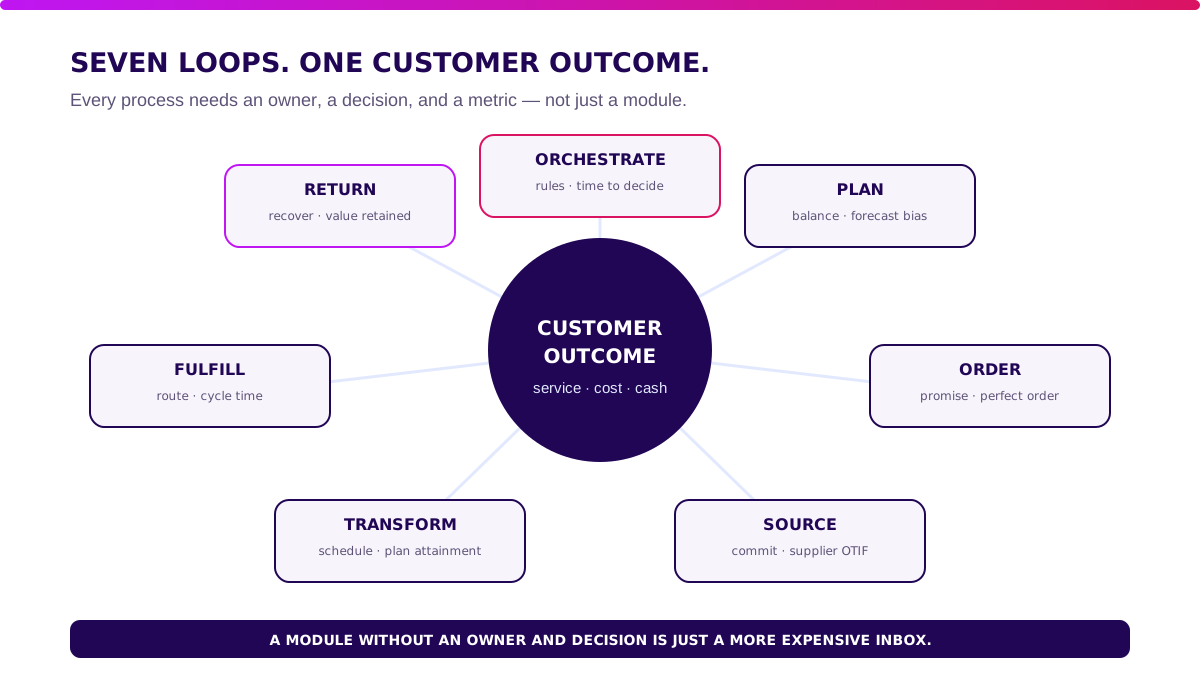
1. Orchestration and network rules
Define service tiers, allocation priority, inventory policy, escalation paths, partner responsibilities, and scenario assumptions. A control tower without agreed rules is a television tuned to the problem.
2. Demand, supply, and inventory planning
- Forecast by product, location, channel, and useful time bucket.
- Separate baseline demand from promotions and one-off events.
- Balance demand against capacity, supplier constraints, inventory, and cash.
- Publish one approved plan with versions and decision history.
3. Order promising and allocation
Calculate available-to-promise or capable-to-promise dates. Reserve scarce stock by explicit customer, channel, margin, or SLA rules. Record why a promise changed and who approved the exception.
4. Sourcing and supplier collaboration
Share forecasts and purchase commitments. Track acknowledgement, promised date, shipment, receipt, quality, lead-time variability, and corrective action. A supplier portal is useful only if the buyer stops re-keying its data into email.
5. Transform, fulfil, and logistics
Connect production priorities to material availability. Feed warehouse waves from the same order priorities. Plan transport by cut-off, capacity, route, service, and cost. Exceptions should update the customer promise, not end in a private chat.
6. Returns and traceability
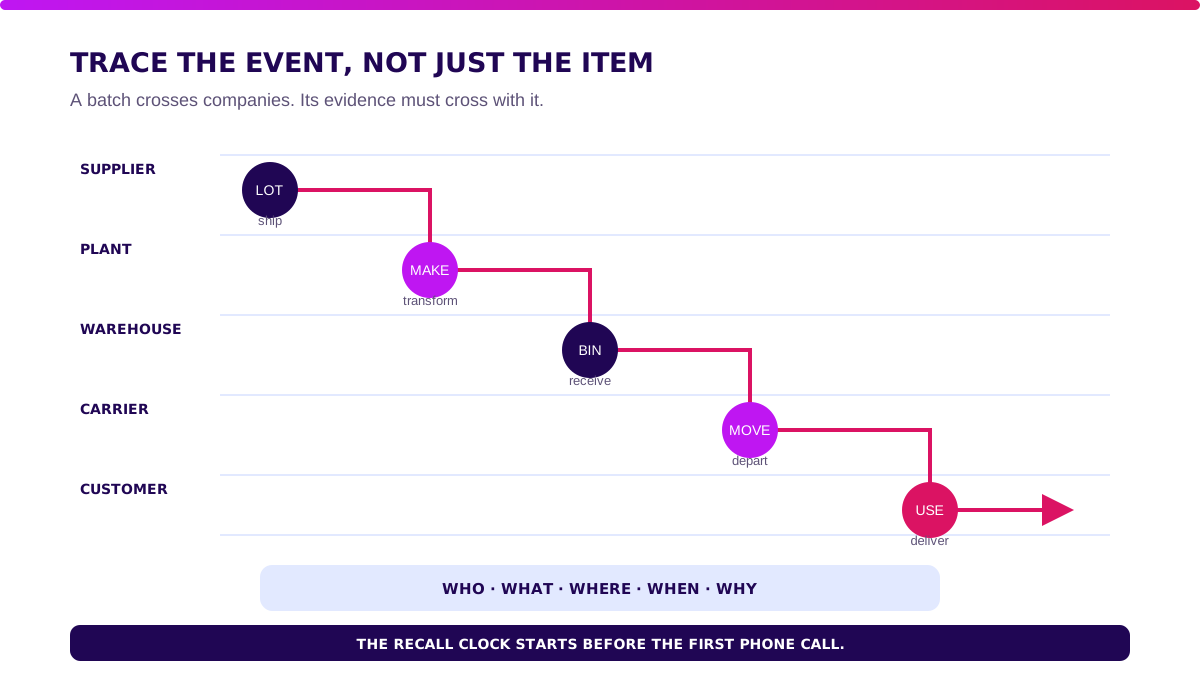
Capture reason, condition, custody, disposition, credit, and recovery value. For traceability across companies, GS1 structures the work around identifying, capturing, and sharing standardised data about objects and events. Read the GS1 Global Traceability Standard.
7. Performance and exception management
Use one metric tree across service, cost, cash, and resilience. Typical measures include perfect-order rate, forecast bias, supplier OTIF, inventory days, fulfilment cost per order, order cycle time, and time to recover. Give each exception an owner, due time, decision, and outcome.
Field rule: If every team is green but the customer is late, your metrics are not connected.
When Is Off-the-Shelf SCM Software Enough?
Stay with packaged software while the network fits standard objects, milestones, and planning rules without shadow decisions.
Packaged software is usually enough when:
- product, location, supplier, order, shipment, and inventory masters are conventional;
- planning uses common forecasting, safety-stock, and replenishment methods;
- suppliers can exchange portals, EDI, APIs, or consistent files;
- order priorities and allocation rules can be configured;
- WMS, TMS, ERP, and marketplaces expose supported integration points;
- exceptions can be managed in the system without a parallel spreadsheet;
- standard reports answer the weekly decisions leaders actually make.
Start with process discipline before custom code. If supplier lead times, item units, location IDs, and order statuses mean different things in every team, integration will only move bad data faster.
When Do You Need Hybrid or Custom Supply Chain Software?
Build when a repeated decision gap changes service, margin, working capital, or risk at meaningful scale.
Signals worth measuring include:
- allocation must balance channel commitments, customer tiers, expiry, and margin;
- promise dates depend on constrained production, supplier capacity, or substitute material;
- a distributor manages different commercial rules for multiple principals;
- cold-chain, regulated, or serialised flows need cross-partner evidence;
- network-wide exceptions require data from systems the packaged suite cannot combine;
- planners spend hours rebuilding the same scenario each week;
- transaction, partner, or user fees rise faster than the value delivered;
- supply-chain decision logic is part of what customers buy from you.
Measure exception volume, decision time, expedite cost, lost margin, inventory exposure, and service failure for four weeks. If a rule affects 8,000 orders a month and saves IDR 12,000 each, it is worth testing. If it affects six orders a quarter, keep the checklist.
Validate it in 2 weeks. Before committing serious budget to supply chain management software, Blueprint & Prototype maps the decision flow, prototypes the riskiest rule, and produces a build, adjust, wait, or stop recommendation.
How to Choose Supply Chain Management Software: 10 Vendor Tests
A presentation shows features. A test shows whether four companies can make one decision from the same event.
Run these with your products, partners, routes, and constraints:
- Import demand history with a promotion spike and show forecast baseline, override, owner, and version.
- Reduce one supplier’s capacity by 30% and recalculate supply, inventory, and customer promises.
- Allocate one scarce SKU across marketplace, key account, and retail orders using an agreed priority rule.
- Accept a supplier promise, move its date, and show every affected order and planner alert.
- Split one order across two warehouses and choose the option by service and landed cost.
- Delay a truck beyond cut-off and update ETA, customer promise, exception owner, and notification.
- Trace one batch from supplier lot through production and shipment to customer, then run a mock recall.
- Process a return into inspect, refurbish, restock, scrap, or supplier-claim disposition.
- Disconnect one integration, replay queued events, and reject duplicates after reconnection.
- Export master data, forecasts, orders, promises, shipments, events, decisions, and users with relational IDs.
If a vendor passes the workflow, continue with software vendor due diligence for architecture, security, SLAs, data ownership, pricing exposure, and exit terms.
How Much Does Supply Chain Management Software Cost in Indonesia?
First-year cost includes software or build, process design, master-data cleanup, integration, partner onboarding, training, support, and contingency.
The ranges below are an illustrative decision model, not vendor quotations:
| First-year component | Packaged suite | Hybrid | Custom platform |
|---|---|---|---|
| Software / build | IDR 120–360m | IDR 350–900m | IDR 1.0–3.0bn |
| Process + master data | IDR 40–120m | IDR 80–220m | IDR 150–400m |
| Integration + partner onboarding | IDR 80–300m | IDR 180–600m | IDR 300m–1.2bn |
| Training, support, contingency | IDR 40–120m | IDR 80–250m | IDR 150–500m |
| Illustrative range | IDR 280–900m | IDR 690m–1.97bn | IDR 1.6–5.1bn |
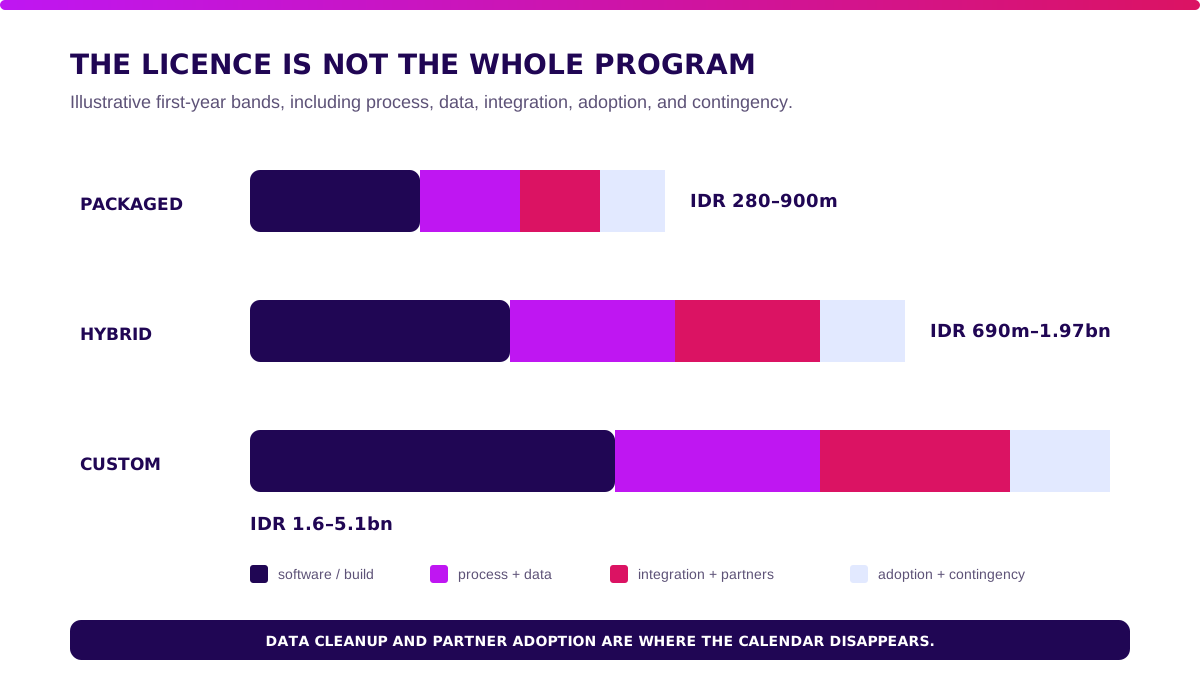
Replace these bands with your users, entities, partners, SKUs, planning granularity, transaction volume, integrations, data quality, support model, and internal team time. Compare the total with measured perfect-order loss and working-capital opportunity. The licence is visible. Data cleanup and partner adoption are where the calendar disappears.
How to Implement Supply Chain Management Without a Big-Bang Failure
A safe rollout expands a proven decision loop, not a half-configured platform.
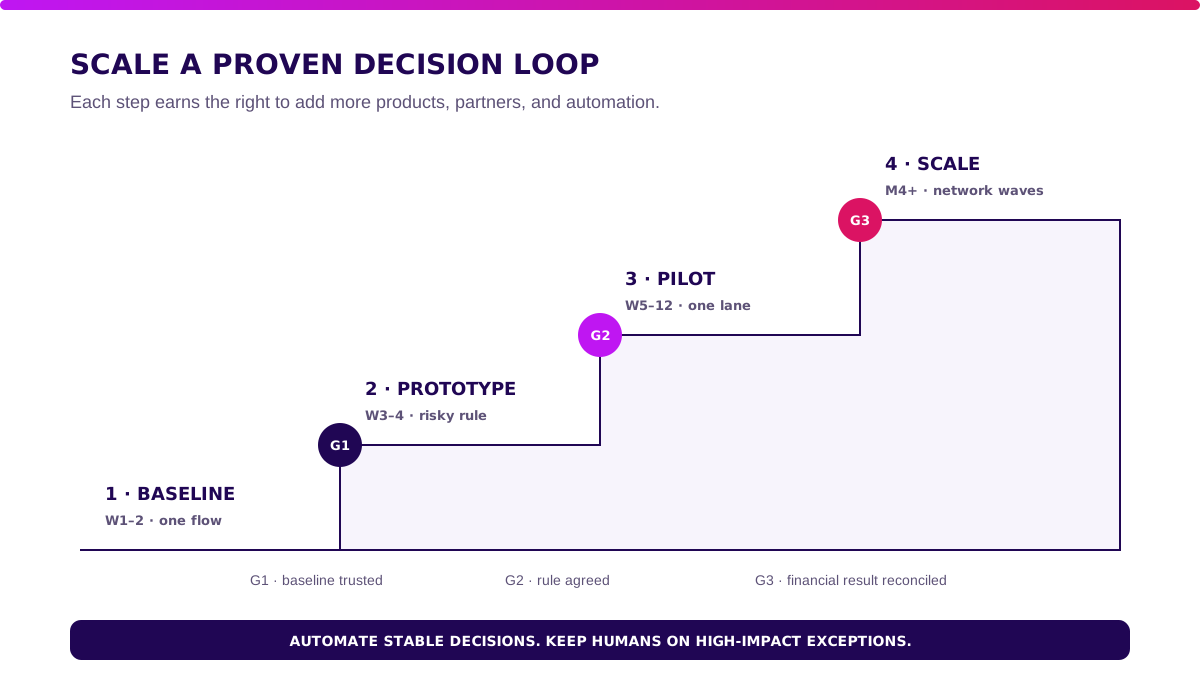
Phase 1 — baseline one flow (weeks 1–2)
Choose one product family, supplier set, fulfilment route, and customer promise. Measure perfect orders, inventory days, expedite cost, cycle time, and forecast error. Map the current decision and every manual hand-off.
Phase 2 — prototype the riskiest decision (weeks 3–4)
Prototype allocation, promise dates, supply balancing, or exception handling with real scenarios. Agree the owner, input, rule, override, and audit trail before selecting screens.
Phase 3 — pilot one end-to-end lane (weeks 5–12)
Connect actual orders, inventory, supplier commitments, shipments, and customer updates for one lane. Pass conditions should include data completeness, decision time, service improvement, no duplicate transactions, and a reconciled financial result.
Phase 4 — scale products, partners, and automation (month 4 onward)
Add segments in waves. Automate only stable decisions. When the custom edge is proven, Production Grade Software turns it into secure, observable, maintainable software. Keep humans on high-impact exceptions until the evidence says otherwise.
What I Would Do Before Digitising a Supply Chain
- Name the decision, not the dashboard. “Reduce late orders” is better scope than “build a control tower.”
- Baseline service and cash together. Otherwise one team improves its number by pushing cost to another.
- Fix master-data ownership first. Software cannot reconcile five meanings of “available.”
- Buy standard execution. Planning engines, WMS, TMS, portals, and traceability standards exist for a reason.
- Build the differentiating rule. Custom allocation or promise logic is valuable only when its effect is measurable.
Take one product family and run the ten tests with real partners and exceptions. Choose the smallest system that closes the decision loop from signal to customer outcome.
FAQ About Supply Chain Management
What is supply chain management?
Supply chain management coordinates sourcing, production, inventory, logistics, fulfilment, and returns across the organisations serving customer demand.
What are the main supply chain management processes?
ASCM’s SCOR model groups them into Orchestrate, Plan, Order, Source, Transform, Fulfill, and Return. A useful implementation also assigns an owner, decision, and metric to each process.
What is the difference between supply chain management and logistics?
Logistics manages the movement and storage of goods. Supply chain management is broader: it also coordinates demand, supply, procurement, production, inventory, partners, customer promises, and returns.
How much does supply chain management software cost?
This article’s illustrative first-year ranges are IDR 280–900 million for a packaged suite, IDR 690 million–1.97 billion for hybrid, and IDR 1.6–5.1 billion for custom. Actual cost depends heavily on integrations, data quality, partner onboarding, and scope.
Can supply chain management software be custom-built?
Yes. Custom makes sense when a repeated allocation, promise, planning, or cross-partner decision creates measurable advantage that packaged configuration cannot support.
Related Posts
Two weeks to a real answer
Need help putting this into practice?
Book a Blueprint session and we'll turn the ideas in this article into a tested prototype in front of real users—2 weeks, from $3,000.