Guide
Warehouse Management System: When Does Your Business Need a WMS?
A warehouse management system is worth buying when the cost of walking, searching, and mis-picking inside your warehouse is larger than the cost of directing that work with software. Many growing businesses reach for a WMS too early. Others wait until customers are receiving the wrong goods every day.
We have spent more than 15 years delivering business systems, including warehouse and operations software for distributors, e-commerce brands, and logistics operators. The pattern is consistent: the warehouse rarely fails because the stock number is missing. It fails because nobody is told which bin to go to, which order to pick first, or which pallet to check before it leaves the dock.
This guide shows how to tell whether you need a WMS yet, with a worked mis-pick calculation. It also covers the modules that matter, SaaS vs hybrid vs custom, illustrative first-year costs in IDR, ten vendor acceptance tests, and a phased rollout. If you are still deciding how to control stock quantity itself, start with our stock management app guide. A WMS sits one layer above it.
TL;DR — the whole guide in five lines:
- A WMS directs physical work. It tells people where to put, pick, pack, and check goods. A stock app only records what happened.
- Buy a WMS when walking, searching, and mis-picks cost more than the software. Measure it before you believe any demo.
- Packaged SaaS WMS wins for standard receive-store-pick-ship operations.
- Hybrid or custom earns its place with multi-client 3PL rules, unusual handling, or allocation logic that decides margin.
- Pilot one zone and one order type first. A WMS that cannot run one aisle cleanly will not run ten.
What Is a Warehouse Management System?
A warehouse management system (WMS) is software that directs and records every physical task inside a warehouse: receiving, putaway, replenishment, picking, packing, shipping, and counting, down to the bin location.
Gartner describes WMS applications as software that helps “manage and intelligently execute” warehouse, distribution, and fulfilment operations, built on mobile devices and barcode or RFID scanning. Read Gartner’s WMS definition.
In practice, a WMS helps you:
- Direct each worker to the next task, bin, and quantity instead of leaving it to memory.
- Locate every unit, carton, and pallet by bin, not just by warehouse.
- Verify each receipt, pick, and pack with a scan before the goods move on.
- Sequence work into waves, batches, or zones so people walk less.
- Replenish pick faces from reserve stock before a picker finds an empty shelf.
- Measure throughput, accuracy, and labour productivity per zone and per person.
Three systems are often confused. The stock management app owns quantity and movement truth. The WMS owns physical execution inside the building. The ERP connects stock to purchasing, sales, manufacturing, and finance. A small business can live without a WMS for years. It cannot live without trustworthy stock.
Warehouse Management System: SaaS vs Hybrid vs Custom
Buy the standard warehouse flow. Build only the rule that changes margin, speed, or risk.
| Factor | Packaged SaaS WMS | Hybrid | Custom WMS |
|---|---|---|---|
| Upfront cost | Lowest | Medium | Highest |
| Time to go-live | 6–12 weeks | 3–6 months | 6–12 months |
| Flexibility | Vendor configuration | SaaS core + custom rules or apps | Designed around your operating model |
| Integration | Standard ERP, marketplace, courier connectors | API or middleware to your stack | Built end to end |
| Ownership | Vendor owns the roadmap | Shared | You own the lifecycle |
| Best for | One or several sites with standard flows | 3PL billing, special allocation, unusual handling | High-volume operations where warehouse logic is the advantage |
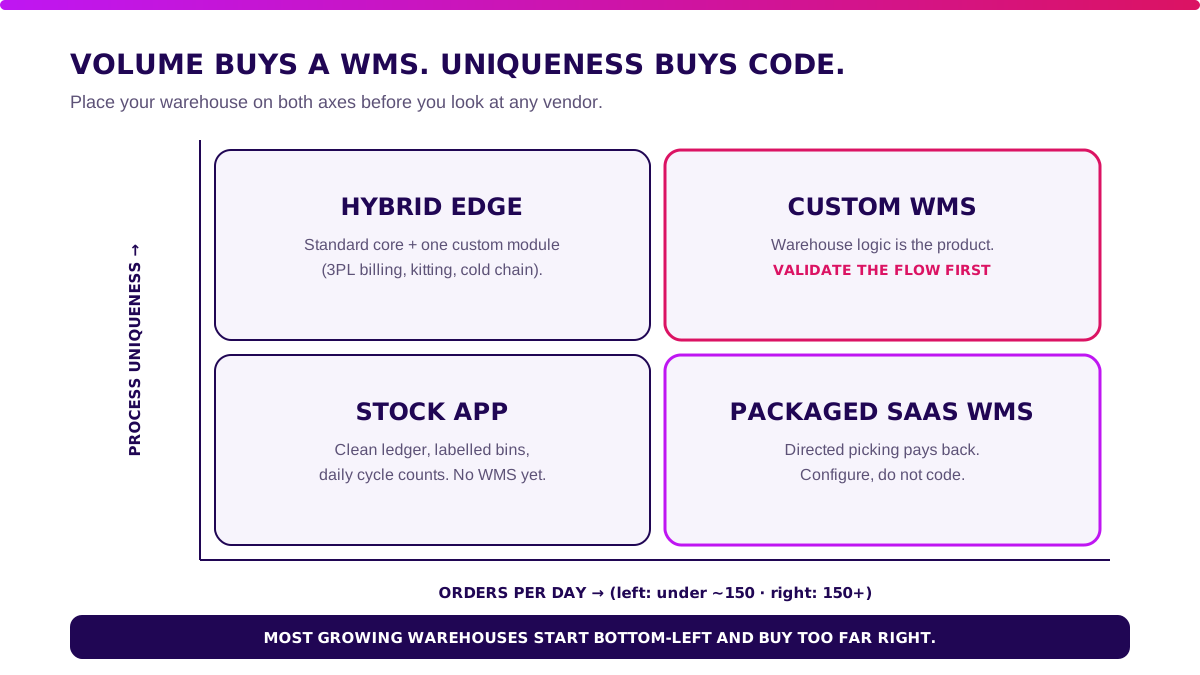
Packaged SaaS wins when your warehouse looks like most warehouses. Receive against a PO, put away to a bin, pick orders, pack, label, ship, and count. Mature vendors have solved these flows more times than any in-house team will.
Hybrid wins when the core flow is standard but one rule is not. Examples include client-specific billing for a 3PL, marketplace cut-off allocation, cold-chain handling, or kitting. Keep the vendor engine. Build the edge around it through APIs.
Custom wins less often than vendors fear and founders hope. It is justified when the way you store, allocate, and ship goods is itself the competitive advantage, and when volume is high enough that a few percent of efficiency pays for a dedicated product team.
When Does a Company Need a WMS? The Mis-Pick Math
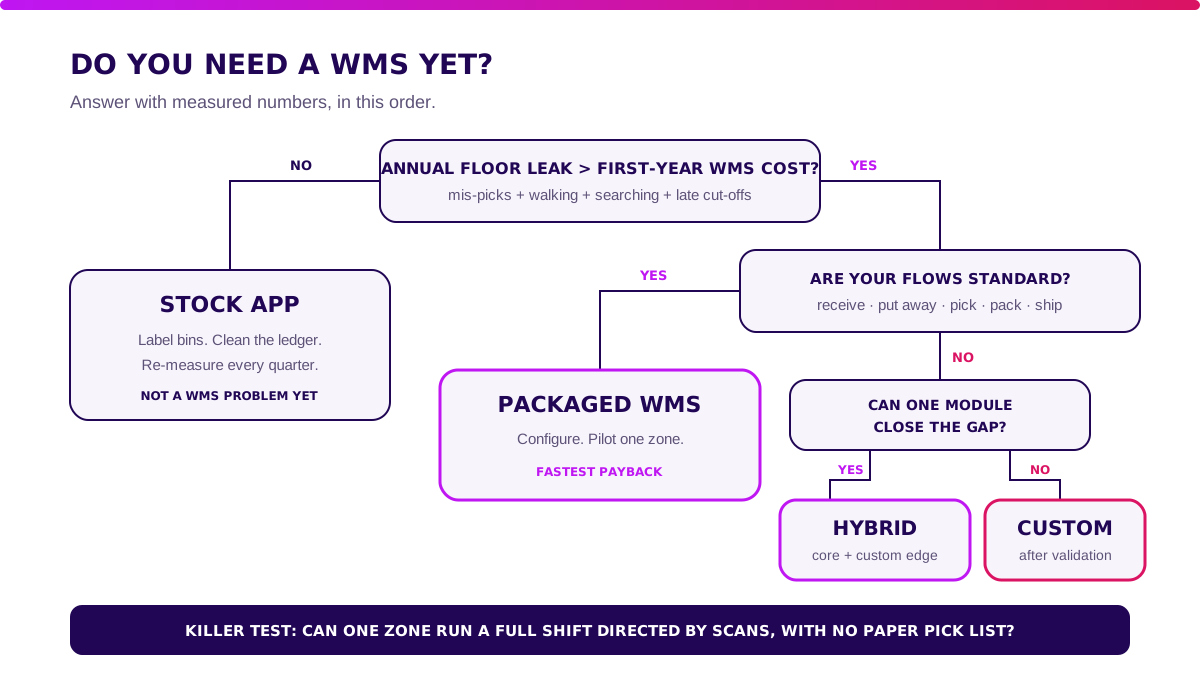
You need a WMS when the money leaking out of the warehouse floor is larger than the first-year cost of stopping it.
Here is a worked decision model to run before anyone looks at a vendor. The inputs below are illustrative, not a client report. The receipt is the arithmetic: replace each assumption with your measured numbers and see whether the case survives.
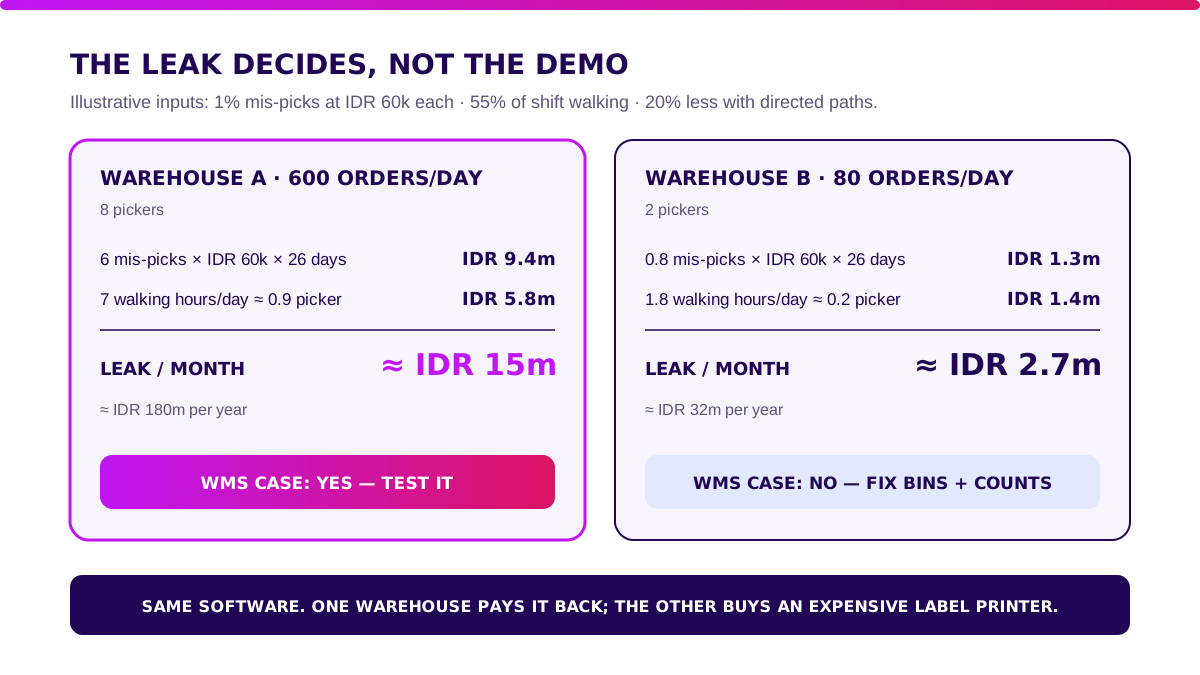
Warehouse A ships 600 orders per day with eight pickers:
- Mis-pick rate of 1% = 6 wrong orders per day.
- Each mis-pick costs about IDR 60,000 in reverse courier, reshipment, customer-service time, and marketplace penalties.
- 6 × IDR 60,000 × 26 working days = IDR 9.4 million per month.
- Pickers spend roughly 55% of their shift walking. Directed pick paths cut that walking by 20%.
- 8 pickers × 8 hours × 55% × 20% = 7 hours per day, close to one full-time picker.
- At a loaded cost of IDR 6.5 million per picker per month = IDR 5.8 million per month.
Total leak: about IDR 15 million per month, or IDR 180 million per year. That covers the lower half of a packaged WMS first-year budget. The case is real.
Warehouse B ships 80 orders per day with two pickers. The same maths gives about IDR 1.3 million in mis-picks and IDR 1.4 million in walking. About IDR 2.7 million per month, or IDR 32 million per year. That does not cover a WMS. Better bin labels, a cleaner stock app, and a daily count routine will return more.
Volume is not the only trigger. Other signals worth measuring:
- pickers regularly search for goods the system says are in stock;
- more than one zone, floor, or temperature range;
- batch, expiry, or serial control that people track on paper;
- same-day cut-offs that force manual prioritisation every afternoon;
- new staff need weeks to learn where things are;
- you store goods for more than one client and bill them by activity.
Warehouse Management System Features and Modules You Need
Essential WMS modules are the ones that prevent a wrong movement, not the ones that report on it afterwards.
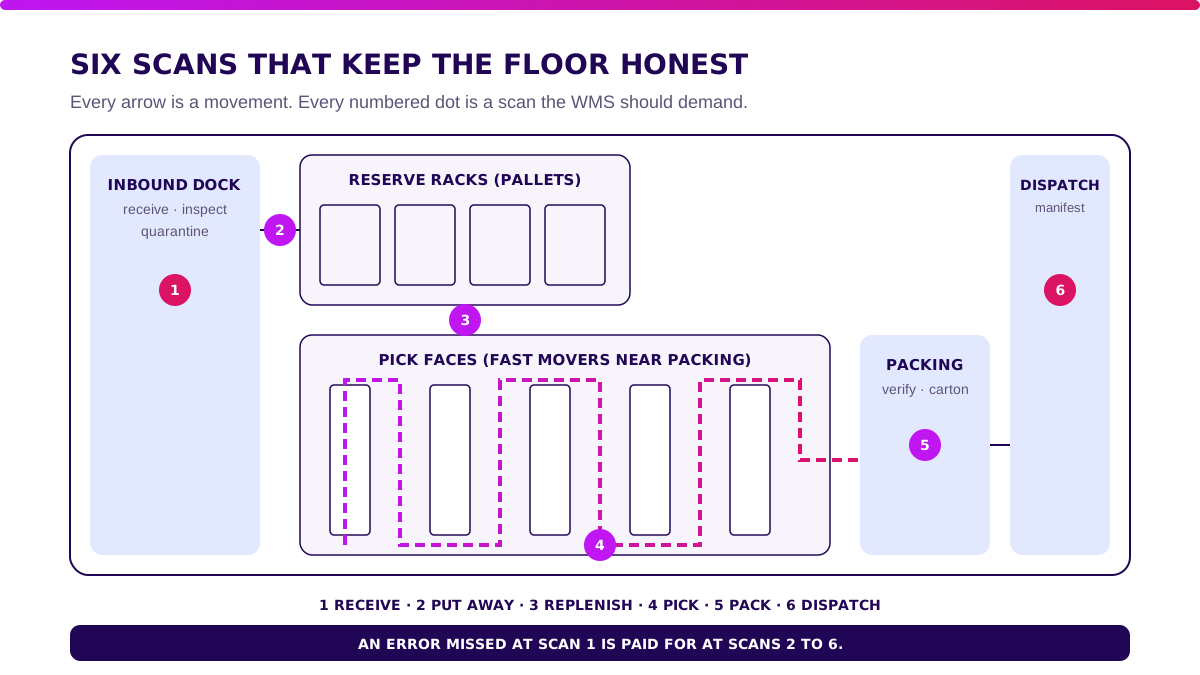
1. Receiving and inbound control
Receiving is where warehouse accuracy is won or lost. Every error made at the dock is inherited by putaway, picking, and shipping.
- Match each scan to the PO or advance shipping notice.
- Flag short, over, and damaged deliveries before they enter stock.
- Route goods to inspection or quarantine when rules require it.
- Label cartons and pallets that arrive without usable barcodes.
For shipments between trading partners, GS1’s Serial Shipping Container Code (SSCC) gives each pallet or carton a globally unique 18-digit identity, so receiving can scan one label instead of counting every unit. See the GS1 SSCC standard.
2. Putaway and slotting
- Suggest a bin based on size, weight, velocity, and compatibility.
- Keep fast movers near packing and heavy goods low.
- Enforce a confirming scan at the destination bin.
- Re-slot periodically as demand changes.
3. Replenishment
- Move stock from reserve to the pick face before it runs out.
- Trigger tasks by minimum level, wave demand, or both.
- Prioritise replenishment ahead of the pick waves that need it.
4. Picking
Picking is usually the largest labour cost in a fulfilment warehouse. It is also where directed work pays back fastest.
- Group orders into single, batch, wave, or zone picks.
- Sequence the route so each picker walks the shortest path.
- Confirm every line with a scan of the bin and the item.
- Handle short picks without breaking the whole order.
5. Packing and dispatch
- Verify each packed item against the order.
- Suggest the right carton to reduce volumetric weight charges.
- Print courier labels and hand off tracking to the order system.
- Check loaded pallets or bags against the manifest before the truck leaves.
6. Counting, traceability, and performance
- Run cycle counts by zone, value, or velocity without stopping the warehouse.
- Enforce FEFO or FIFO where expiry or batch matters.
- Trace a batch from supplier receipt to customer shipment.
- Report throughput, pick accuracy, dock-to-stock time, and productivity per person.
Field rule: A WMS does not make a messy warehouse smart. It makes the mess visible, one scan at a time. That is exactly why it works.
When Off-the-Shelf Is Enough — and When You Need a Custom WMS
Stay with a packaged WMS while your flows fit its configuration without a shadow spreadsheet.
A packaged WMS is usually enough when:
- you run one to a few sites with the same process;
- goods follow receive, putaway, pick, pack, and ship without unusual handling;
- your ERP, marketplace, and courier have supported connectors;
- picking strategies fit what the vendor offers: batch, wave, or zone;
- reports cover what managers actually review each week;
- your team can run a full day without re-keying data elsewhere.
Consider hybrid or custom when:
- you are a 3PL and every client has different rules, SLAs, and billing;
- allocation must weigh channel cut-offs, margin, expiry, or customer priority;
- handling is unusual: kitting, co-packing, cross-docking, cold chain, or bonded storage;
- automation equipment needs control logic the vendor cannot expose;
- licence fees grow per user or per order faster than the value received;
- your warehouse process is what customers pay you for.
Before building, measure how often the workaround happens, how long it takes, how many errors it creates, and what they cost. If a manual 3PL billing process eats IDR 20 million a month and a controlled hybrid module costs IDR 200 million, test the case. If the exception happens twice a quarter, keep it manual.
Validate it in 2 weeks. Before committing serious budget to a warehouse management system, Blueprint & Prototype proves the assumptions: spec, prototype of the riskiest warehouse flow, and a real cost figure with a build, adjust, wait, or stop recommendation.
How to Choose a Warehouse Management System: 10 Vendor Tests
A demo proves the screens work. Acceptance tests prove your warehouse survives Monday morning.
Run these with your own SKUs, bins, and orders:
- Receive a PO with one short line, one over-delivery, and one damaged carton.
- Put away a pallet and reject a scan at the wrong bin.
- Trigger replenishment from reserve to pick face before a wave starts.
- Release a wave of 50 orders and show the picker route in sequence.
- Short-pick one line and complete the rest of the order without manual edits.
- Pack an order, catch a wrong item at verification, and print the courier label.
- Pick two batches of the same SKU and enforce FEFO on the earlier expiry.
- Run a cycle count on one zone while picking continues in another.
- Lose device connectivity mid-pick, reconnect, and reject duplicate scans.
- Export bins, balances, movements, tasks, and users with relational IDs.
If the vendor passes, continue with software vendor due diligence to review contracts, SLAs, security, data ownership, and exit terms.
How Much Does a Warehouse Management System Cost in Indonesia?
First-year WMS cost is software plus devices, bin mapping, integration, and adoption. The licence is rarely the biggest line.
The ranges below are an illustrative decision model, not vendor quotations:
| First-year component | Packaged SaaS | Hybrid | Custom |
|---|---|---|---|
| Software / build | IDR 36–180m | IDR 120–400m | IDR 400–1,000m |
| Handheld scanners, printers, Wi-Fi | IDR 20–80m | IDR 30–100m | IDR 30–120m |
| Bin mapping, labelling, migration | IDR 10–40m | IDR 20–60m | IDR 30–80m |
| Integration (ERP, marketplace, courier) | IDR 10–60m | IDR 40–120m | IDR 60–160m |
| Training, support, contingency | IDR 10–30m | IDR 20–60m | IDR 30–90m |
| Illustrative range | IDR 86–390m | IDR 230–740m | IDR 550m–1.45bn |
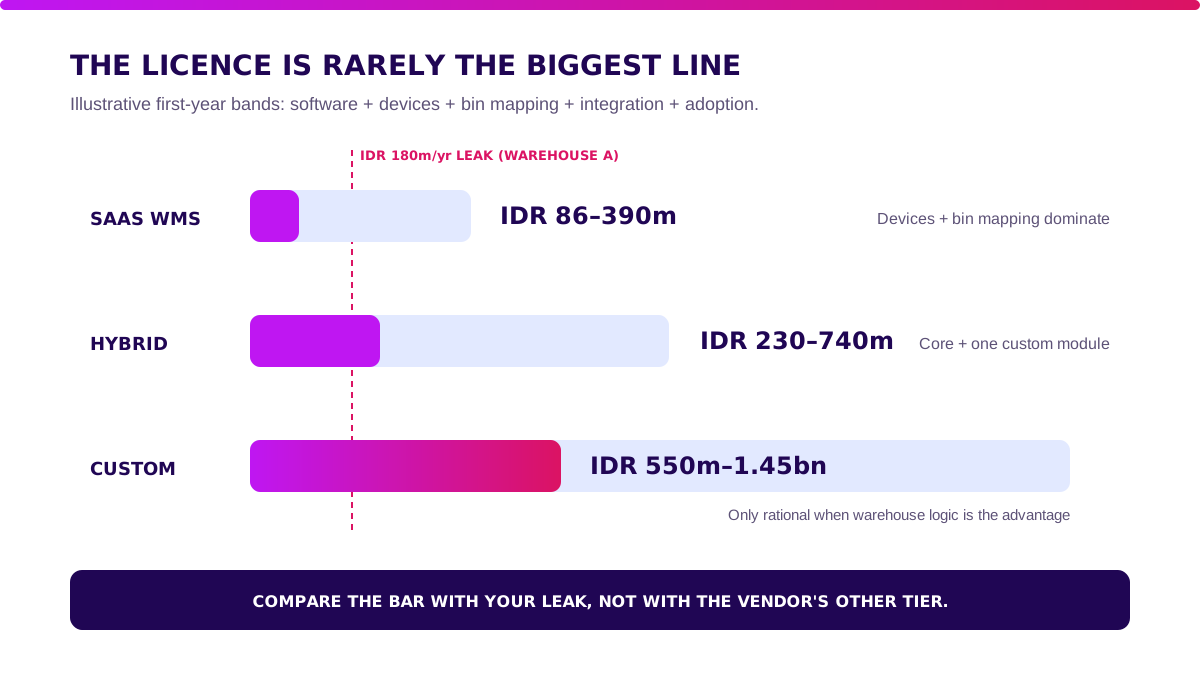
Replace these bands with your site count, bins, SKUs, orders per day, users, devices, integrations, and internal staff time. Then compare them with your own mis-pick math. A WMS that costs IDR 200 million and stops a IDR 180 million annual leak is a good buy. The same WMS in an 80-order warehouse is an expensive label printer.
How to Implement a Warehouse Management System Without Failing
A safe rollout expands verified bins and flows, not just user accounts.
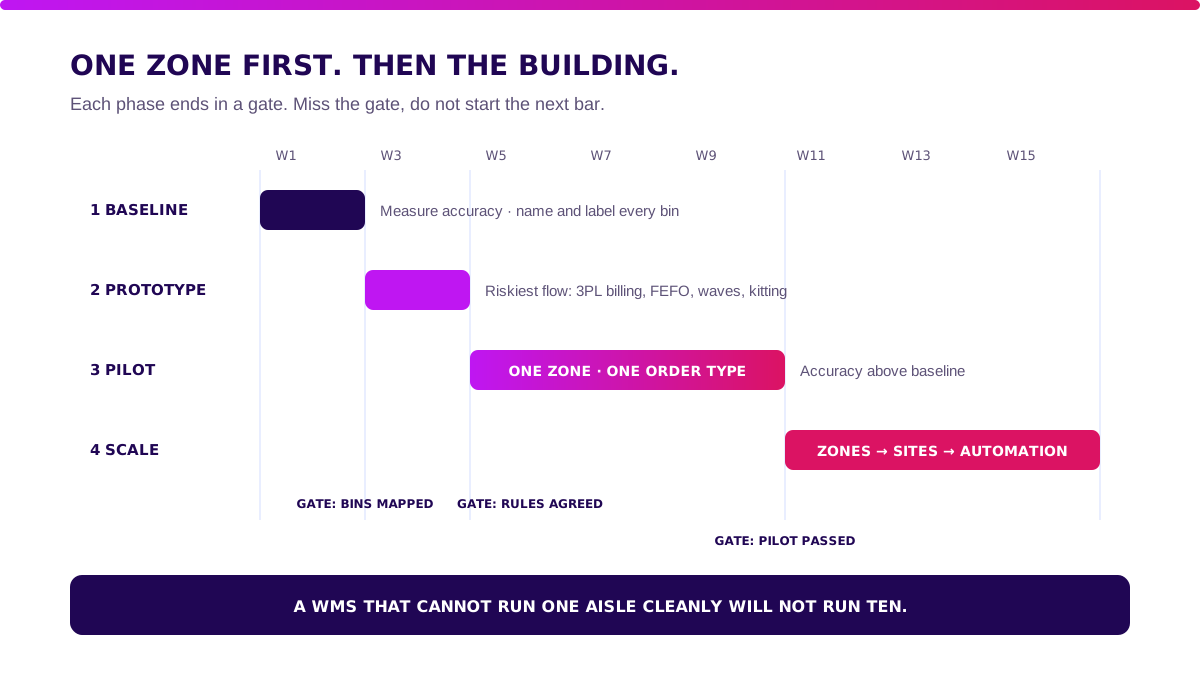
Phase 1 — baseline and bin mapping (weeks 1–2)
Measure pick accuracy, orders per picker hour, dock-to-stock time, and count variance. Name every bin. Label every location. A WMS cannot direct people to places that do not exist in data.
Phase 2 — prototype the riskiest flow (weeks 3–4)
Test the hard path first: 3PL billing, wave cut-offs, FEFO, kitting, or marketplace allocation. Decide the rules on paper and in a prototype before configuring the whole site.
Phase 3 — pilot one zone and one order type (weeks 5–10)
Run real receiving, putaway, picking, and packing in one zone. Set pass conditions: pick accuracy above the baseline, no unexplained balance changes, and no duplicate sync with the ERP or marketplace.
Phase 4 — scale zones, sites, then automation (week 11 onward)
Add zones and order types in waves. Add slotting optimisation and labour reporting only after accuracy holds. When a custom edge is proven, Production Grade Software turns it into a secure, observable, maintainable system.
What I Would Do Before Buying a Warehouse Management System
- Do the mis-pick math first. If the annual leak is smaller than the first-year cost, fix labels, bins, and counting discipline instead.
- For standard fulfilment, buy SaaS. Spend the saved budget on bin mapping, rugged devices, and floor training.
- If you run a 3PL, test billing before picking. Client-specific billing is where packaged WMS quietly breaks.
- If the vendor cannot export movements and tasks, do not sign. Your warehouse history is operating evidence.
- If one zone is not accurate, do not scale. More zones multiply bad data.
Take one shift and run the ten vendor tests with your real orders. Choose the simplest system that keeps every movement directed, scanned, and traceable.
FAQ About Warehouse Management Systems
What is a warehouse management system?
A warehouse management system is software that directs and records physical warehouse work: receiving, putaway, replenishment, picking, packing, shipping, and counting, down to the bin location.
What is the best warehouse management system?
There is no universal best WMS. Choose the one that passes your real receiving, picking, FEFO, offline, integration, and export tests with your own SKUs and bins.
How much does a warehouse management system cost?
This article’s illustrative first-year model places packaged SaaS at IDR 86–390 million, hybrid at IDR 230–740 million, and custom at IDR 550 million–1.45 billion. Actual cost depends on sites, devices, integrations, and support.
Can a warehouse management system be custom-built?
Yes. Custom is justified when your warehouse logic is a competitive advantage or when multi-client 3PL rules, handling, or allocation cannot be configured. Validate the flow and business case first.
Is a WMS better than a stock management app?
Not always. A stock app is enough when the warehouse is small and people find goods easily. A WMS pays off when walking, searching, and mis-picks cost more than the software.
Related Posts
Two weeks to a real answer
Need help putting this into practice?
Book a Blueprint session and we'll turn the ideas in this article into a tested prototype in front of real users—2 weeks, from $3,000.