Guide
CRM System: Essential Features Before You Buy or Build
A CRM system is ready to buy or build when your team can describe what it must do and prove that it works. “Contact management, automation, integration” is a shopping list. It does not explain what happens when the same customer enquires twice, a salesperson leaves, or an order transfer fails.
Synetica’s documented Seva.id delivery connects lead-generation websites with Astra’s existing CRM, finance, and partner systems. The relevant lesson is practical: the handoff between systems deserves its own requirement, owner, and acceptance test.
This guide turns feature names into testable requirements. You get six capability groups, an eight-point vendor checklist, an illustrative budget, and a downloadable template. The test scenarios below are synthetic examples, not claims that we benchmarked a particular CRM.
TL;DR — the whole guide in five lines:
- Write the expected outcome for each requirement, including the exception that could break it.
- Give every must-have a business owner who can accept or reject the result.
- Test customer identity, ownership, approvals, handoffs, access, and data portability before adding dashboards.
- Compare the complete operating scope: licences alone do not pay for migration, integrations, or support.
- Approve a pilot on evidence, then expand the same working process to the next team.
What does a testable CRM requirement look like?
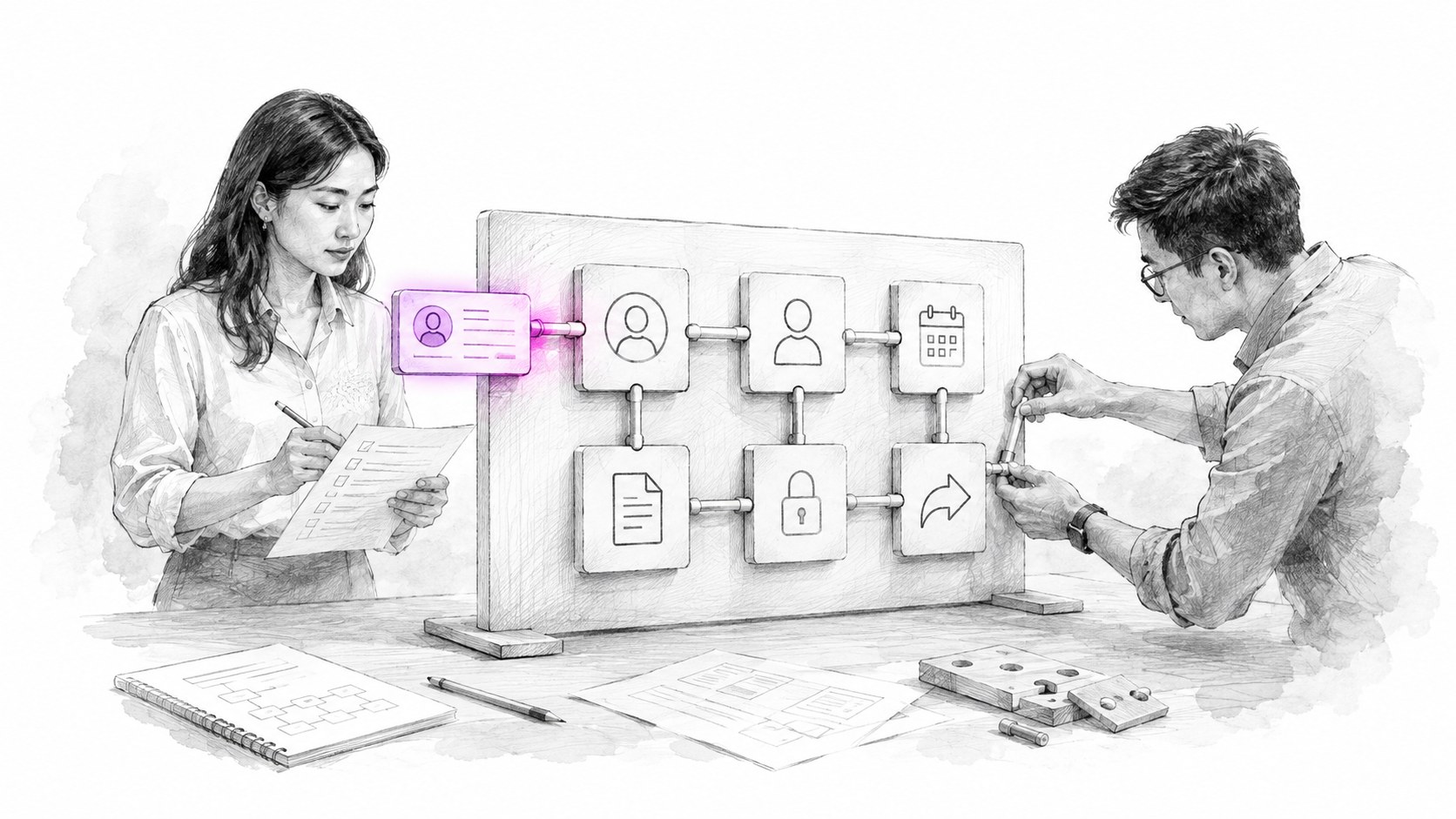
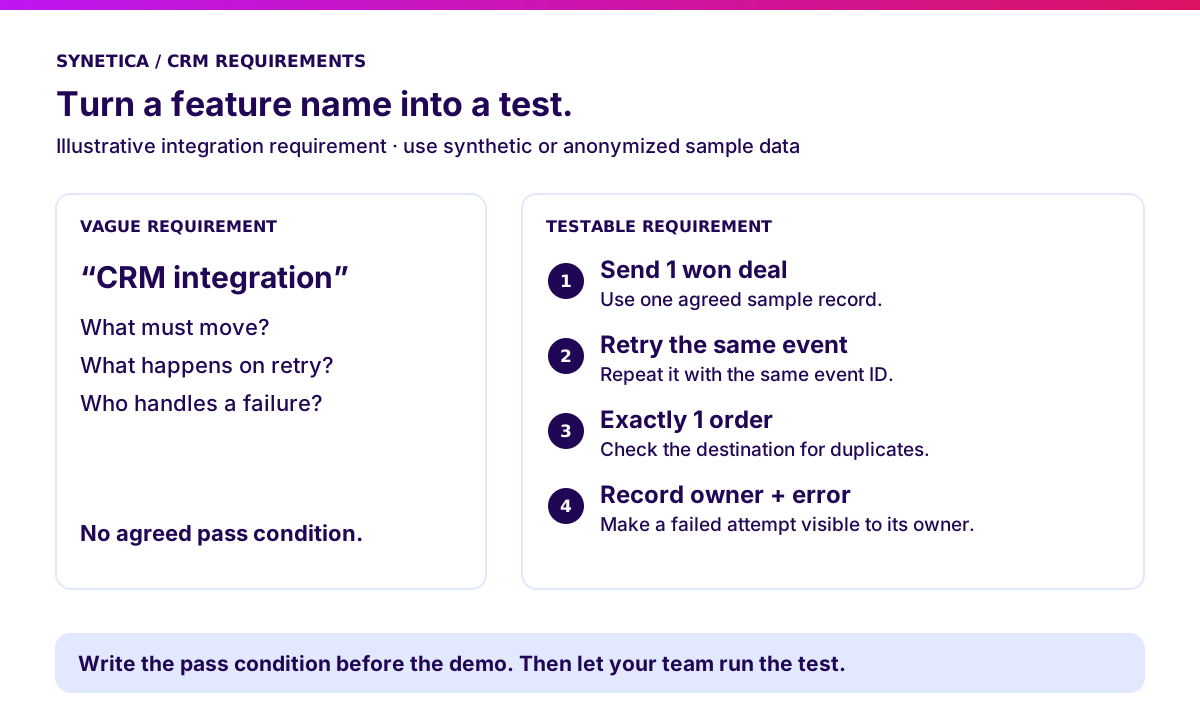
Replace “supports integration” with an input, an action, and an observable result. Here is a requirement you can put in a scope document today:
CRM-04 — Won-deal handoff. Send one won deal to the order system. Simulate a timeout after the order is saved, then retry the same event. Pass when exactly one order exists, its source deal ID is preserved, and a named owner can see the transfer status.
This is a proposed test, not a recorded client result. It exposes something a successful first transfer cannot: whether retries create duplicate orders.
The distinction matters for migration too. HubSpot’s import documentation specifies unique identifiers for updating records and preserving associations. An import can finish while the relationships your team relies on are still wrong.
Download the editable requirements checklist and replace each example with your own workflow.
What is a CRM system?
A CRM system combines customer records, sales processes, access rules, and the people responsible for running them. The application is one component. The system also needs an agreed meaning for qualified, an owner for each active opportunity, and a rule for what happens next.
Its core jobs are to capture customers, coordinate follow-ups, preserve commercial decisions, and hand work to the next team. A dashboard cannot compensate for conflicting definitions underneath it.
Use the CRM definition guide for the wider customer lifecycle. This article focuses on the requirements you should sign off before procurement or development.
CRM system: SaaS, custom, or hybrid?
Evaluate the same must-haves across all three routes. A proposal should say whether each requirement is included, configurable, needs paid extension work, or is unsupported.
| Route | Upfront work and cost | Time | Flexibility | Fits when |
|---|---|---|---|---|
| SaaS | Setup, migration, training | Trial first; rollout depends on data readiness | Within the product and plan | Standard configuration passes your tests |
| Custom | Validation, design, build, migration | Production follows validated scope | Within the agreed architecture and budget | Valuable requirements remain unsupported |
| Hybrid | SaaS setup plus a defined custom boundary | Depends on the integration | Flexible at that boundary | The core works; one handoff needs engineering |
Ask for a priced exception list, not a page of ticks. For the broader purchase decision, read custom vs SaaS CRM.
Which CRM system features are essential?
Start with six capability groups and test them with the people who do the work. The owners below are proposed responsibilities; replace them with actual names in your requirements document. All quantities and approval thresholds in these examples are test inputs.
1. Customer identity — owner: sales operations
Give each customer a stable identity so their history does not split across records. It is the luggage tag that keeps the relationship attached as it moves between teams.
What it helps you do:
- Capture the inquiry source.
- Match records using agreed identifiers.
- Preserve separate contacts at one company.
- Review uncertain duplicates before merging.
Test: submit 12 inquiries containing 10 unique customer IDs. Expect 10 customers with all 12 inquiries traceable. Two people sharing a name must remain separate when their identifiers differ.
Why it matters: matching by name alone can merge unrelated people. Define phone normalisation and duplicate rules explicitly. Record your identity test.
2. Ownership and pipeline — owner: sales manager
Make every active deal someone’s next action. A pipeline should function as a work queue, not a monthly slide.
What it helps you do:
- Assign leads using agreed territory rules.
- Set a dated follow-up.
- Require evidence before advancing a stage.
- Reassign work without losing history.
Test: create Jakarta and Surabaya leads, then deactivate one assigned rep. Expect an active replacement or a visible exception queue. Try moving a deal to Proposal without the required quotation; the agreed stage rule must apply.
Why it matters: attractive stage columns can hide unattended work. Test the same follow-up action on a rep’s phone. Define the owner and stage rules.
3. Quotation and approval — owner: commercial lead
Preserve the decision behind the price. An approved quotation needs a traceable version, not just a PDF in someone’s inbox.
What it helps you do:
- Apply agreed discount limits.
- Route exceptions to the right approver.
- Preserve rejected and revised versions.
- Identify the final customer-facing quotation.
Test: use a synthetic rule requiring approval above a 10% discount. Submit 15%, reject it, then revise. Expect the rejection, approver, time, and final version to remain traceable.
Why it matters: 10% is a sample policy, not a recommended commercial threshold. Your finance team defines the actual rule. Write your approval scenario.
“A CRM earns adoption one completed workflow at a time. Start with the handoff that currently drops the most context.” — Ganis Atmawarin, CRM definition guide
4. Integration and recovery — owner: operations lead
Define how failed handoffs recover. An integration is a delivery route that also needs a returns desk.
What it helps you do:
- Send approved data to the next system.
- Retain the source record identifier.
- Retry failed transfers without duplicating work.
- Assign unresolved errors to an owner.
Test: run the one-deal timeout scenario above. Require one resulting order, a visible status, and a documented recovery action. Decide which system owns customer identity, price, and fulfilment status.
Why it matters: two connected systems can disagree while both appear healthy. Map your integration boundary.
5. Access and audit — owner: system owner
Test what a user can do, and what evidence remains afterwards. A lock icon proves neither access control nor audit coverage.
What it helps you do:
- Limit records by role and territory.
- Restrict sensitive changes and exports.
- Trace important field changes.
- Remove access when people leave.
Test: log in as two territory reps and a manager. Attempt cross-territory access, change a deal value, and try an unauthorised export. Compare outcomes with the agreed access matrix.
Why it matters: Microsoft’s Dataverse documentation distinguishes change auditing from read/export activity logging. Ask what is enabled and retained. Document the control evidence.
6. Migration, reporting, and exit — owner: data owner
Require the data to survive the journey in and out. An export button is only the departure gate; you still need to know what made it aboard.
What it helps you do:
- Reconcile imported records and relationships.
- Preserve owners and activity dates.
- Trace report totals to source records.
- Export usable data when you leave.
Test: import 10 customers, three companies, four deals, and six dated activities. Update and export the sample. Reconcile IDs, associations, dates, and deal values, then list anything excluded from the export.
Why it matters: matching row counts does not prove matching relationships. Capture your migration and exit criteria.
When is off-the-shelf enough for your CRM requirements?
Buy when configuration passes the must-haves; investigate custom only for essential gaps. If the gap is isolated and the product supports the necessary integration, test a hybrid approach first.
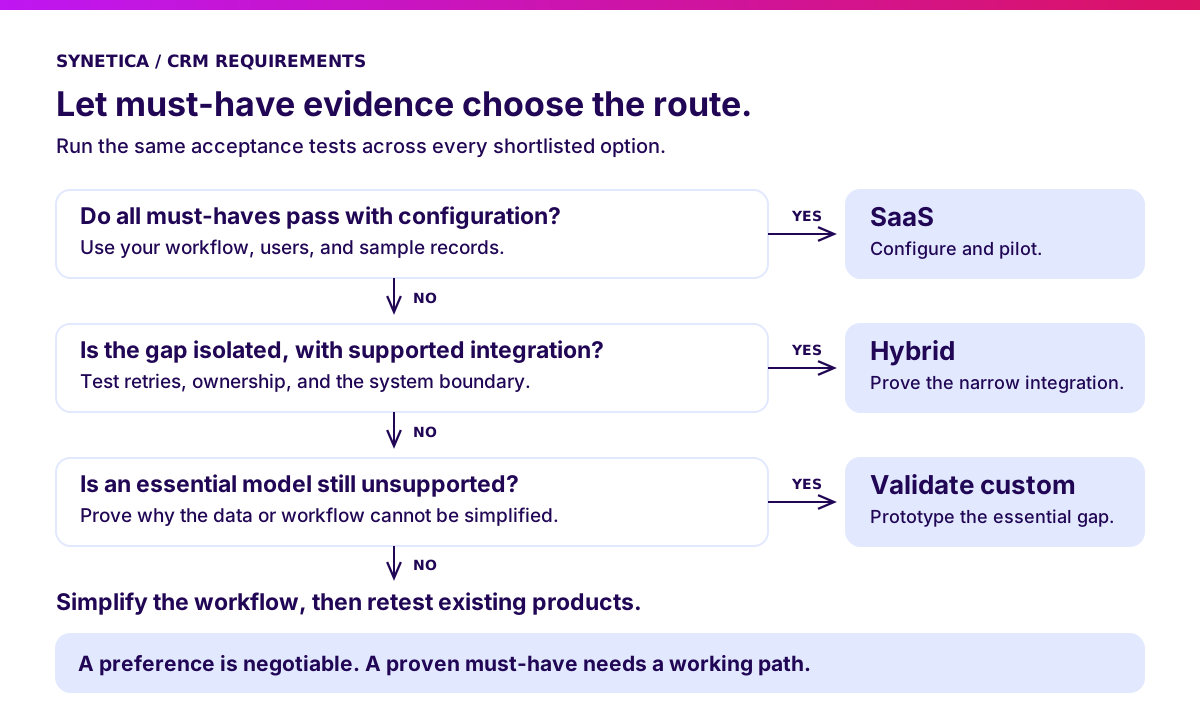
A different field label is a preference. A pricing model that cannot represent a signed customer contract may be a real constraint. Check supported configuration and simplify unnecessary process steps before approving development.
Validate it in 2 weeks. Bring the hardest requirement to Blueprint & Prototype. We map the workflow, build a working prototype, and collect user signal before defining production scope.
How do you use a CRM requirements checklist with vendors?
Give every vendor the same scenarios and ask your own team to run them. The downloadable Markdown template has eight rows covering identity, ownership, approvals, integration, access, reporting, migration, and exit.
For each row, record priority, named owner, expected result, evidence, and unresolved gap. Use this proposed scale:
| Evidence | Meaning | Procurement action |
|---|---|---|
| 0 | Unsupported | Rework the requirement or route |
| 1 | Claimed | Request a demonstration |
| 2 | Demonstrated | Let your user repeat it |
| 3 | Completed by your team | Record the result and acceptance decision |
A must-have failure blocks acceptance regardless of other scores. For SaaS, test in the trial before purchase. For custom work, validate the risky assumptions before commissioning, contract the unresolved requirements, and require production acceptance before rollout. Use synthetic or anonymised data in demos, and agree the exceptions before testing.
Download the checklist, then use the vendor due-diligence guide to check delivery and contract responsibilities.
How much should you budget for a CRM system?
Price the requirements that passed, including the work around the licence. As local service references, Synetica lists Blueprint & Prototype from IDR 49 million and Production Grade Software from IDR 200 million. These are separate starting prices, not an all-in CRM quote.
For a separate, illustrative SaaS rollout, assume 20 users at IDR 350,000 per user per month: annual licences cost IDR 84 million. Add setup 40m, migration and training 30m, integration 36m, and support 24m. Year one totals IDR 214 million; IDR 130 million sits outside licences.
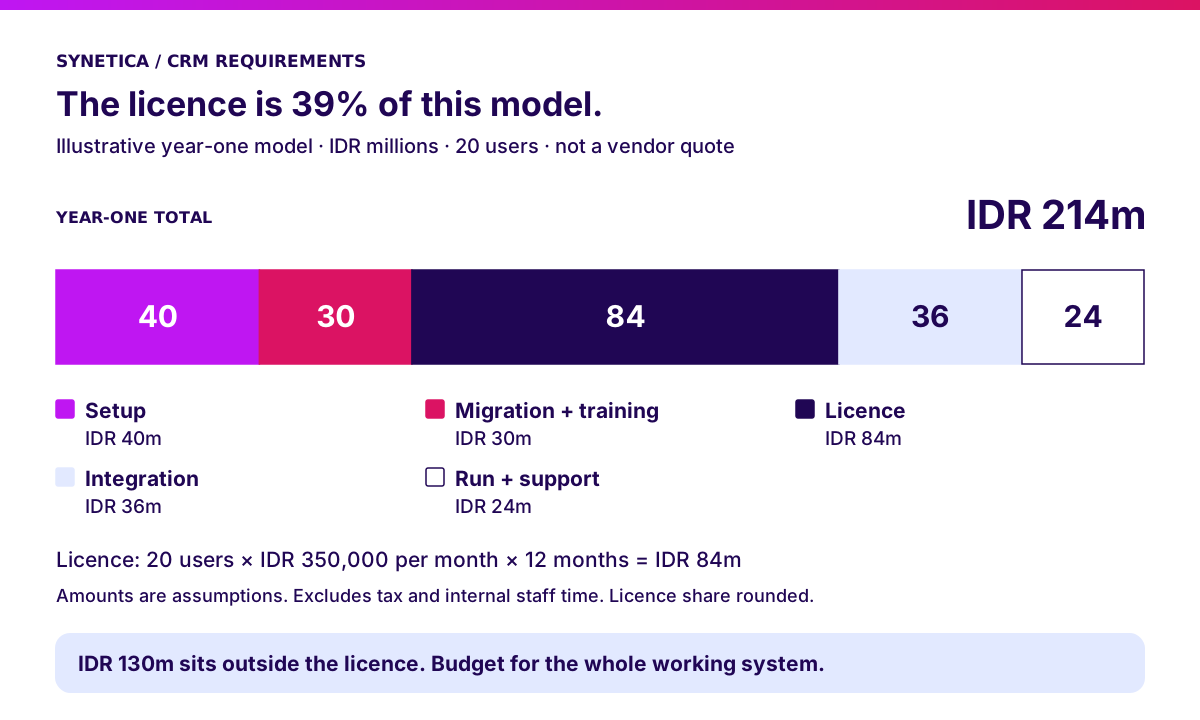
These are modelling assumptions, not vendor rates. Tax, internal staff time, future changes, and exit costs are excluded; add them to your actual comparison. The three-year CRM cost guide shows how to extend the horizon.
How do you implement a CRM system in phases?
Start with one team and one complete workflow, then expand after the acceptance evidence holds. Define the cutover owner and recovery plan before moving live customer work.
| Phase | What to complete | Gate to proceed |
|---|---|---|
| Scope | Requirements, owners, sample data, baseline | Agree must-haves and expected results |
| Pilot | Configuration/build, sample migration, exception tests | Users complete the critical workflow |
| Expand | Training, staged migration, monitored handoffs | Reconcile records and resolve blocking errors |
Synetica’s path is two weeks of Blueprint & Prototype, then eight weeks of Production Grade Software for agreed validated scope: ten weeks to production release. Broader migrations can need additional stages. Launch & Grow continues through a monthly retainer for learning and iteration.
Review the production scope and explicitly assign migration, support, and adoption responsibilities. Measure completed follow-ups and failed handoffs against your baseline; logins alone do not show successful adoption.
What I would ask your team to do first
Choose one costly failure and write its acceptance test today. Dreamers with a simple sales process can keep the requirements short. Growing Businesses should involve sales, operations, finance, and the data owner before signing off.
I would delay optional dashboards until that first workflow works. A smaller accepted scope gives you a clearer buying decision and a clearer build brief.
Next step: bring your completed checklist to Blueprint & Prototype.
FAQ
What is a CRM system?
A CRM system combines customer data, sales workflows, access rules, and operating responsibilities so teams can coordinate relationships and follow-ups.
Which CRM features are essential?
Start with customer identity, ownership, pipeline rules, quotations, handoffs, access, reporting, and data portability. Prioritise them by your actual workflow and test the must-haves.
What is the best CRM system?
The best fit lets your users complete the critical scenarios within an acceptable operating cost. Use the same requirements and evidence scale across your shortlist.
How much does a CRM system cost?
Include licences, setup, migration, integration, training, and support. The IDR 214 million first-year example here is illustrative, not a price quote or market range.
Can a CRM system be built custom?
Yes, when essential requirements remain unsupported after testing configuration and supported integrations. Validate the workflow and assign ongoing ownership before committing to production engineering.
Related Posts
Two weeks to a real answer
Need help putting this into practice?
Book a Blueprint session and we'll turn the ideas in this article into a tested prototype in front of real users—2 weeks, from $3,000.